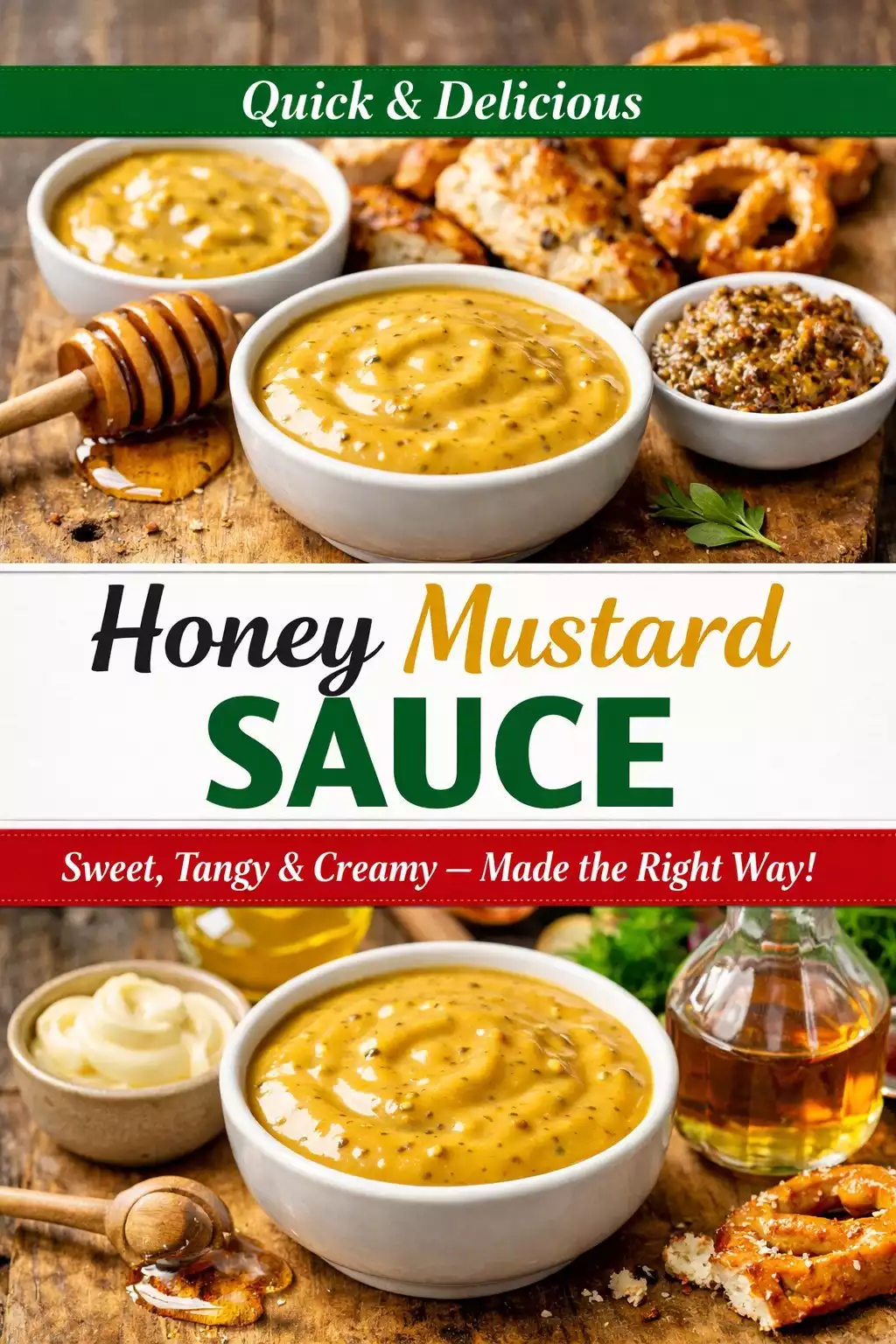
My nonna would’ve smacked me with a wooden spoon if I got this wrong. Honey Mustard Sauce — sweet, tangy, smooth, and sharp in all the right proportions — is one of those condiments that sounds simple enough to not require a recipe. Most people mix honey and mustard together in whatever ratio feels right and call it done. What they end up with is almost right but missing something. The something is this: balance, acid, depth, and the specific mustard combination that makes the sauce taste like it came from a real kitchen instead of a squeeze bottle at a fast food counter.
Good honey mustard has layers. The honey’s sweetness, the mustard’s tang, a hit of vinegar to sharpen both, and a creamy element that ties everything together. Two minutes to make. Lasts a week. Works on chicken, in sandwiches, as a dip, as a salad dressing. This is the recipe I’ve kept in my back pocket for thirty years. Now it’s yours.
Why This Honey Mustard Sauce Works
- Two-mustard combination: Dijon provides sharpness and smooth body. Whole grain mustard adds texture and a slightly nuttier, more complex mustard flavor. Using both creates more dimension than either alone.
- Apple cider vinegar: A small amount cuts through the sweetness of the honey and brightens the whole sauce. Without it, honey mustard tastes one-dimensional and overly sweet.
- Mayonnaise as binder: Makes the sauce creamy, helps it cling to food, and smooths the direct edge of the mustard. Optional but transforms a condiment into a proper sauce.
- Good honey: Raw honey or wildflower honey has more flavor complexity than mass-produced clover honey. The honey’s character comes through directly in this uncooked sauce.
- Resting time: Even 30 minutes at room temperature allows the flavors to meld and the vinegar’s sharpness to soften.
Ingredients
Honey Mustard Sauce
- 3 tbsp Dijon mustard
- 1 tbsp whole grain mustard
- 3 tbsp good quality honey
- 2 tbsp mayonnaise
- 1 tbsp apple cider vinegar
- ½ tsp garlic powder (optional)
- Pinch of salt
- Pinch of cayenne or white pepper (optional)
Instructions
Step 1: Combine and Whisk
Whisk together Dijon mustard and whole grain mustard first. The Dijon acts as an emulsifier, so combining the mustards before adding other ingredients helps everything come together smoothly. Add honey and whisk to incorporate fully. Add mayonnaise, apple cider vinegar, and any optional seasoning. Whisk until the sauce is smooth, creamy, and uniform in color.
Step 2: Taste and Adjust
Taste the sauce critically. Too sweet? Add a bit more vinegar or mustard. Too sharp? Add a touch more honey. Too thick? Add a few drops of water or additional vinegar to thin. The ideal honey mustard sits between sweet and tangy, with neither dominating. Add the pinch of salt even if it seems unnecessary — salt connects and amplifies both the sweet and the tangy elements.
Step 3: Rest and Serve
Let the sauce rest at room temperature for at least 30 minutes before serving. Transfer to a jar or serving dish. The sauce will thicken slightly in the refrigerator — bring to room temperature before using if it becomes too thick to pour or dip comfortably.
Tips and Common Mistakes
- Only one mustard type: Single-mustard honey mustard tastes flat. The combination of Dijon (for heat and smoothness) and whole grain (for texture and nuttiness) creates the layered flavor profile worth making from scratch.
- Too sweet: The most common mistake. Honey is powerful. Start with less and add more — a sauce that leans sweet is harder to fix than one that leans mustardy. The vinegar is your correction tool.
- Skipping the mayonnaise: This makes a lighter, sharper sauce that works well as a dressing. If you want a sauce that clings to food and has creamy body, the mayo is non-negotiable.
- Cold serving: Honey mustard from the refrigerator is thick and the flavors are muted. Bring to room temperature (15–20 minutes) before serving. It becomes noticeably more flavorful and fluid.
Variations
- Spicy honey mustard: Add ½–1 tsp of prepared horseradish or a teaspoon of sriracha. The heat plays beautifully against the sweetness. Excellent as a sandwich spread or with smoked meats.
- Honey mustard dressing: Whisk in an extra tablespoon of apple cider vinegar and 2 tablespoons of olive oil for a pourable salad dressing. Toss with baby greens, sliced apple, and candied pecans.
- Lemon honey mustard: Substitute lemon juice for the apple cider vinegar and add a pinch of lemon zest. Brighter, more citrusy — excellent with chicken and fish.
- Tarragon honey mustard: Add a teaspoon of fresh tarragon, finely chopped. A French-inspired variation with an herbal, anise-adjacent note. Pairs perfectly with roasted chicken.
Honey mustard belongs at every condiment table. Pair it with the Salsa Verde, the Homemade Salsa, the French Onion Dip, and the Homemade Ranch Dressing for a full spread worth every bowl on the table.
Storage
- Refrigerator: Keeps for 2 weeks in a sealed jar. Flavor actually improves in the first 48 hours as the ingredients fully meld together.
- Room temperature: Can sit out for up to 2 hours at a party or during a meal. The mayo content means it should not sit in heat for extended periods.
- Consistency after refrigeration: The sauce thickens significantly in the cold. Stir and let come to room temperature before using, or thin with a few drops of water or vinegar.
Frequently Asked Questions
What’s the best honey to use?
Raw wildflower honey or buckwheat honey for the most flavor. Buckwheat honey is dark, strong, and almost molasses-like — it creates an assertive, complex honey mustard. Clover honey (the most common supermarket variety) works fine. Avoid flavored honeys unless you’re intentionally building on that note.
Can I make this without mayonnaise?
Yes. Skip it for a lighter, sharper sauce. It works well as a dipping sauce without mayo. For a creamy version without mayo, substitute Greek yogurt or sour cream. Each gives a slightly different tang profile.
What’s the difference between honey mustard sauce and honey mustard dressing?
Consistency and fat content. Sauce is thicker, clings to food. Dressing is thinner, pourable, with added oil. Same flavor profile; different ratios of dairy, oil, and acid. The base recipe here is a sauce — thin it with oil and vinegar for a dressing.
Can I use this as a chicken marinade?
Yes, and it’s excellent. Marinate chicken thighs or strips in honey mustard for 2–4 hours before grilling or baking. The honey caramelizes beautifully during cooking and the mustard tenderizes slightly. Reserve fresh sauce for dipping — don’t reuse the marinade.