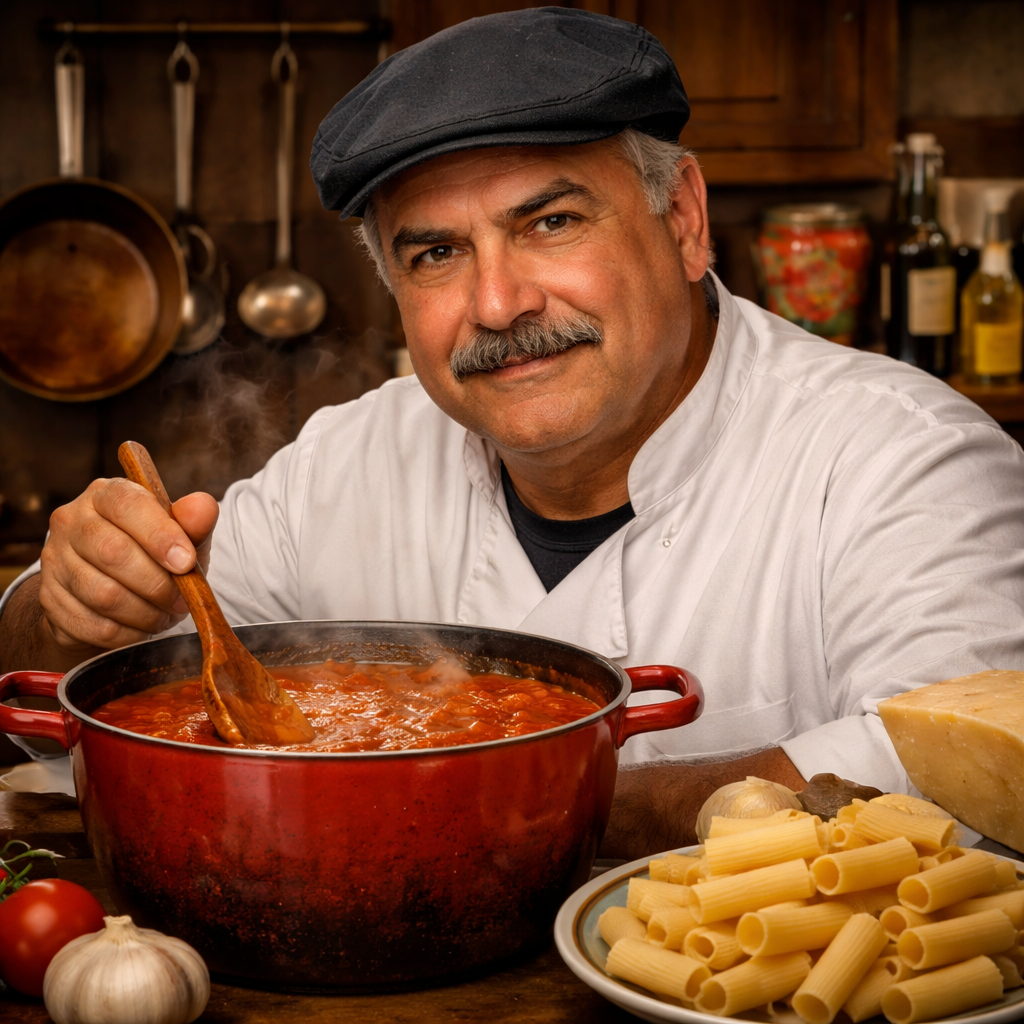
Simple ingredients, proper technique. That’s the whole game. I’ve been making béchamel since my first week in a professional kitchen — a French-trained chef threw a whisk at me because mine was lumpy. Never made a lumpy one since. White sauce pasta is one of those dishes that looks like nothing on paper and tastes like everything on the plate. It’s the kind of recipe Italian-American grandmothers perfected long before anyone called it “béchamel” in polite company.
My family calls it white sauce. My nonna called it salsa bianca. Whatever you call it, this is the version that ends debates at the dinner table. Creamy, silky, clinging to every strand of pasta without turning into glue. Learn this sauce and you’ve unlocked half the Italian kitchen.
This white sauce pasta is built on a proper roux — butter and flour cooked together before the milk goes in. That step is non-negotiable. Rush it and you get a floury, gloppy mess. Take your time and you get velvet. We’re making velvet today.
Why This White Sauce Pasta Recipe Works
- The roux is cooked properly — no raw flour taste, no lumps, no shortcuts
- Whole milk builds richness without being heavy — the balance Italian home cooks have always known
- Nutmeg finishes the sauce — one pinch and the whole thing comes alive, just like in Emilia-Romagna
- Pasta water is the secret weapon — a splash loosens and binds simultaneously
- Salt at every stage — pasta water, sauce, finish — layered flavor that restaurant food always has
Ingredients
For the Béchamel Sauce
- 3 tablespoons unsalted butter
- 3 tablespoons all-purpose flour
- 2½ cups whole milk, warmed
- ½ teaspoon kosher salt
- ¼ teaspoon white pepper (or black pepper)
- Pinch of freshly grated nutmeg
- ½ cup freshly grated Parmigiano-Reggiano
For the Pasta
- 1 pound penne, rigatoni, or fettuccine
- 2 tablespoons kosher salt (for pasta water)
- 2–3 tablespoons reserved pasta water
- Fresh parsley or basil, chopped, for garnish
- Extra Parmigiano-Reggiano for serving
Optional Add-Ins
- 2 cloves garlic, minced (sauté in butter before roux)
- 4 strips pancetta or bacon, cooked and crumbled
- 1 cup baby spinach, wilted in
- 1 cup frozen peas, stirred in at the end
- Pinch of red pepper flakes for heat
Instructions
Step 1: Boil the Pasta
Bring a large pot of water to a rolling boil. Salt it heavily — it should taste like mild seawater. Cook pasta two minutes shy of package directions. Reserve ½ cup pasta water before draining. The pasta finishes cooking in the sauce, so undercooking here is correct.
Step 2: Warm the Milk
Warm the milk in a small saucepan over low heat or in the microwave. Hot milk prevents lumps when it hits the roux. Cold milk shocks the butter-flour mixture and creates clumps. This one step separates smooth béchamel from lumpy disaster.
Step 3: Make the Roux
Melt butter in a heavy-bottomed saucepan over medium heat. Add flour all at once and whisk constantly for 2 minutes. The mixture should bubble, turn pale golden, and smell faintly nutty — that’s the raw flour cooking out. Don’t let it brown. This roux is the foundation of the entire sauce.
Step 4: Build the Béchamel
Add the warm milk in a slow, steady stream while whisking constantly. Don’t dump it all at once — that’s how lumps happen. Keep whisking as the sauce comes to a gentle simmer. Cook for 5–7 minutes, stirring frequently, until the sauce coats the back of a spoon. Season with salt, white pepper, and nutmeg. Stir in the Parmigiano-Reggiano until melted.
Step 5: Combine Pasta and Sauce
Add the drained pasta directly to the sauce and toss over low heat for 2 minutes. If the sauce is too thick, add pasta water one tablespoon at a time until it reaches a silky, flowing consistency. The pasta water starch helps the sauce cling without becoming gluey. Taste and adjust salt. Serve immediately.
Chef’s Tips & Common Mistakes
- Never stop whisking during the roux stage — walk away and it burns; burned roux means starting over
- Warm milk is non-negotiable — cold milk into hot roux is the number one cause of lumpy béchamel
- Don’t skip the nutmeg — it sounds minor but it’s what makes béchamel taste like béchamel
- Undercook the pasta by 2 minutes — it finishes in the sauce and absorbs flavor while cooking through
- Pasta water is your rescue tool — if the sauce seizes up, a splash loosens everything instantly
- Use real Parmigiano-Reggiano — pre-shredded cheese has anti-caking agents that prevent proper melting
Variations
- Baked White Sauce Pasta: Combine sauced pasta in a baking dish, top with mozzarella and breadcrumbs, bake at 375°F for 20 minutes until golden — a baked pasta recipe worth memorizing
- Spinach and Ricotta: Stir in 1 cup wilted spinach and ¼ cup ricotta for a richer, vegetarian version similar to penne alla vodka richness without the tomato
- Pancetta White Sauce: Render crispy pancetta first, sauté garlic in the fat, then build the roux — Italian-American flavor maximized
- Four-Cheese Version: Add Gruyère, fontina, and a touch of Gorgonzola along with the Parmigiano — not traditional but absolutely delicious
- Lighter Béchamel: Sub 1 cup of the milk for chicken or vegetable broth — fewer calories, still deeply flavorful, pairs well with creamy mushroom pasta technique
Storage & Reheating
Refrigerator: Store in an airtight container up to 3 days. The sauce will thicken as it cools — this is normal.
Reheating: Reheat in a saucepan over medium-low heat with a splash of milk or pasta water, stirring constantly. Do not microwave without covering — it dries the surface before the center heats through.
Freezer: Béchamel-based pasta does not freeze well — the sauce separates when thawed. Make fresh when possible.
Make-Ahead Sauce: The béchamel alone can be made 2 days ahead and refrigerated. Reheat gently with a splash of milk before tossing with fresh pasta.
Frequently Asked Questions
Why is my béchamel lumpy?
Two culprits: cold milk added to hot roux, or roux cooked too briefly. Always warm the milk before adding and whisk constantly. If lumps happen anyway, strain the sauce through a fine-mesh sieve and keep going.
Can I use low-fat milk?
Technically yes, but the sauce will be thinner and less rich. Whole milk gives the sauce its body. If cutting fat, compensate by using slightly more flour in the roux — about 3½ tablespoons instead of 3.
What pasta shape works best with white sauce?
Ridged shapes like rigatoni and penne hold the sauce in their grooves. Fettuccine gives maximum sauce contact per bite. Spaghetti works but the sauce slides off more easily — go with something with surface texture for best results.
Is béchamel the same as Alfredo sauce?
No — classic béchamel is butter, flour, and milk. True Roman Alfredo is butter and Parmigiano-Reggiano, no cream or flour. American Alfredo uses cream. The version here is a Parmigiano-enriched béchamel — closer to French technique but used in Italian-American style. See also: creamy sausage rigatoni for a related approach.
How do I know when the sauce is done?
Dip a wooden spoon into the sauce and run a finger across the back. The line should hold clean and not fill in. That’s nappe consistency — the classical standard for a finished béchamel.
Can I make this without butter?
Olive oil works as a butter substitute and gives the sauce an Italian lean. The result is slightly thinner and less rich but still delicious. Use the same ratio — 3 tablespoons olive oil to 3 tablespoons flour. See brown butter sage pasta for another fat-forward pasta approach.