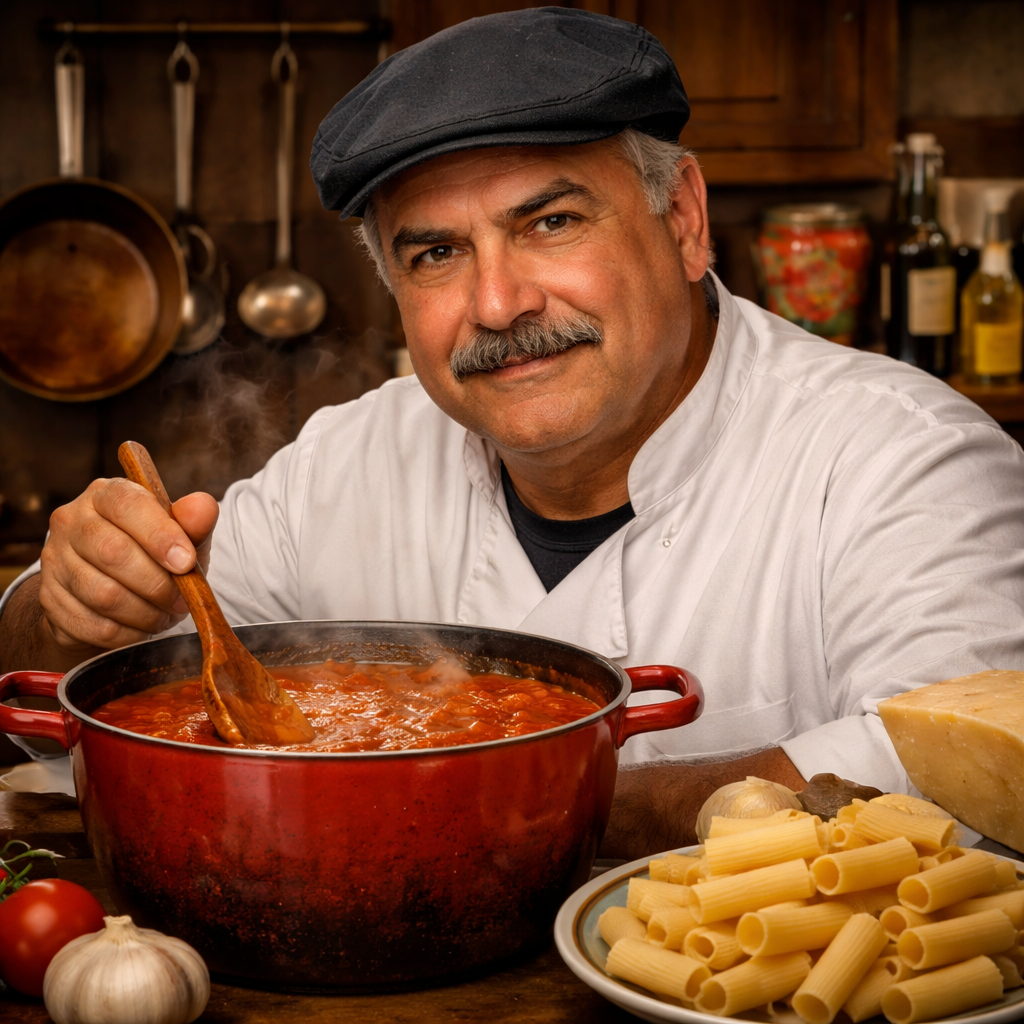
My mother made this every Sunday. I still can’t beat hers, but I’m close. Penne alla Vodka — Spicy Vodka Pasta — is the Italian-American dish that became a cultural touchstone in the 1980s and has never left the table since, for good reason. This is one of the great sauce techniques: a tomato-cream emulsion where the vodka does something that nothing else can replicate — it releases flavor compounds in the tomato and cream that are alcohol-soluble, meaning they’re only accessible when you add the vodka. The sauce you get with vodka is chemically, noticeably different from the sauce without it. That’s not a gimmick. That’s food science.
The Italian-American way with this sauce is no shortcuts, no compromises. The pancetta gets rendered properly. The shallots caramelize. The tomatoes cook down until sweet. The cream is added last and cooks just long enough to integrate. The vodka is added before the cream and cooked off properly. Every step earns its place, and skipping any one of them produces a sauce that almost gets there but doesn’t quite arrive.
The best Italian spicy vodka pasta penne alla vodka has three non-negotiables: San Marzano tomatoes, real Parmesan, and a proper simmer after the cream goes in. The sauce should be deep salmon-pink in color, slightly spicy from Calabrian chili or red pepper flakes, and rich enough to coat the back of a spoon without being heavy. That’s the version my mother served, and that’s the version worth making.
Why This Penne alla Vodka Recipe Works
- Vodka releases tomato flavor compounds that are otherwise inaccessible. Certain flavor compounds in tomato are fat-soluble (accessible through olive oil), some are water-soluble (accessible through the tomato itself), and some are alcohol-soluble. The vodka unlocks that third category, producing a more complete, more complex tomato flavor. This is why the sauce tastes different — because it is different.
- Pancetta adds fat and umami as the sauce foundation. Rendering pancetta before the aromatics builds a fat base and deposits crispy, salty pork flavor throughout the sauce. This step distinguishes a restaurant-quality alla vodka from a home version that tastes one-dimensional.
- San Marzano tomatoes provide a sweeter, less acidic base. The specific acidity and sugar content of San Marzano tomatoes produces a sauce that naturally balances without needing much correction. Regular crushed tomatoes work but require more adjustment.
- The cream simmers until integrated, not just added at the end. Cream poured in right before serving produces a sauce where the cream and tomato are adjacent rather than unified. A 5–7 minute simmer after adding cream creates a true emulsification — a unified sauce with the right color and texture.
- Finishing pasta in the sauce is the Italian standard. The pasta cooks for the last 2 minutes in the sauce, absorbing it and releasing starch into it. The sauce thickens slightly and the pasta is fully coated. This is the technique that separates pasta dishes from pasta with sauce.
Ingredients
For the Vodka Sauce
- 4 oz pancetta or guanciale, cut into small cubes (or 4 tbsp olive oil for vegetarian)
- 3 shallots, minced
- 4 cloves garlic, minced
- 1 tsp red pepper flakes (or 1 tbsp Calabrian chili paste)
- ½ cup quality vodka
- 1 can (28 oz) San Marzano crushed tomatoes
- ¾ cup heavy cream
- 2 tbsp cold unsalted butter
- ½ cup freshly grated Parmigiano-Reggiano
- Salt to taste
- 2 tbsp olive oil
For the Pasta
- 1 lb penne rigate (the ridges are important for sauce adherence)
- Kosher salt for pasta water
- Fresh basil for garnish
- Additional Parmigiano-Reggiano
Instructions
Step 1: Render the Pancetta
In a large skillet over medium heat, render the pancetta cubes in 1 tbsp olive oil until golden brown and crispy, about 6–8 minutes. The fat will render out and become the flavor base for the sauce. Remove crispy pancetta with a slotted spoon and set aside. Leave the rendered fat in the pan.
Step 2: Build the Aromatics
Add remaining olive oil to the pancetta fat over medium heat. Sauté shallots for 4–5 minutes until soft and starting to turn golden. Add garlic and red pepper flakes (or Calabrian chili paste), cook 1 minute until fragrant. The pepper blooms in the fat and its heat distributes through everything that follows.
Step 3: Add Vodka and Tomatoes
Pour in the vodka — it will sizzle. Stand back slightly — the alcohol vapor is potent. Cook, stirring, for 2–3 minutes until the sharp smell of alcohol has mostly dissipated. This is the alcohol cook-off that removes the harsh vodka taste while leaving the flavor compounds behind.
Add the crushed tomatoes. Stir to combine with all the aromatics and rendered fat. Bring to a simmer. Cook uncovered for 15 minutes until the sauce has thickened and the color has deepened from bright red to a darker, slightly brick-red.
Step 4: Add Cream and Finish Sauce
Meanwhile, cook pasta in generously salted boiling water until 1 minute short of al dente. Reserve 1 cup pasta water before draining.
Stir the heavy cream into the tomato sauce. Simmer together for 5–7 minutes until the sauce turns a deep salmon-pink and has thickened enough to coat a spoon. Taste and adjust salt. Return the crispy pancetta to the sauce.
Step 5: Finish the Pasta
Add drained pasta to the sauce. Toss over medium heat for 2 minutes, adding pasta water in small splashes to help the sauce coat every piece of penne. Remove from heat. Add cold butter and half the Parmigiano-Reggiano, toss until melted. Serve immediately in warm bowls with fresh basil and additional Parmesan.
Tips & Common Mistakes
- Use penne rigate, not smooth penne. The ridges on rigate capture the sauce and hold it against the pasta surface. Smooth penne lets the sauce slide. When the recipe is in the name (penne alla vodka), the pasta shape is intentional — use it.
- Cook off the vodka before adding tomatoes. Two to three minutes of cooking the vodka with the aromatics removes the harsh alcohol flavor while leaving the flavor compounds behind. Skipping this step produces a sauce with a noticeable alcohol taste.
- Simmer the cream until the sauce turns salmon-pink. The visual cue is the color. Pale pink means it needs more time. Deep salmon-pink is correct. This 5–7 minute simmer after the cream goes in is what creates the unified sauce instead of a tomato sauce with cream on top.
- Reserve the pasta water. This is pasta water’s most important appearance in any recipe. The starch in it emulsifies the cream-tomato sauce perfectly around each penne. Don’t forget to save it.
- Pancetta, not bacon. Bacon has a smoky, slightly sweet flavor that competes with the tomato. Pancetta is cured but not smoked, and its flavor is more neutral and compatible. Guanciale is the traditional choice and extraordinary if you can find it.
Variations
- Vegetarian Vodka Pasta: Skip the pancetta and start with 3 tablespoons of good olive oil. Add 1 tsp fennel seed with the aromatics for a subtle pork-like depth without the meat. Outstanding version.
- Shrimp alla Vodka: Add 1 lb large shrimp (peeled and deveined) to the finished sauce, cook 2–3 minutes until pink. Toss with pasta immediately. Coastal Italian-American and exceptional.
- Extra Spicy Version: Use Calabrian chili paste instead of red pepper flakes and double the amount. The Calabrian chili adds heat and fruity complexity that red pepper flakes can’t replicate.
- With Burrata: Serve the finished pasta topped with torn fresh burrata instead of Parmesan. The warm pasta sauce melts the burrata’s cream center into the dish. Restaurant-level presentation at home.
For more Italian-American pasta dishes, explore creamy mushroom pasta for the vegetarian version and white sauce pasta for the béchamel approach. The brown butter sage pasta is the butter-based Italian alternative. For a tomato-only variation, cherry tomato pasta is excellent alongside.
Storage & Reheating
- Refrigerator: Store sauce and pasta together for up to 4 days. The pasta absorbs the sauce overnight — add a splash of cream or broth when reheating.
- Sauce only: Freeze the vodka sauce (without pasta) for up to 3 months. Thaw overnight in the refrigerator, reheat gently. Cook fresh pasta when serving.
- Reheating: Stovetop over medium-low with a splash of cream or broth, stirring. 5–6 minutes on gentle heat restores the sauce completely. Add fresh Parmesan before serving. Avoid high heat — it can cause the cream to separate.
Frequently Asked Questions
Does the vodka need to be quality vodka?
No — use a mid-range, neutral vodka. The flavor compounds it releases from the tomato and cream are the goal, not the vodka flavor itself. Expensive or premium vodka provides no additional benefit in this application. A standard $15–$20 bottle is exactly right.
Can I make this alcohol-free?
You can substitute 3 tablespoons of white wine vinegar mixed with 1 tablespoon of lemon juice for the vodka. The alcohol-soluble flavor compounds won’t be fully accessible without alcohol, but the result is still a very good tomato-cream sauce. It’s not penne alla vodka technically, but it’s delicious.
Why is my sauce too acidic?
The tomatoes need more time to cook down, or they’re not San Marzano quality. Simmer the tomatoes for 5 more minutes before adding cream. A pinch of sugar and ¼ teaspoon of baking soda also neutralize excess acid directly. The pancetta fat should also help balance the acidity — if you skipped it, that’s a likely contributor.
What’s the difference between this and regular tomato cream sauce?
The vodka releases flavor compounds from the tomato and cream that are alcohol-soluble, producing a sauce with a more complex, complete flavor profile. It also contributes a slight heat and sharpness before it cooks off that rounds out the sweetness of the cream. Side by side, the vodka version is noticeably more interesting. That’s the science. That’s why it exists.