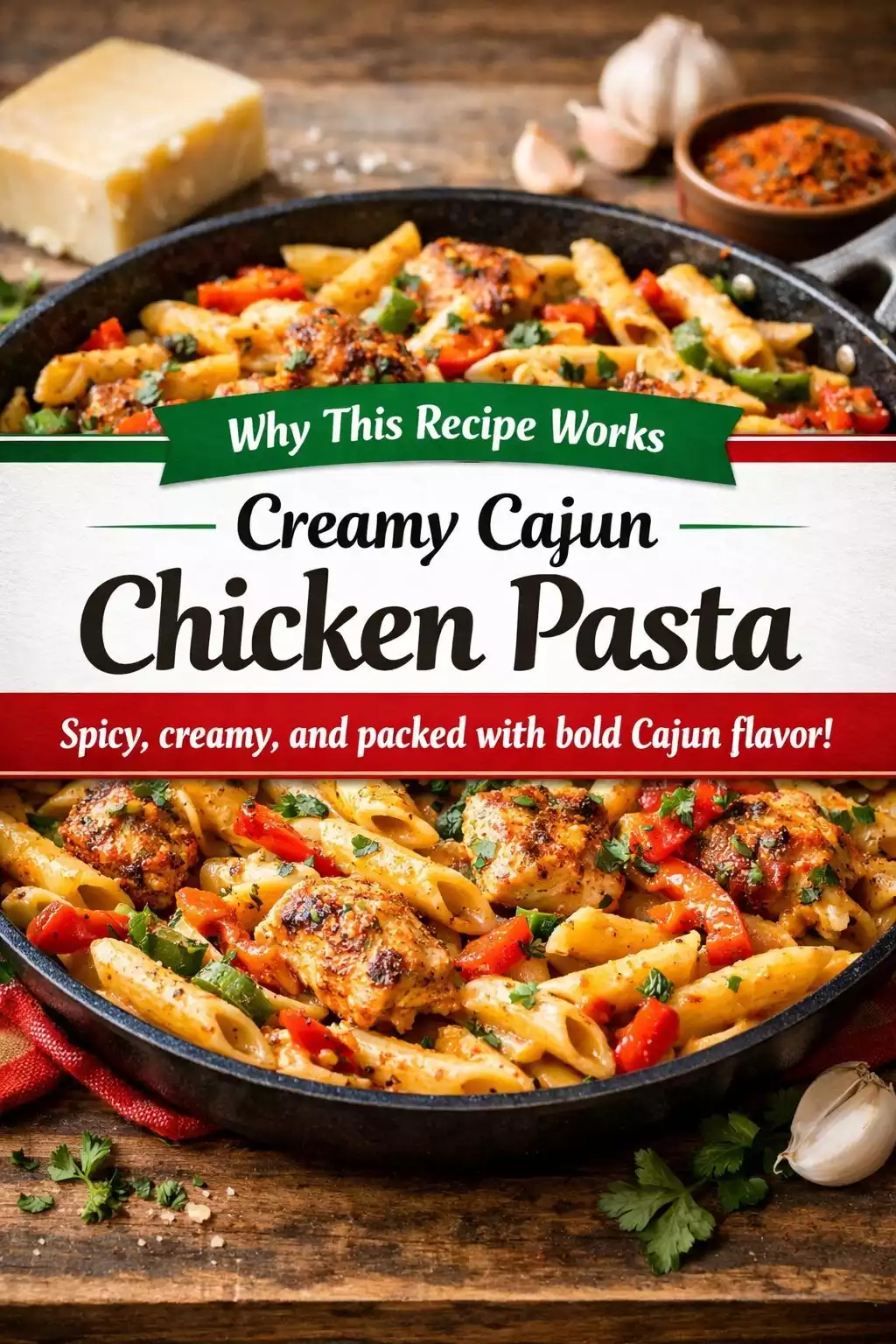
My nonna would’ve smacked me with a wooden spoon if I got this wrong. Creamy Cajun Chicken Pasta is the dish where Italian-American technique meets Southern American seasoning and the result is something neither tradition produces on its own. The cream sauce is Italian in its construction — properly built, properly reduced, finished with butter off the heat. The Cajun seasoning is American South in its bone structure — bold, smoky, slightly hot, and unapologetic. Together they produce a pasta dish that’s hard to stop eating and harder to forget.
This recipe ends all arguments because it delivers on every front simultaneously. The chicken is properly seared with a Cajun spice crust. The cream sauce has depth from the rendered chicken fond and the complexity of the spice blend. The pasta absorbs the sauce. The heat builds through the meal. No one ingredient dominates — they all support each other. That’s what makes a dish work versus a dish that just technically exists.
The best easy creamy Cajun chicken pasta requires two things done right: a properly made Cajun seasoning blend (not a pre-packaged one if you can help it — the salt content in commercial blends is usually excessive and the spices less fresh), and a cream sauce that has been allowed to actually reduce and develop flavor instead of being rushed from cold cream to finished dish in 60 seconds. These are the two points where this recipe succeeds or fails. Do both right.
Why This Creamy Cajun Chicken Pasta Recipe Works
- The Cajun-spiced sear on the chicken is the flavor anchor. The spice crust on the chicken caramelizes against the hot pan, building fond that becomes the backbone of the entire cream sauce. Properly seared Cajun chicken produces a completely different result from just-cooked chicken with spice sprinkled in.
- Homemade Cajun spice blend provides better control. Commercial blends contain varying amounts of salt that can make the final dish unpredictably salty. A simple homemade blend (paprika, cayenne, garlic powder, onion powder, thyme, oregano) takes 60 seconds to mix and tastes significantly fresher.
- Bell peppers and onion provide sweetness that balances the heat. The Trinity — onion, celery, and bell pepper — is the aromatic foundation of Cajun cooking for a reason. Here, bell pepper and onion provide the sweet, slightly earthy counterpoint that keeps the spice from dominating.
- The cream sauce reduces before the pasta goes in. A properly reduced cream sauce is thick, silky, and intensely flavored. A rushed cream sauce is thin, pale, and flat. Give the cream 5–7 minutes to reduce and develop before adding the pasta.
- Parmesan is the Italian component that ties it all together. A dish this Southern in spirit might not seem like a natural Parmesan moment, but the cheese’s umami and salt tie the cream and the Cajun spice into a unified sauce. Trust the Italian instinct here.
Ingredients
For the Cajun Chicken
- 1½ lbs boneless skinless chicken breasts or thighs, sliced into strips
- 1½ tsp smoked paprika
- 1 tsp garlic powder
- 1 tsp onion powder
- ½ tsp cayenne (adjust to heat preference)
- ½ tsp dried thyme
- ½ tsp dried oregano
- ½ tsp salt
- ¼ tsp black pepper
- 2 tbsp olive oil
For the Creamy Cajun Sauce
- 1 red bell pepper, sliced
- 1 green bell pepper, sliced
- 1 medium onion, sliced
- 4 cloves garlic, minced
- 1 tsp additional Cajun seasoning (from above blend)
- ½ cup dry white wine (or chicken broth)
- 1 cup heavy cream
- ½ cup pasta cooking water
- ½ cup freshly grated Parmigiano-Reggiano
- 2 tbsp cold unsalted butter
- Salt to taste
For the Pasta
- 12 oz penne or linguine
- Kosher salt for pasta water
- Fresh parsley or green onions for garnish
Instructions
Step 1: Season and Sear the Chicken
Mix all the Cajun spice blend ingredients. Toss chicken strips with the spice blend, coating thoroughly. Heat olive oil in a large skillet over medium-high heat until shimmering. Sear chicken strips for 2–3 minutes per side until deeply golden with a visible spice crust. Remove to a plate — the chicken may not be fully cooked through. It will finish in the sauce.
Step 2: Cook the Vegetables
In the same pan over medium-high heat, add the bell peppers and onion. Toss in the chicken fond and cook for 3–4 minutes until starting to soften and develop char at the edges. Add garlic and an additional teaspoon of Cajun seasoning. Cook 1 more minute. The vegetables should have some caramelization — not fully soft, not raw.
Step 3: Build the Cream Sauce
Meanwhile, cook pasta in heavily salted water until 1 minute short of al dente. Reserve 1 cup pasta water before draining.
Add white wine to the pan and deglaze, scraping up all the Cajun fond. Reduce by half, 2–3 minutes. Add heavy cream. Bring to a gentle simmer and cook for 5–7 minutes until the cream is slightly thickened and has turned a warm orange-red from the Cajun seasoning and peppers.
Step 4: Return Chicken and Finish
Return the seared chicken to the sauce. Stir to combine and cook 2–3 more minutes until the chicken is cooked through and the sauce has absorbed its flavor. Taste and adjust salt and cayenne.
Step 5: Finish with Pasta
Add drained pasta to the sauce. Toss over medium heat for 2 minutes, adding pasta water in splashes to loosen the sauce. Remove from heat, add cold butter and Parmigiano-Reggiano, and toss until incorporated. Serve immediately in warm bowls garnished with fresh parsley or sliced green onions.
Tips & Common Mistakes
- Control the heat level at the seasoning stage, not after. Adjust cayenne in the spice blend before the chicken goes into the pan. Once the cream is in, it’s difficult to add heat without adding raw cayenne that tastes harsh.
- Don’t skip the fond development. The spice crust on the chicken plus the vegetables caramelizing in that same fond creates the backbone of the Cajun cream sauce. A poorly developed fond produces a cream sauce that is merely cream with Cajun seasoning mixed in — not the same thing at all.
- Keep the bell peppers with some texture. Fully soft peppers blend into the background. Bell peppers with a slight bite provide sweetness and texture contrast against the creamy sauce. Don’t overcook them in step 2.
- Let the cream reduce before adding pasta. Five to seven minutes of cream simmering with the Cajun aromatics and fond is what transforms it from cream in a pan to a proper sauce. Patience here is directly rewarded.
- Chicken thighs over breasts for more forgiveness. The Cajun spice crust means the chicken exterior can look very done before the inside is cooked. Thighs have more fat and handle the high-heat sear more forgivingly than lean breasts.
Variations
- Cajun Shrimp Pasta: Replace chicken with 1 lb large shrimp, seasoned and seared the same way (1–2 minutes per side). Return with the spinach at the end rather than with the cream. Quick-cooking shrimp need minimal time in the sauce.
- Extra Creamy Version: Increase cream to 1½ cups and add 2 oz cream cheese to the sauce when adding the cream. Stir until fully melted. Richer, more substantial, and outstanding for cold-weather comfort.
- Lighter Version: Replace the cream with half-and-half and reduce the cook time to 3–4 minutes (be careful not to let it boil). Less rich, still excellent, and significantly fewer calories.
- Chicken Spaghetti Casserole Version: See chicken spaghetti casserole for a baked Cajun-style pasta casserole format. The Cajun cream sauce technique applies directly.
For more creamy pasta recipes, explore creamy Tuscan chicken pasta, high protein chicken pasta, and penne alla vodka. The Cajun direction connects to Southern cooking across the site, and the cream sauce technique ties directly to creamy sausage rigatoni and creamy mushroom pasta.
Storage & Reheating
- Refrigerator: Store for up to 4 days. The Cajun flavors deepen overnight. The pasta absorbs the sauce — add a splash of cream when reheating.
- Freezer: Freeze the sauce separately (without pasta) for up to 2 months. The cream sauce may separate slightly — reheat gently and stir vigorously to reintegrate. Cook fresh pasta when serving.
- Reheating: Stovetop in a skillet over medium-low with a splash of cream, stirring. 4–5 minutes. Add a squeeze of lemon juice when reheating to brighten the Cajun flavors. Microwave works — 90 seconds covered, stirring halfway.
Frequently Asked Questions
Can I use store-bought Cajun seasoning?
Yes — just taste the seasoning blend first. Many commercial Cajun blends are extremely salty. If using a commercial blend, reduce the salt in the recipe to zero and add it at the end after tasting. Tony Chachere’s and Slap Ya Mama are the most reliable commercial Cajun blends.
What pasta shape works best?
Penne is the classic choice — the spiced cream sauce fills the tubes and the ridges hold the sauce. Linguine also works well and produces a more elegant presentation. For a heartier dish, rigatoni or cavatappi hold up to the robust sauce beautifully.
Can I make this milder for kids?
Yes — reduce cayenne to a pinch and use mild smoked paprika as the primary spice. The resulting sauce has the Cajun aromatics (thyme, garlic, onion) without the heat. Even young palates often enjoy the bell pepper and cream combination this way.
Can I add andouille sausage?
Yes — slice andouille and render it first in the pan before the chicken. The rendered fat from the andouille replaces some of the olive oil and adds extraordinary smoky depth to the entire dish. This is actually the most deeply Cajun version of this recipe.