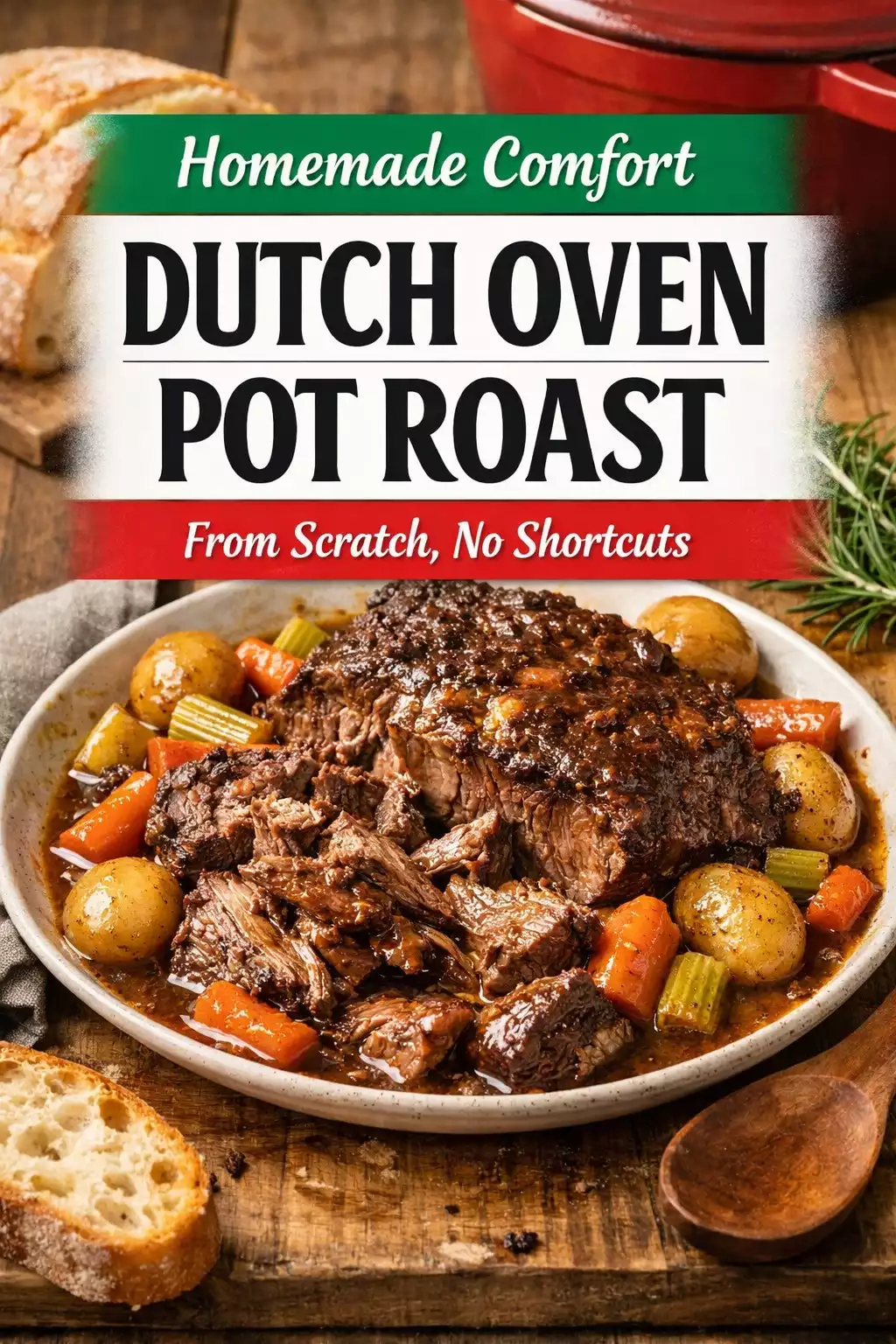
Pot roast is the dish that tells you everything you need to know about low and slow cooking. It starts with the toughest, least tender cut of beef available — the chuck roast, full of connective tissue and relatively lean muscle that would be unpleasant if cooked fast and dry — and through time and moisture and low heat, transforms that collagen into gelatin, that tough muscle into tender, pull-apart beef that produces its own glossy, rich sauce. It’s one of the great cooking transformations in the kitchen.
I’ll fight anyone who says this needs to be complicated. It doesn’t. A proper Dutch oven pot roast is one of the most straightforward dishes a home cook can make — properly browned, properly braised, with vegetables that absorb the flavor of the beef while releasing their own into the liquid. The technique is simple. The result is extraordinary. That’s what good cooking looks like.
This one pot meal is Sunday dinner territory. Plan for it, make time for it, and eat it at a table with people worth feeding.
Why This Recipe Works
- Chuck roast, specifically: The high collagen content in chuck converts to gelatin during a long braise, creating a silky, body-full braising liquid that becomes the sauce. Leaner cuts become dry and stringy.
- Deep sear on all sides: The Maillard reaction creates hundreds of flavor compounds that dissolve into the braising liquid. A pale roast produces a pale-tasting sauce.
- Dutch oven for oven braising: The heavy, tight-fitting lid traps steam and creates the steady 275–300°F environment that converts collagen without drying the meat. The oven’s surrounding heat is gentler and more uniform than stovetop braising.
- Aromatics and tomato paste: The vegetables provide sweetness and body; the tomato paste provides acid, umami, and color to the braise.
- Rest before shredding: Resting the roast covered for 20–30 minutes allows the juices to redistribute. Cutting immediately loses all the moisture you spent hours developing.
Ingredients
Main Ingredients
- 3–4 lb chuck roast
- Salt and black pepper (generous amounts)
- 2 tablespoons neutral oil
- 1 large onion, roughly chopped
- 4 cloves garlic, smashed
- 3 carrots, cut into 2-inch pieces
- 3 stalks celery, cut into 2-inch pieces
- 2 tablespoons tomato paste
- 1 cup beef broth
- 1 cup red wine (or additional beef broth)
- 1 sprig fresh rosemary
- 2 sprigs fresh thyme
- 2 bay leaves
- 1 lb baby potatoes (added in the last 60 minutes)
Instructions
Step 1: Preheat and Season
Preheat oven to 275°F (135°C). Pat the chuck roast completely dry on all surfaces. Season aggressively with salt and pepper on all sides, including the edges. The seasoning forms part of the crust during searing.
Step 2: Sear on All Sides
Heat oil in a large Dutch oven over high heat until shimmering. Sear the roast on each flat side and then the edges — 3–4 minutes per side undisturbed, until deeply browned and releasing from the pan easily. This takes 12–15 minutes total and is the most important step in the recipe. Remove roast to a plate.
Step 3: Build Aromatics
Reduce heat to medium. In the same pot, cook onion, carrots, and celery in the beef drippings for 5 minutes. Add garlic and tomato paste. Cook 2 minutes, stirring, until tomato paste darkens slightly. This darkening concentrates the tomato flavor and removes raw acidity.
Step 4: Deglaze and Braise
Add wine and scrape up all the fond from the bottom. Cook 1 minute to reduce slightly. Add beef broth, rosemary, thyme, and bay leaves. Return the roast to the pot — the liquid should come about halfway up the sides of the meat. Bring to a simmer.
Step 5: Long Oven Braise
Cover the Dutch oven tightly and transfer to the 275°F oven. Cook for 3.5–4.5 hours for a 3–4 lb roast. The meat is done when it’s completely tender and falls apart when pressed with a fork — not just cooked through, but fully transformed. Add baby potatoes in the last 60 minutes of cooking.
Step 6: Rest and Finish
Remove the pot from the oven. Transfer the roast to a cutting board and tent loosely with foil. Rest 20–30 minutes. Meanwhile, discard herb sprigs and bay leaves. If desired, reduce the braising liquid on the stovetop for 5–10 minutes until slightly thickened. Pull the beef into large chunks and serve with the vegetables and braising sauce poured over everything.
Pro Tips & Common Mistakes
- Season aggressively before searing: The crust is the first layer of flavor. Underseasoned crust = underseasoned roast, because the crust dissolves into the braise and becomes the sauce.
- Sear truly on all sides, including edges: Most people sear the two flat surfaces and call it done. Searing the edges too builds additional fond and creates an evenly browned crust.
- 275°F is not a mistake: The low temperature prevents the braising liquid from boiling, which would toughen the meat. The gentle simmer converts collagen slowly into the silky gelatin you want.
- The rest is not optional: Cut into a roast immediately and watch all the juice run out. Rest 20–30 minutes covered and the juice redistributes into the meat where it belongs.
- Don’t add too much liquid: The roast should partially baste in the liquid, not be submerged. Submerging produces boiled beef, not braised beef. Halfway up the side of the roast.
Variations Worth Trying
- Italian Pot Roast (Stracotto): Use a bottle of Chianti instead of wine/broth, add San Marzano tomatoes, and finish with fresh basil. The Italian-American version. Exceptional.
- Red Wine and Mushroom: Add 1 lb sliced cremini mushrooms to the aromatics and increase red wine to 1½ cups. Deep, earthy, and complex.
- Asian-Braised Chuck: Replace wine with ½ cup soy sauce, add ginger and star anise. Different direction, same technique, equally excellent result.
- Slow Cooker Adaptation: Sear on stovetop, transfer to slow cooker with all ingredients, cook on low 8–10 hours. See also this slow cooker dump beef stew for a similar slow-cooked beef approach.
- Leftovers as Tacos or Sandwiches: Shredded pot roast in tacos with pickled onion and cilantro, or on crusty bread with horseradish sauce. The second life of this recipe is as good as the first. See also this beef taco casserole, this dump and bake meatball casserole, this pizza casserole, this oven baked pork chops, and this homemade sloppy joes for more hearty beef and meat dinners.
Storage & Reheating
- Refrigerator: Up to 4 days in the braising liquid. The flavor improves overnight as the beef re-absorbs the sauce.
- Freezer: Up to 3 months in the braising liquid. Freeze in portioned containers. Thaw overnight in the refrigerator.
- Reheating: Covered in a low oven (300°F) for 20–25 minutes, or in the braising liquid on the stovetop over low heat. The braising liquid is what keeps it moist during reheating.
Frequently Asked Questions
Can I skip the sear if I’m short on time?
Technically yes. The roast will still be tender and flavorful. But you lose the depth that the Maillard reaction contributes to the sauce and the roast itself. The sear takes 15 minutes and is the single highest-return-on-time-invested step in the recipe. Don’t skip it.
What if I don’t have a Dutch oven?
Sear in a heavy skillet and transfer to a deep baking dish covered tightly with foil. The foil must form a tight seal — loose foil allows too much steam to escape. A Dutch oven is far superior; this is an acceptable workaround.
How do I know when the roast is done?
When a fork slides in without resistance and twisting the fork causes the meat to fall apart. Temperature is secondary here — the textural indicator of tender pull-apart meat is the correct target, not an internal temperature number.
Can I cook this faster at a higher temperature?
Higher temperatures produce a less tender, less silky result. The collagen conversion requires time at low temperature. At 325°F the roast will be done in 2.5–3 hours but will be slightly less tender and the sauce less rich. At 275°F, it’s worth the wait.
What wine should I use?
Any dry red wine you’d drink works. Chianti, Cabernet, Merlot, or Pinot Noir all produce slightly different results. Avoid cooking wine sold in bottles — the added salt and preservatives produce an off flavor. Use real wine, even if it’s a modest bottle.