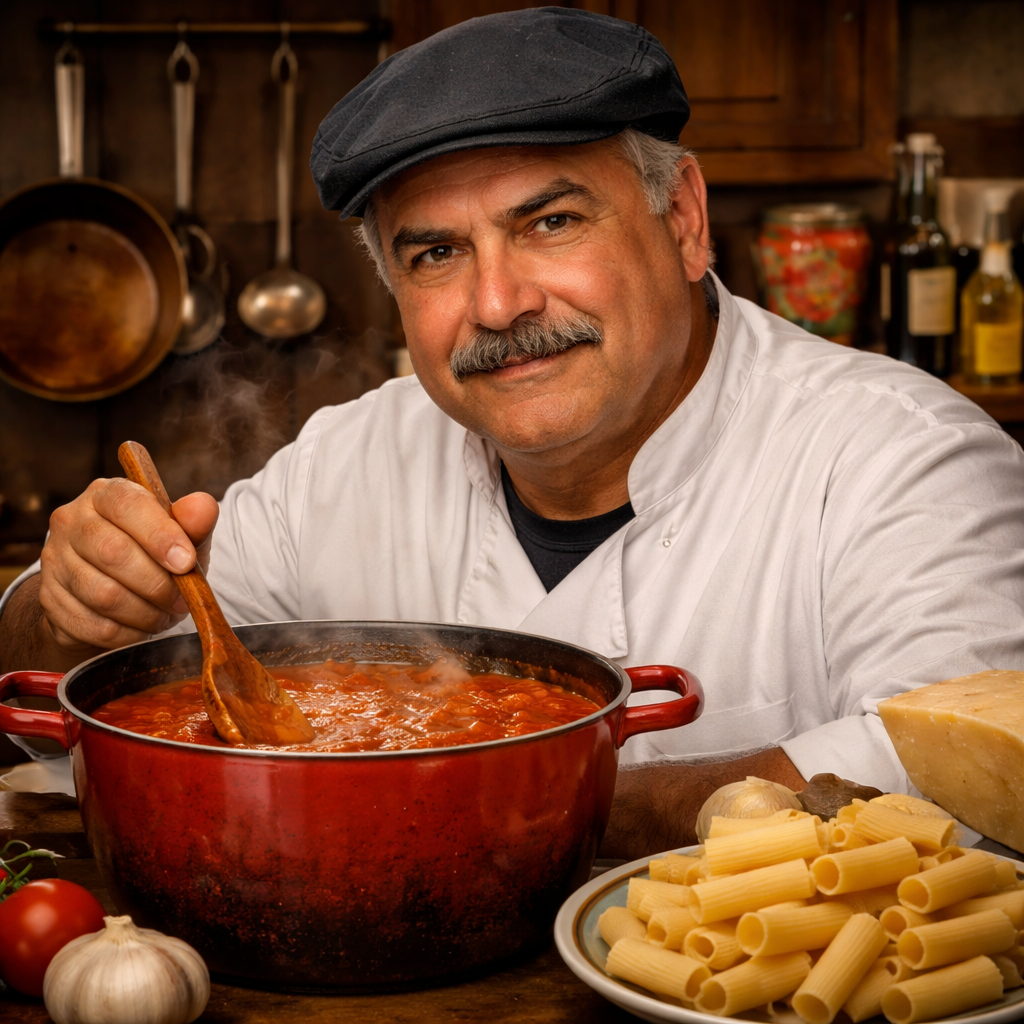
You think you know this dish? Sit down. Let me show you what polenta actually tastes like when it’s done right. Not the tube from the grocery store. Not the instant stuff from a packet that tastes like wet cardboard. Polenta from scratch, made low and slow, stirred with patience and finished with butter and cheese until it’s silk in a bowl. This is the dish my grandmother called cibo dei poveri — food of the poor. She made it sound like a compliment, because it was.
Polenta has been a staple of Northern Italian cooking for centuries. Before pasta conquered the Italian table, polenta was what fed families through long winters. Cornmeal, water, salt, heat, and time. That’s all it ever was. But what you do with those things — how you treat them, how patient you are — determines whether you get something transcendent or something you scrape into the trash.
I grew up eating polenta twice a week. Sometimes with braised short ribs ladled over the top. Sometimes just with a puddle of good olive oil and some pecorino. Either way, it was the meal that meant we were home. Once you make this from scratch, you’ll understand why the Italians never needed anything else.
Why This Polenta Recipe Works
- Coarse-ground cornmeal — Fine polenta cooks too fast and loses texture. Coarse-ground takes longer but develops a deeper corn flavor and a satisfying, slightly rustic consistency.
- Ratio of 4:1 liquid to cornmeal — This is the foundation. Too little liquid and you get a brick. Too much and it never tightens up. Four parts liquid to one part cornmeal is the sweet spot.
- Constant stirring at the start — The first 5 minutes of constant stirring prevents lumps from forming. After that, you can relax to occasional stirring, but that opening window is critical.
- Butter and cheese at the end — Fold in cold butter and freshly grated Parmigiano-Reggiano off the heat. This is the mantecatura — the technique that turns cooked polenta into something luxurious.
Ingredients
For the Polenta
- 1 cup coarse-ground polenta (not instant)
- 4 cups water (or chicken/vegetable broth for more flavor)
- 1 cup whole milk
- 1½ teaspoons salt
- 4 tablespoons unsalted butter, cold, cut into cubes
- 1 cup Parmigiano-Reggiano, freshly grated
- Black pepper to taste
Optional Finishing Touches
- Extra virgin olive oil, for drizzling
- Fresh herbs (rosemary, thyme, sage)
- Truffle oil (a few drops)
- Goat cheese or mascarpone (stir in at the end for creamier result)
Instructions
Step 1: Bring Liquid to a Boil
Combine water, milk, and salt in a heavy-bottomed pot over medium-high heat. Bring to a boil. Using milk alongside water adds richness without making the polenta too heavy. Broth instead of water adds another layer of savory depth — use whichever suits what you’re serving it with.
Step 2: Whisk in the Polenta
Once the liquid is boiling, reduce heat to medium and add the polenta in a slow, steady stream while whisking constantly. This is the moment where lumps either happen or they don’t. Whisk continuously for the first 3-4 minutes until the polenta has fully hydrated and there are no clumps. Once smooth, switch to a wooden spoon or a heavy silicone spatula.
Step 3: Cook Low and Slow
Reduce heat to the lowest setting. Cook, stirring every few minutes, for 35-45 minutes. Coarse polenta needs time to fully cook through — if the center of each grain isn’t tender, it’ll feel gritty on the tongue. The polenta is ready when it pulls away from the sides of the pot cleanly and a spoonful holds its shape briefly before spreading. Taste it — there should be no raw cornmeal texture.
Step 4: The Mantecatura Finish
Remove from heat. Add cold butter cubes and grated Parmigiano-Reggiano. Stir vigorously — this is the mantecatura, the Italian technique of emulsifying fat into the polenta for a silky, glossy finish. The cold butter hitting the hot polenta creates a creamy emulsion that no other finishing technique can replicate. Taste and adjust salt. Add black pepper to taste.
Step 5: Serve Immediately
Polenta waits for no one. Serve immediately in warm bowls. Ladle over braised meat, ragu, mushrooms, or roasted vegetables. Or serve simply with a drizzle of best-quality olive oil and a little extra Parmigiano on top. It’s a complete statement on its own.
Tips & Common Mistakes
- Don’t use instant polenta: It’s ready in 5 minutes and it tastes like it. Real polenta takes 40 minutes and tastes like a reason to be alive. The difference is not subtle.
- Don’t stop stirring at the start: The first 5 minutes are critical. If you walk away too early, lumps form and they’re very hard to fix without straining the whole batch.
- Watch for spattering: As polenta thickens, it bubbles and spits like molten lava. Keep the heat low and use a long-handled spoon. A splattered arm is a lesson learned the hard way.
- Season in layers: Salt the water first, then taste and adjust again at the finish. Polenta absorbs a lot of salt. Underseasoning is the most common complaint.
- If it gets too thick: Add warm water or broth a splash at a time and stir it in. Never add cold liquid — it shocks the polenta and changes the texture.
Variations Worth Trying
- Grilled Polenta Cakes: Pour cooked polenta into a greased baking dish to ¾-inch thickness. Let it set in the fridge for at least 2 hours. Cut into squares or rounds and grill or pan-fry in olive oil until golden and crispy. An entirely different dish from the same base.
- Cheesy Polenta with Fontina: Substitute fontina or taleggio for the Parmigiano. Both melt into the polenta more completely and create a stringier, richer result — especially good under braised meat.
- Herb Polenta: Stir in 2 tablespoons of chopped fresh herbs (rosemary, sage, thyme) during the last 5 minutes of cooking. The heat blooms the herbs into the cornmeal without making it bitter.
- Breakfast Polenta: Add extra butter, a touch of maple syrup, and top with a fried egg and crispy bacon. Polenta for breakfast is an Italian-American tradition that deserves to be revived.
For more Italian classics and sides that belong on the same table, try perfect sushi rice for technique comparison, homemade pierogi, classic panna cotta, and homemade basil pesto as a finishing sauce.
Storage & Reheating
- Refrigerator: Polenta sets completely when cooled and keeps for 4-5 days in an airtight container.
- Reheating creamy style: Add a splash of milk or water to a saucepan over medium-low heat. Break the polenta up and stir continuously as it warms, adding liquid as needed until it returns to its original silky texture. Add a bit more butter and cheese if desired.
- Reheating as polenta cakes: Let it set in the fridge, cut into slabs, and pan-fry or grill. No liquid needed — treat it like a solid cake and get that crispy exterior.
Frequently Asked Questions
What’s the difference between polenta and grits?
Both are ground corn cooked in liquid, but the corn variety is different. Polenta uses Italian flint corn, which has a firmer texture and slightly nuttier flavor. Southern grits use dent corn, which is softer and starchier. The technique is nearly identical — the result is similar but not the same.
Can I make polenta in a slow cooker?
Yes. Combine the polenta, liquid, and salt in a slow cooker on high for 2-3 hours, stirring every 30 minutes. Finish with butter and cheese before serving. This method is nearly hands-off and produces excellent results — especially for large batches.
Why is my polenta grainy?
It didn’t cook long enough. Coarse polenta needs 35-45 minutes of active cooking at low heat. The center of each grain must fully hydrate and soften. Taste before finishing — if there’s any raw crunch or grit, cook it longer with a splash more liquid.
What do I serve polenta with?
The honest answer is: anything braised, roasted, or sauced. Braised short ribs, mushroom ragu, roasted chicken with pan juices, lamb stew, Italian sausage with peppers. It’s also excellent as a base for sauteed greens and a fried egg. Polenta is the ultimate canvas.
Can I make it dairy-free?
Yes. Use all water or vegetable broth instead of milk. Replace butter with good olive oil — use a generous amount, about 3-4 tablespoons. Skip the Parmigiano or use a quality dairy-free alternative. It won’t be as rich, but it will still be good.