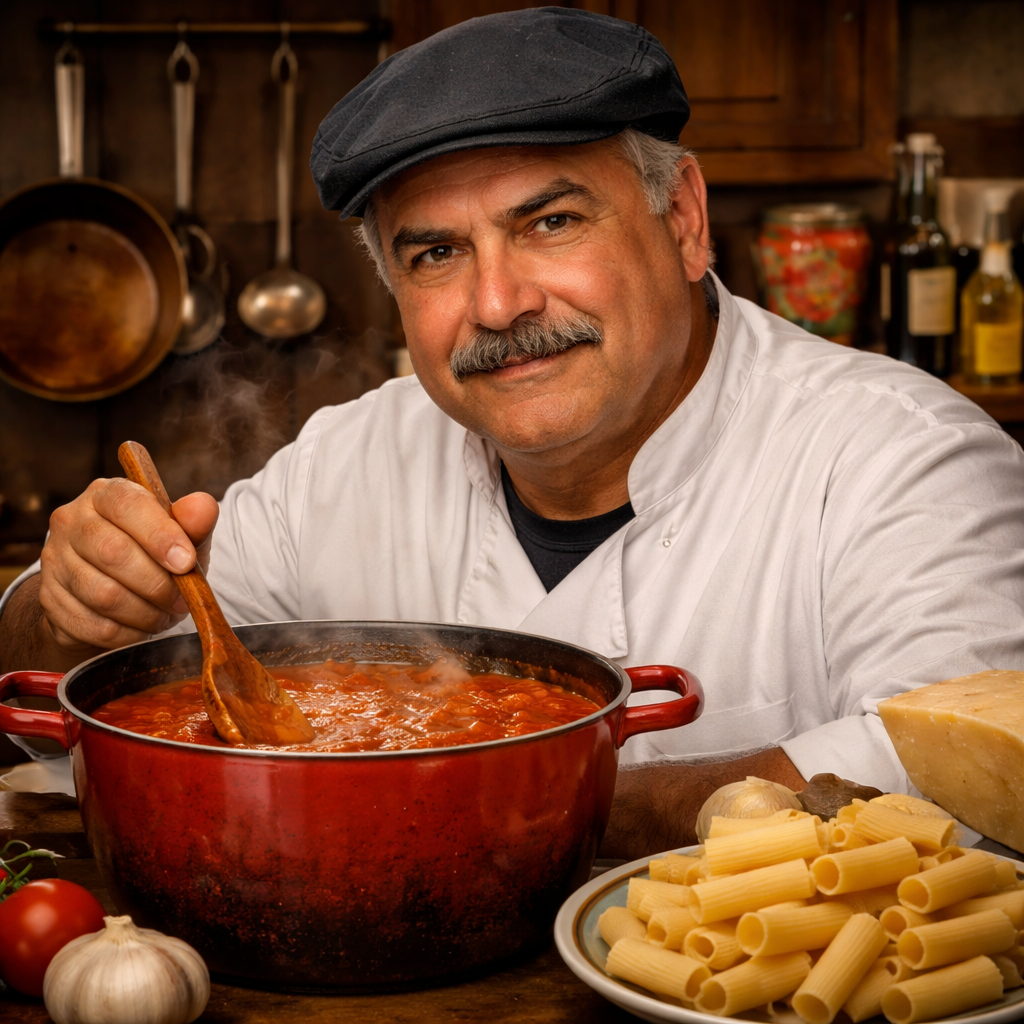
My old head chef used to say — if the aroma doesn’t hit the hallway, start over. Stuffed shells with ricotta is the dish I think of every time I hear that. When this goes in the oven, the whole house smells like Sunday in an Italian-American kitchen — blistering mozzarella, bubbling marinara, the faint sweetness of ricotta browning at the edges. It’s a smell that makes people wander into the kitchen to hover and ask how much longer.
My family has been making stuffed shells since before jumbo shells were a supermarket staple. My nonna used to stuff them with a ricotta mixture that had nothing in it except good ricotta, egg, Parmigiano, and black pepper. Simple was the whole point. The marinara carried the flavor and the baking did the rest. Thirty years of professional cooking later and I come back to the same recipe, maybe with a little more finesse in the layering, but the same spirit.
This stuffed shells with ricotta recipe makes the most of each component. The filling is properly seasoned so every shell delivers flavor, not bland dairy filling. The sauce is either a good jarred marinara or a quick homemade version. The mozzarella on top goes on in the last fifteen minutes so it melts and bubbles without burning. And the result — bubbly, golden, aromatic — is the centerpiece of any Italian-American table.
Why This Stuffed Shells Recipe Works
- Ricotta is properly drained — watery ricotta makes watery filling that collapses in the oven; draining it first keeps the shells intact
- Egg binds the filling — one egg per pound of ricotta gives the filling structure so it holds when eaten
- Sauce goes under and over — shells on bare baking dish dry out from the bottom; sauce on all sides keeps everything moist
- Mozzarella added late — cheese placed at the start burns before the shells heat through; adding in the last 15 minutes gives perfect melt with no brown
- Cover then uncover baking method — covered baking steams the filling through; uncovered finish blisters the cheese
Ingredients
For the Filling
- 2 lbs whole-milk ricotta, drained overnight or for at least 2 hours
- 2 eggs
- 1½ cups freshly grated Parmigiano-Reggiano
- 2 cups shredded low-moisture mozzarella, divided
- 2 tablespoons fresh flat-leaf parsley, chopped
- 1 teaspoon kosher salt
- 1 teaspoon freshly cracked black pepper
- ¼ teaspoon freshly grated nutmeg
For the Shells
- 1 box (12 oz) jumbo pasta shells
- 1 tablespoon kosher salt (for pasta water)
For Baking
- 4 cups marinara sauce (homemade or good-quality jarred)
- 1 cup shredded mozzarella (reserved for topping)
- ¼ cup freshly grated Parmigiano-Reggiano (for topping)
- Fresh basil for garnish
Instructions
Step 1: Drain the Ricotta
Place ricotta in a fine-mesh strainer set over a bowl. Refrigerate for at least 2 hours (overnight is better). The ricotta will release considerable liquid — discard it. This step is not optional. Undrained ricotta makes filling that weeps in the oven, dilutes the sauce, and makes shells that slide apart when served.
Step 2: Cook the Shells
Bring a large pot to a boil. Salt generously. Cook shells 2 minutes shy of package directions — they’ll continue cooking in the oven. Drain and spread on a lightly oiled sheet pan in a single layer so they don’t stick to each other. Cool until handleable.
Step 3: Make the Filling
In a large bowl, combine drained ricotta, eggs, Parmigiano-Reggiano, 1 cup of the mozzarella (reserving the other cup for topping), parsley, salt, pepper, and nutmeg. Mix well. The filling should be creamy, cohesive, and hold its shape on a spoon. Taste and adjust seasoning — well-seasoned filling is what separates good stuffed shells from bland ones.
Step 4: Assemble
Preheat oven to 375°F. Spread 1½ cups marinara in the bottom of a 9×13 baking dish. Fill each shell with a generous tablespoon of ricotta filling — overfill slightly so the tops are rounded. Place filled shells open-side up in the baking dish in a single layer. Spoon remaining marinara over and around the shells. Cover tightly with foil.
Step 5: Bake
Bake covered at 375°F for 25 minutes. Remove foil, scatter reserved mozzarella and Parmigiano evenly over the top. Continue baking uncovered for 15 more minutes until cheese is melted, bubbly, and golden in spots. Let rest for 10 minutes before serving — this rest is what allows the filling to set so the shells stay together when served. Garnish with fresh basil.
Chef’s Tips & Common Mistakes
- Drain the ricotta — every time, no exceptions — this is the most skipped step and the most important
- Undercook the shells — they bake in the oven for 40 minutes total; fully cooked shells turn mushy before the filling sets
- Cool shells on an oiled sheet pan — dumped in a colander, they stick together and tear when you try to fill them
- Nutmeg in the filling is essential — one small pinch changes everything about the flavor profile; don’t skip it
- Don’t skip the rest period — cutting into shells straight from the oven releases steam and the filling loses structure; 10 minutes changes the serving experience completely
- Sauce under and over — bare-bottom shells bake unevenly and stick to the dish; sauce contact on all sides keeps them moist
Variations
- Spinach and Ricotta: Add 1 cup thawed, squeezed-dry frozen spinach to the filling — a related technique to spinach ricotta cannelloni
- Meat Version: Add ½ lb cooked, crumbled Italian sausage or ground beef to the ricotta filling
- Three-Cheese Shells: Add ½ cup whole-milk ricotta and ¼ cup Gruyère alongside the standard cheeses for a more complex filling
- Vodka Sauce Version: Substitute vodka sauce for marinara — the cream-tomato sauce adds richness reminiscent of Alfredo technique
- Baked Shells Primavera: Add diced sautéed zucchini and bell pepper to the ricotta filling for a vegetable-forward version
- Cannelloni-Style: Skip the shells and roll the filling in cooked lasagna sheets — the same dish, slightly different presentation, see homemade lasagna for the sheet pasta approach
Storage & Reheating
Refrigerator: Store covered up to 4 days. Stuffed shells actually improve slightly on day two as the flavors meld.
Reheating: Cover with foil and reheat at 350°F for 20 minutes, or microwave individual portions covered with a damp paper towel. Add a spoonful of sauce on top before reheating to prevent drying.
Freezer: Assemble completely but don’t bake. Freeze covered up to 3 months. Bake from frozen covered at 375°F for 50 minutes, then uncovered for 15 more minutes. Or thaw overnight in the refrigerator and bake as directed.
Make-Ahead: The filling keeps refrigerated up to 2 days. Assemble day-of for best results.
Frequently Asked Questions
Why do my stuffed shells fall apart when serving?
The ricotta wasn’t drained, the shells weren’t given a rest period after baking, or both. Watery filling loses its structure and shells collapse when lifted. Properly drained ricotta and a 10-minute rest after baking keeps every shell intact and cohesive. See also baked ziti for a ricotta-based baked pasta where drainage matters equally.
Can I make stuffed shells ahead?
Yes — assemble completely through the foil-covering step and refrigerate up to 24 hours before baking. Add 10 minutes to the covered baking time to account for the cold start. This makes stuffed shells perfect for dinner parties or Sunday meal prep.
How many shells does one batch make?
A standard 12 oz box yields 30–35 shells. With 2 lbs of ricotta filling, each shell gets a generous tablespoon plus, filling all 30–35 shells. This serves 6–8 people as a main course. The recipe scales down easily for smaller households.
Should I use whole-milk or part-skim ricotta?
Whole-milk ricotta gives a creamier, richer filling with better flavor. Part-skim works but the result is slightly dryer and less flavorful. Either drains the same way. For a baked pasta dish where the filling is the center of attention, whole-milk is worth the calories. See cacio e pepe for a contrast — a pasta where dairy does its work as a sauce, not a filling.
Can I use a different sauce?
Marinara is classic, but béchamel white sauce makes an elegant alternative, see white sauce pasta for the technique. Meat ragù makes a heartier version. Vodka sauce is a popular variation. The only requirement is that the sauce is generous enough to keep the shells moist during baking and flavorful enough to carry the relatively mild ricotta filling.