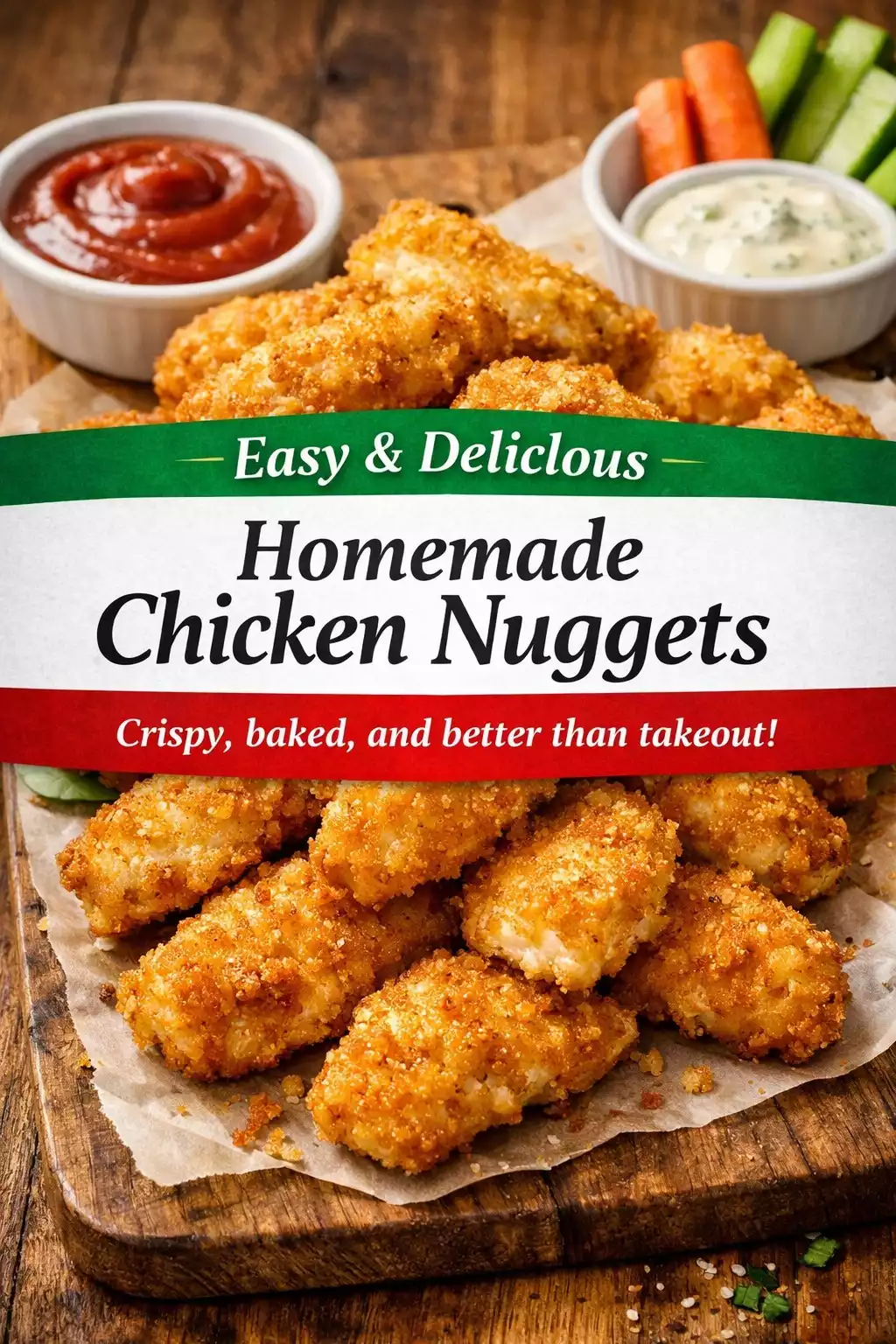
I‘ll fight anyone who says this needs to be complicated. Baked Chicken Tenders are proof that good technique and a few smart ingredient choices are worth more than any special equipment or hours in the kitchen. A proper baked tender has a genuinely crispy, flavorful crust — not a pale, soft coating that tastes like it was steamed instead of baked. Achieving that from a home oven requires two things: the right preparation and the right technique. Once you understand both, these come out right every single time.
My grandkids eat these on a weekly basis. They’ve never ordered a chicken tender at a restaurant since I started making these, which I consider a serious endorsement. These aren’t the same as fast food tenders — they’re better, because they’re made from whole chicken tenderloins with a coating that’s actually seasoned and actually crunchy. Better ingredients, better result, fraction of the cost, made at home.
The best easy baked chicken tenders use the same baking powder technique that makes baked chicken skin crispy: a small amount of baking powder in the coating raises the pH of the surface and dramatically accelerates browning and crunch. Combined with panko breadcrumbs and a proper wire rack setup, this method produces a baked tender that genuinely rivals the fried version. Let’s build it right.
Why This Baked Chicken Tenders Recipe Works
- Baking powder in the coating creates real crunch from the oven. Baking powder raises the surface pH and encourages the Maillard reaction, the same browning process that creates crispy skin on roasted chicken. A small amount in the panko mixture produces dramatically crispier tenders without any frying.
- A wire rack over a sheet pan is mandatory. Tenders sitting directly on a sheet pan steam on the bottom and come out soft. Elevated on a rack, air circulates underneath and the entire surface crisps. This one setup change makes the biggest difference of any single technique in this recipe.
- Buttermilk marinade tenderizes and adds flavor. Even 30 minutes in buttermilk produces a more tender, moist tender with noticeably better flavor penetration. Overnight produces exceptional results. The acid in buttermilk breaks down surface proteins and acts as a brine.
- Panko beats regular breadcrumbs for crunch. Panko is lighter, coarser, and drier than regular breadcrumbs. In the oven, it puffs and crisps where regular breadcrumbs compact and stay dense. For baked applications, panko is the professional standard.
- 425°F is the right temperature. Lower temperatures produce soft, pale tenders. 425°F is hot enough to dehydrate the coating quickly and produce real browning within the cook time of the tender (15–18 minutes). Use a thermometer to confirm 165°F internal temp.
Ingredients
For the Marinated Chicken
- 1½ lbs chicken tenderloins (or chicken breast cut into strips)
- ½ cup buttermilk
- ½ tsp kosher salt
- ½ tsp garlic powder
- ¼ tsp cayenne (optional)
For the Coating
- ¾ cup all-purpose flour
- ½ tsp salt
- ½ tsp garlic powder
- 1½ cups panko breadcrumbs
- 1 tsp garlic powder
- 1 tsp smoked paprika
- ½ tsp onion powder
- ½ tsp salt
- ½ tsp black pepper
- 1 tsp baking powder
- Cooking spray or 2 tbsp neutral oil for misting
Instructions
Step 1: Buttermilk Marinade
Combine chicken tenderloins with buttermilk, salt, garlic powder, and cayenne in a zip-lock bag or bowl. Marinate for minimum 30 minutes at room temperature or up to 24 hours refrigerated. If refrigerating overnight, bring to room temperature 20 minutes before coating.
Step 2: Set Up the Coating Station and Oven
Preheat oven to 425°F. Place a wire rack on a rimmed sheet pan. Set up two bowls: bowl 1 = flour + ½ tsp salt + ½ tsp garlic powder; bowl 2 = panko + all remaining panko seasoning including the baking powder. Mix each thoroughly.
Step 3: Dredge the Tenders
Remove each tender from the buttermilk, letting excess drip off (don’t wipe). Coat in the seasoned flour, shake off excess. The buttermilk remaining on the tender is what the flour adheres to — that’s why you don’t wipe it. Press firmly into the panko mixture, ensuring full coverage on all sides. Place on the prepared rack.
Step 4: Oil and Bake
Spray the coated tenders lightly but thoroughly with cooking spray, or brush gently with a small amount of oil. Every surface should have a light coating of fat — this is what enables browning in the oven. Without it, the panko may look done but won’t be crispy.
Bake at 425°F for 15–18 minutes until golden brown and internal temperature reaches 165°F. Don’t flip — the rack takes care of both sides.
Step 5: Rest and Serve
Remove from the oven and let rest 2–3 minutes on the rack before serving. The crust continues to crisp slightly as it cools. Serve immediately with dipping sauces of choice — honey mustard, ranch, buffalo sauce, or ketchup.
Tips & Common Mistakes
- Don’t skip the buttermilk marinade. Even 30 minutes changes the texture and flavor of the finished tender noticeably. The buttermilk breaks down surface proteins, resulting in more tender meat and better sauce adhesion during dipping.
- Spray every surface with oil. This is the step most people underdo. Every visible panko surface needs a light coating of fat for the oven to crisp it. A light, even spray is better than a heavy spot-application. Pale, powdery patches after baking indicate insufficient oil coverage.
- Use a wire rack. This is the single most important equipment choice. Without it, the bottom of the tender steams against the pan and comes out soft and damp. The rack is non-negotiable.
- Baking powder, not baking soda. They are completely different compounds with completely different effects. Baking powder produces crispy browning. Baking soda produces soapy, bitter flavor. Check the label — they look identical.
- Don’t overcrowd the rack. Tenders touching each other create steam between them and the neighboring surfaces don’t crisp. Leave a small space between each tender on the rack.
Variations
- Honey Mustard Glazed Tenders: In the last 5 minutes of baking, brush tenders with a honey-Dijon glaze. Return to oven for the final 5 minutes. The glaze caramelizes beautifully over the crispy base.
- Spicy Tenders: Add 1 tsp cayenne and 1 tsp hot sauce to the buttermilk marinade. Double the paprika in the panko coating. Serve with ranch to cool the heat.
- Parmesan Tenders: Mix ½ cup finely grated Parmesan into the panko coating. The cheese melts and caramelizes in the oven, adding extraordinary savory depth and a slightly richer crust.
- Air Fryer Version: Air fry at 400°F for 10–12 minutes, flipping halfway. Spray generously with oil before and halfway through. The air fryer version is excellent and slightly crispier than the oven version due to the circulating hot air.
For more crispy chicken options, see mini chicken meatballs and crispy baked chicken thighs. For the lemon-herb baked approach, lemon herb baked chicken breast is excellent. The spicy version connects naturally to chicken 65 and buffalo chicken dip.
Storage & Reheating
- Refrigerator: Store in an airtight container for up to 4 days. The coating softens in the fridge but reheats very well.
- Freezer: Freeze baked tenders in a single layer on a sheet pan, then transfer to a bag for up to 2 months. Reheat from frozen in a 400°F oven for 12–15 minutes on a wire rack.
- Reheating: Oven at 400°F on a wire rack for 8–10 minutes (refrigerated). Air fryer at 375°F for 5–6 minutes. Both methods restore significant crunch. The air fryer may actually improve on the original for texture. Avoid the microwave for anything involving breading.
Frequently Asked Questions
Can I use chicken breast instead of tenderloins?
Yes — cut chicken breast into 1-inch wide strips, cutting against the grain. They’ll be slightly thicker than tenderloins, so add 2–3 minutes to the bake time. Tenderloins are more uniform in size and cook more evenly, but breast strips work very well.
What dipping sauces work best?
Classic pairings: honey mustard (Dijon + honey + mayo), ranch dressing, buffalo sauce with ranch for dipping, or honey. For a grown-up version, a hot honey drizzle with fresh thyme is outstanding. BBQ sauce is always acceptable and never wrong.
Can I make these gluten-free?
Yes — substitute the all-purpose flour with rice flour or a gluten-free flour blend. Use gluten-free panko breadcrumbs (widely available). The technique is identical. The result is slightly different in texture but still very good.
How do I keep baked tenders warm for a party without losing crunch?
Keep finished batches on a wire rack in a 200°F oven. The low heat maintains temperature without continuing to cook, and the wire rack prevents the bottom from steaming. Hold for up to 30–40 minutes. Beyond that, the crust starts to soften regardless.