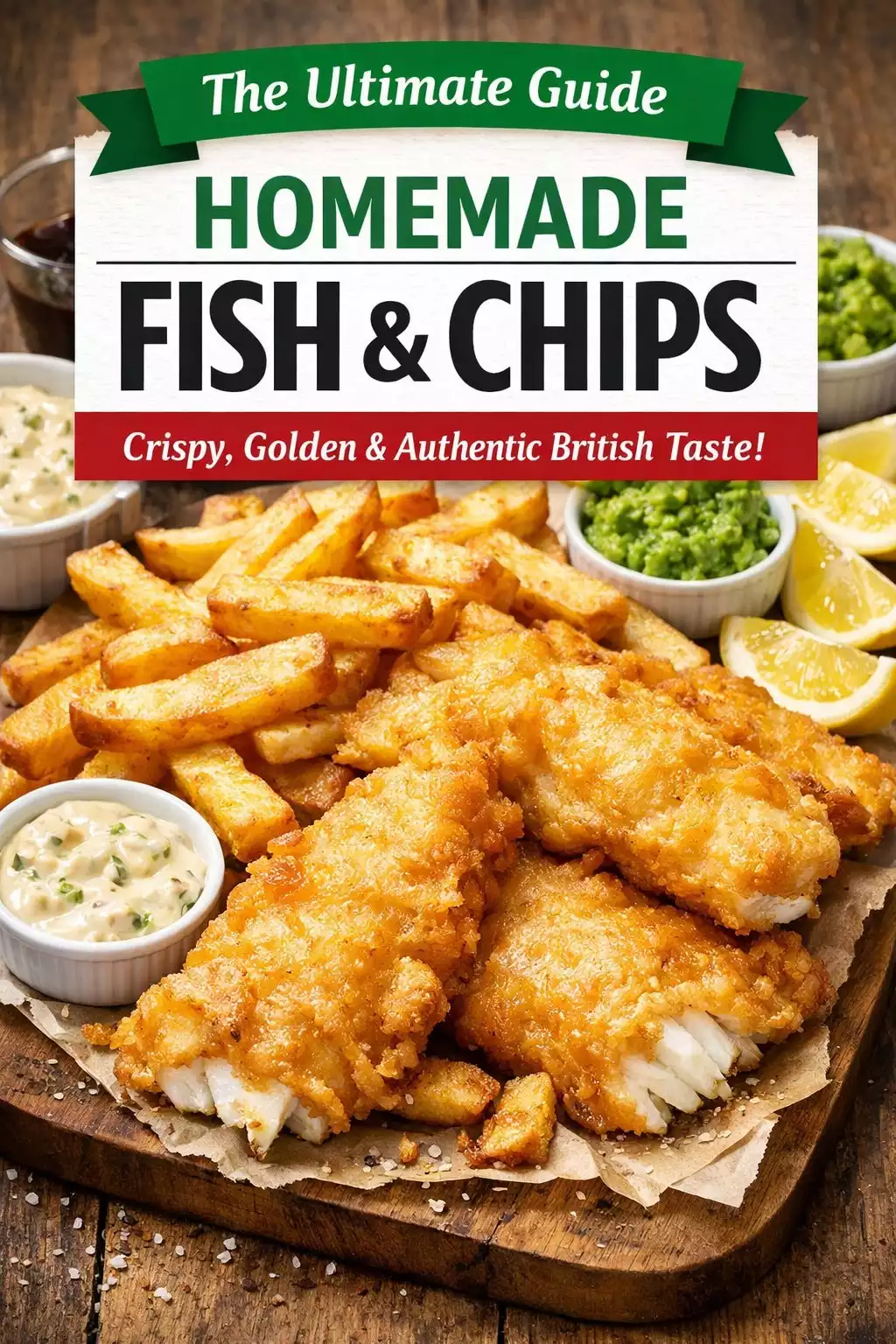
Fish and chips belong to the British the way pizza belongs to the Italians — they didn’t invent the components, but they assembled them into something that became a cultural institution. The British chippy — the fish and chip shop — is one of the great democratic eating institutions in the world. Hot, crispy, salty, vinegar-sharp. There’s nothing pretentious about fish and chips, and that’s precisely what makes it worth doing properly.
I spent 30 years in kitchens so you don’t have to mess this up. The secrets are straightforward: cold batter, hot oil, and the willingness to fry in stages rather than crowding the pan. Cold batter hitting hot oil creates the steam that makes the coating light and crispy rather than heavy and greasy. Every shortcut produces a shortcut result. Follow the technique and you get fish and chips that would be at home in any proper British chippy.
This family dinner recipe is the homemade version worth making at least once. It’s a project, not a Tuesday-night dinner — but the result is something that earns its place at any table.
Why This Recipe Works
- Beer batter (or sparkling water): The carbonation in beer or sparkling water creates bubbles that expand during frying, producing a lighter, crispier coating than egg-and-flour batter without carbonation.
- Cold batter and hot oil: The temperature differential is the mechanism of crispy batter. Cold batter hitting 375°F oil causes immediate steam explosion that puffs the coating before it sets. Warm batter doesn’t produce this effect.
- Double-fried chips: Traditional chips (thick-cut fries) are blanched in lower-temperature oil first to cook the interior, then fried at high heat to crisp the exterior. This produces chips that are fluffy inside and genuinely crispy outside.
- White fish with firm flesh: Cod, haddock, or pollock hold together during frying without falling apart and have a mild flavor that lets the batter and seasoning be the star.
- Draining on a rack, not paper towels: Paper towels trap steam and make the bottom of fried food soft. A wire rack allows air circulation on all sides, maintaining crispness.
Ingredients
For the Fish
- 1.5 lbs cod, haddock, or pollock fillets, cut into 4–6 oz portions
- Salt and black pepper
- ½ cup all-purpose flour (for dredging)
For the Beer Batter
- 1 cup all-purpose flour
- 1 teaspoon baking powder
- 1 teaspoon salt
- ½ teaspoon garlic powder
- ½ teaspoon smoked paprika
- 1 cup cold beer (lager) or cold sparkling water
For the Chips
- 3 large russet potatoes, cut into thick strips (½ inch wide)
- Vegetable or canola oil for frying (enough to fill pot 3–4 inches deep)
- Salt
For Serving
- Malt vinegar
- Tartar sauce
- Mushy peas (optional, traditional)
- Lemon wedges
Instructions
Step 1: Prepare the Chips (First Fry)
Cut potatoes into thick strips, soak in cold water 20–30 minutes to remove surface starch, then dry completely. Heat oil in a large heavy pot to 325°F (165°C). Fry potato strips in batches for 5–6 minutes until pale and cooked through but not yet golden. They should be floppy, not crispy. Remove to a rack and let cool at room temperature. This can be done up to 2 hours ahead.
Step 2: Make the Batter
Whisk together flour, baking powder, salt, garlic powder, and smoked paprika. Add cold beer (or cold sparkling water) all at once and whisk until just combined — a few lumps are fine. The batter should be thicker than cream but thinner than pancake batter. Refrigerate until needed. Keep it cold.
Step 3: Season and Dredge Fish
Pat fish portions completely dry — any surface moisture prevents batter from adhering. Season with salt and pepper. Dredge each piece lightly in plain flour, shaking off excess. The flour gives the batter something to cling to during frying.
Step 4: Fry the Fish
Heat oil to 375°F (190°C). Working in batches of 2–3 pieces, dip flour-dredged fish into cold batter and let excess drip off. Carefully lower into hot oil away from you. Fry 5–7 minutes, turning once, until deeply golden and crispy. The batter should be uniformly golden, not pale in spots. Remove to a rack and season immediately with salt.
Step 5: Second-Fry the Chips
Increase oil temperature to 375°F. Fry the blanched chips in batches for 3–4 minutes until golden and crispy. Remove to a rack, season generously with salt immediately. Serve with malt vinegar shaken over the top, not poured — the shaken application distributes evenly without making them soggy.
Pro Tips & Common Mistakes
- Keep the batter cold: This is the single most important technique instruction. A warm batter doesn’t produce the steam expansion that creates crispy, light coating. Refrigerate it and use it immediately from the fridge.
- Don’t crowd the pan: Adding too many pieces of fish or chips at once drops the oil temperature dramatically. The food steams rather than fries, producing a greasy result. Fry in small batches.
- Dry the fish completely before dredging: Wet fish prevents batter adhesion. The batter slides off during frying. Pat dry until no moisture is visible on the surface.
- Double fry the chips: Single-fried chips are good. Double-fried chips are perfect. The first fry cooks the interior; the second fry creates the exterior crunch. Don’t skip the blanch.
- Season immediately out of the oil: Salt adheres to hot, slightly wet food. Salt added after cooling just falls off.
Variations Worth Trying
- Tempura-Style: Replace beer batter with tempura batter (flour, egg, ice-cold water, mixed minimally until lumpy). Lighter, more delicate coating. Japanese technique applied to British fish.
- Cornmeal Crust: Replace beer batter with a seasoned cornmeal and flour mixture. Southern-style fish fry that produces a crunchier, grittier coating.
- Baked Version: Dredge fish in seasoned panko breadcrumbs and bake at 400°F for 18–22 minutes. Not traditional fish and chips, but a significantly lower-fat version. Serve with oven-baked fries.
- Shrimp and Chips: Use extra-large shrimp instead of fish fillets. Batter and fry identically. A crowd-pleasing alternative.
- Fish Tacos from Leftovers: Leftover fried fish in a flour tortilla with shredded cabbage, lime crema, and hot sauce. One of the best uses of day-old fried fish. See also this shrimp scampi recipe, this one pot Spanish chicken and rice, this one pot Greek lemon chicken, this dump and bake chicken parmesan, and this family pasta bake for more family dinner and seafood options.
Storage & Reheating
- Best eaten immediately: Fried fish is at its peak quality within 10 minutes of coming out of the oil. The crunch degrades significantly over time.
- Leftover storage: Airtight container in the refrigerator up to 2 days. The coating softens considerably.
- Reheating: A 375°F oven or air fryer for 8–10 minutes restores significant crispness. Avoid microwave — it makes fried fish rubbery and soggy. The air fryer is the best reheating method for fried food.
Frequently Asked Questions
What oil is best for frying?
Vegetable, canola, or peanut oil — high smoke points and neutral flavor. Avoid olive oil, which has a lower smoke point and will begin smoking before reaching frying temperature. Lard or beef tallow are traditional options that add flavor.
How do I know the oil is at the right temperature?
A thermometer is the reliable answer. If you don’t have one: drop a small amount of batter into the oil. It should sink briefly, then rise immediately and sizzle actively. If it sinks and stays, the oil is too cold. If it instantly browns in 10 seconds, the oil is too hot.
Can I make the batter ahead?
Make it 30–60 minutes ahead maximum and keep refrigerated. The baking powder loses its leavening power over time, and the batter absorbs flour and becomes heavier. Fresh batter is lighter and crispier.
Why is my batter falling off during frying?
The fish wasn’t dry enough, or the flour dredge step was skipped. The fish must be completely dry, and the light flour coating gives the batter mechanical adhesion. Without both steps, the batter slides off in the hot oil.
What vinegar goes on British fish and chips?
Malt vinegar is the traditional and correct choice — it’s made from fermented malted barley and has a sharp, slightly sweet flavor that complements fried fish and chips perfectly. Regular white vinegar is an acceptable substitute; balsamic and red wine vinegar are not.