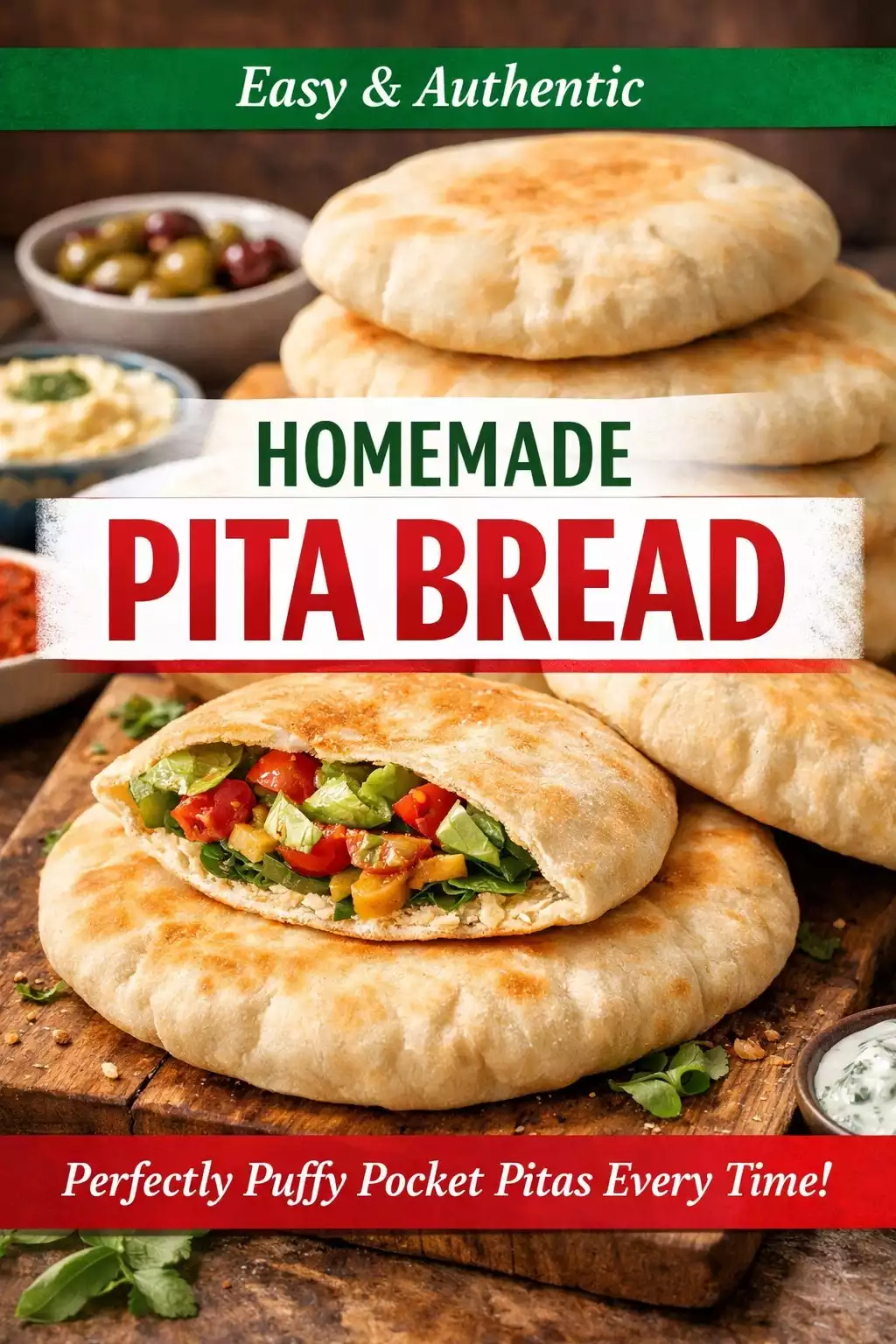
What separates good bread from great bread is often just heat and steam. Pita bread lives and dies by those two things — the pocket that forms during baking isn’t magic, it’s physics. When a properly developed, properly hydrated disc of dough hits a very hot surface, the steam inside expands rapidly and separates the two layers of dough. That’s the pocket. That’s the whole game. Understanding the mechanism is what lets you replicate it every time rather than hoping for it.
This homemade pita recipe is built on the same foundation as a great pizza dough recipe — proper gluten development, adequate fermentation, high heat cooking — but adapted for the specific result of pita. Where pizza dough needs extensibility and char, pita needs uniform thinness and reliable pocketing. The technique differs; the fundamentals are the same.
Making pita at home is one of those kitchen moments that produces visible amazement — watching a flat disc of dough puff into a pillow on a hot baking surface is one of the better shows a home kitchen puts on. Worth doing. Worth doing right.
Why This Recipe Works
- Moderate hydration dough: Drier than focaccia or ciabatta, which allows the pita to roll evenly and produce clean, uniform pocketing.
- Rolling to exact thinness: Too thick and the steam pressure can’t separate the layers. Too thin and it tears. Exactly 1/8 inch is the target.
- Screaming hot surface: Pita needs to cook fast. A hot cast iron or baking stone creates the rapid steam expansion that produces the pocket.
- Resting dough after rolling: Letting rolled pitas rest 15–20 minutes before baking relaxes the gluten and allows the surface to dry slightly — both improve pocketing.
- Whole wheat option: Substituting some whole wheat flour adds flavor without significantly affecting the pocket formation.
Ingredients
For the Pita Dough (Makes 8 pitas)
- 2¼ teaspoons active dry yeast (1 packet)
- 1 cup warm water (110°F)
- 1 teaspoon granulated sugar
- 2½ cups all-purpose flour, plus more for dusting
- 1 teaspoon salt
- 1 tablespoon olive oil
Instructions
Step 1: Activate Yeast
Combine warm water, sugar, and yeast. Let sit 5–7 minutes until foamy. A few seconds saved here and the yeast is potentially dead. Confirm activity before proceeding.
Step 2: Mix and Knead
In a large bowl, combine flour and salt. Add the yeast mixture and olive oil. Mix until a dough forms, turn onto a floured surface, and knead 8–10 minutes until smooth and elastic. The dough should feel slightly firm and spring back when poked.
Step 3: First Rise
Place dough in a lightly oiled bowl, cover, and let rise in a warm spot for 1–1.5 hours until doubled. Alternatively, cold ferment overnight for better flavor.
Step 4: Preheat the Cooking Surface
Place a pizza stone, cast iron skillet, or heavy baking sheet in the oven and preheat to 500°F (or maximum oven temperature) for at least 30 minutes. For stovetop method, heat a cast iron skillet over high heat for 5 minutes. The surface must be very hot before the first pita goes on.
Step 5: Divide and Roll
Punch down dough and divide into 8 equal balls. On a lightly floured surface, roll each ball into a circle approximately 6–7 inches in diameter and exactly 1/8 inch thick. Uniform thinness is critical for consistent pocketing. Let rolled pitas rest uncovered on a floured surface for 15–20 minutes before cooking.
Step 6: Cook
Oven method: Slide pitas onto the hot stone or sheet pan and bake 3–4 minutes until puffed and lightly golden. They will deflate slightly as they cool — that’s correct.
Stovetop method: Place rolled pita on the hot dry cast iron skillet. Cook 1–2 minutes until bubbles form and the bottom has light brown spots. Flip and cook 1 more minute. The pocket may form during cooking or as it rests.
Step 7: Cover and Stack
Stack cooked pitas under a clean kitchen towel immediately after cooking. The steam from stacking keeps them soft and pliable. Serve warm or cool completely before storing.
Pro Tips & Common Mistakes
- Roll to exactly 1/8 inch: This is the critical measurement. Too thick = no pocket. Use a ruler if necessary until you develop an eye for it.
- Rest after rolling: The 15–20 minute rest is not optional. It relaxes tight gluten and slightly dries the surface, both of which improve pocketing.
- Don’t open the oven while baking: The temperature drop can prevent the pocket from forming fully. Watch through the glass.
- Cover immediately after cooking: The steam from stacking keeps pitas soft. Pita left uncovered becomes stiff within minutes.
- A pocket that doesn’t fully open isn’t a failure: Cut and use as flatbread. The flavor is identical; the pocket is an aesthetic bonus.
Variations Worth Trying
- Whole Wheat Pita: Replace 1 cup all-purpose with 1 cup whole wheat flour. Earthier, slightly denser, but excellent flavor. The pocket still forms reliably.
- Herb Pita: Add 1 tablespoon dried za’atar or mixed herbs to the dough. The herbs perfume the bread through and through.
- Sesame Pita: Brush rolled pitas with water and sprinkle with sesame seeds before baking. Traditional in some Middle Eastern traditions.
- Pita Chips: Cut cooked pitas into triangles, brush with olive oil, season, and bake at 375°F for 10–12 minutes until crispy. The homemade version makes store-bought obsolete.
- Grilled Pita: Cook on a very hot grill grate for 1 minute per side. Gets char spots and a smoky quality that the oven can’t replicate. See also this homemade naan, this cheddar herb quick bread, this rosemary focaccia, and this homemade flour tortillas for the full flatbread collection alongside this socca chickpea flatbread.
Storage & Reheating
- Room temperature: In a zip bag up to 3 days. Keep air out — pita dries quickly when exposed.
- Refrigerator: Up to 1 week in an airtight bag.
- Freezer: Up to 3 months. Separate pieces with parchment before freezing. Toast or heat directly from frozen.
- Reheating: 20–30 seconds wrapped in a damp paper towel in the microwave. Or directly in a dry hot skillet for 30 seconds per side to restore warmth and slight crispness.
Frequently Asked Questions
Why won’t my pita form a pocket?
Most commonly: too thick, insufficiently preheated surface, or under-rested rolled dough. Roll to exactly 1/8 inch, preheat the baking surface for a minimum 30 minutes at maximum temperature, and rest rolled pitas 15–20 minutes before baking.
Can I make pita without a stone?
Yes. A heavy baking sheet preheated at maximum temperature for 30 minutes works adequately. The result is slightly less impressive pocketing but still good pita.
What’s the difference between Greek pita and Middle Eastern pita?
Greek pita is typically thicker, softer, and doesn’t have a pocket — it’s used as a wrap. Middle Eastern pita is thinner and pockets. This recipe produces the pocketed Middle Eastern style.
Can I use instant yeast?
Yes. Add directly to the flour without activating first. All other steps remain the same.
My pitas are tough and chewy. Why?
Overkneaded dough or over-baked. This dough needs 8–10 minutes of kneading maximum. Bake just until puffed and slightly golden — 2–3 minutes in a screaming hot oven. More time = tougher pita.