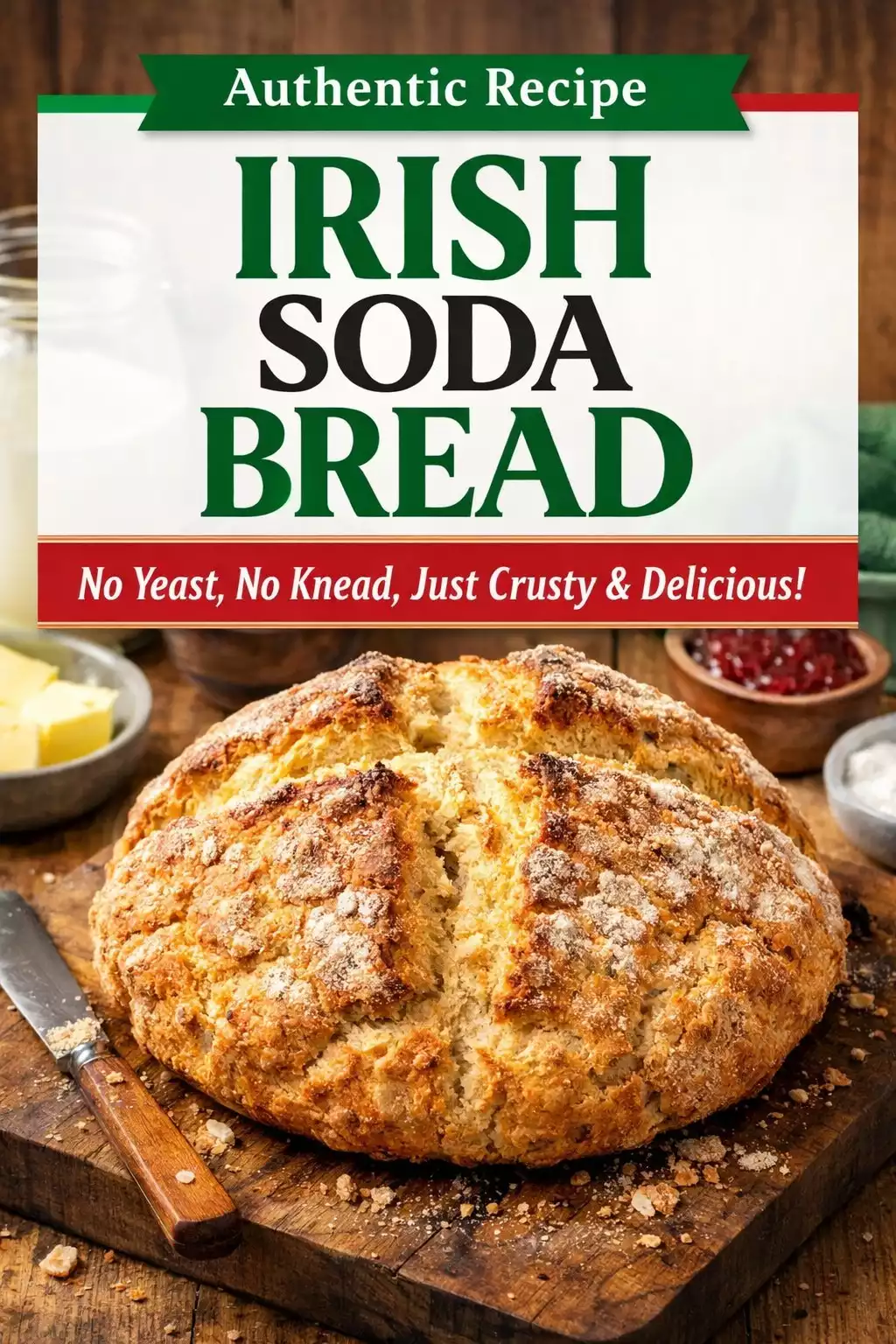
This is the recipe my sous chefs used to steal from my station. Irish Soda Bread — the real kind, with buttermilk and baking soda and none of the additions that turn it into something it isn’t. No yeast. No rising time. No kneading for 10 minutes. The best quick bread recipes in the Irish tradition is built on one chemical reaction: baking soda + buttermilk acid = lift. That’s the entire engineering. The technique that determines success or failure is knowing when to stop handling the dough. Overwork it and the gluten tightens. Handle it gently and briefly, and you get a tender, crusty, slightly tangy loaf that pairs with everything from butter and jam to smoked salmon and soup.
There is a reason this bread has survived unchanged for generations: it is already optimal. Simple ingredients — flour, buttermilk, baking soda, salt — handled correctly. The cross cut into the top isn’t decorative (well, it is partly decorative), but it helps the center bake through by allowing steam to escape. The overnight rest, if you can manage it, produces a better crumb and a more developed flavor. Make it the day before St. Patrick’s Day or any day you want bread in under an hour.
For the full bread basket, pair with no-knead artisan bread and buttermilk biscuits. For a quick bread companion, honey butter drop biscuits and homemade cinnamon rolls complete the spread.
Why This Irish Soda Bread Works
- Real buttermilk — provides the acid that activates baking soda; the flavor tang is essential, not incidental
- Minimal handling — less working = less gluten = more tender crumb
- Cast iron or Dutch oven baking — reflects heat evenly and creates the characteristic crust
- Deep cross cut — allows steam to escape from the center, ensuring even baking throughout
- No fat option — traditional Irish soda bread has no butter; modern American versions often add some; both are valid
Ingredients
Traditional Irish Soda Bread
- 4 cups (500g) all-purpose flour (or whole wheat, or half and half)
- 1 1/2 teaspoons fine salt
- 1 teaspoon baking soda
- 1 1/2 to 1 3/4 cups (360-420ml) buttermilk
Optional American Style Additions
- 2 tablespoons cold butter, cut in (for richer crumb)
- 2 tablespoons sugar (for slightly sweeter bread)
- 1/2 cup raisins (traditional in American-Irish versions)
- 1 tablespoon caraway seeds (authentic traditional addition)
How to Make Irish Soda Bread
Step 1: Mix the Dry Ingredients
Preheat oven to 425°F. Place a cast iron skillet or Dutch oven in the oven to preheat (this creates a hot surface that immediately crisps the bottom crust). Whisk flour, salt, and baking soda together. If adding butter, cut it into the flour mixture until it resembles coarse crumbs. If adding sugar or caraway seeds, add them here.
Step 2: Add Buttermilk
Make a well in the center of the dry ingredients. Add 1 1/2 cups of buttermilk. Stir with a fork or your hand until a shaggy dough comes together. Add the remaining 1/4 cup if the dough seems dry or crumbly. The dough should be sticky and slightly rough — not smooth, not wet. Do not knead. A rough, just-combined dough produces better soda bread than a smooth one.
Step 3: Shape
Turn the shaggy dough onto a floured surface. Fold it gently 3-4 times (not kneading — just folding) to bring it together into a rough round about 6 inches across. Do not overwork it. Place on a piece of parchment paper. Cut a deep cross into the top — all the way through nearly to the bottom — using a sharp knife or bench scraper. This is not decorative; the cross must be deep for proper steam release.
Step 4: Bake
Using the parchment, lower the bread into the preheated cast iron or Dutch oven. Bake at 425°F for 15 minutes, then reduce to 400°F and bake for another 25-30 minutes. The bread is done when it sounds hollow when tapped on the bottom — this is the most reliable test. A toothpick works too but the hollow knock is traditional and accurate. Cool on a wire rack for at least 20 minutes before slicing.
Tips & Common Mistakes
- Don’t overwork the dough — fold briefly to bring it together and stop. The more you handle it, the tougher the crumb. Rough is right.
- Real buttermilk matters — the acid is the leavening activator. The buttermilk substitute (milk + vinegar) works but produces a slightly less complex flavor.
- Preheat the baking vessel — starting in a hot pan creates a better bottom crust. A cold pan produces a dense, undercooked bottom.
- The hollow knock test — tap the bottom; if it sounds hollow, it’s done. Dense thud means more time.
- The cross must be deep — shallow scoring closes up during baking. Cut nearly to the bottom of the loaf.
Variations
- Brown Soda Bread: Replace half the white flour with whole wheat flour. The resulting loaf is nuttier, denser, and more traditionally Irish. Serve with Irish butter and smoked salmon.
- Cheddar Soda Bread: Fold 1 cup grated sharp cheddar into the dough. The cheese melts throughout and creates pockets of richness. Excellent with soup. See cheddar herb quick bread for a dedicated savory bread recipe.
- Herb Soda Bread: Add 2 tablespoons each fresh rosemary and chives, minced. Serve alongside roasted lamb or beef stew. Rustic and impressive.
- Sweet Brown Bread: Add 2 tablespoons each of butter, sugar, and raisins. This is closer to the American-Irish interpretation served in American pubs. Equally valid and excellent with butter.
Storage
- Room temperature: Wrapped in a towel (not plastic — plastic makes the crust soft) for 2 days. Soda bread stales faster than yeast bread. Eat within 2 days for best quality.
- Toasting: Day-old soda bread is excellent toasted. The crust crisps back up beautifully under the broiler or in a toaster.
- Freezer: Slice and freeze for 2 months. Thaw slices at room temperature or toast from frozen.
Frequently Asked Questions
Why is my soda bread dense and wet inside?
Under-baked. The dense dough requires the full baking time. The hollow knock test is more reliable than visual assessment. If the tap sounds solid, return to oven for 5-10 more minutes and test again. Also check that your baking soda is fresh — inactive baking soda produces no lift.
Can I make soda bread without buttermilk?
Add 1 tablespoon of white vinegar or lemon juice to 1 1/2 cups of whole milk. Let sit 5 minutes. The milk curdles slightly and the acid activates the baking soda. It works. Real buttermilk is better — it has more natural acid, more fat, and a more complex tang. But the substitute produces acceptable soda bread when you don’t have buttermilk on hand.
Do I need a cast iron pan?
Not strictly required. A regular baking sheet lined with parchment works. You lose the intensely hot bottom crust from the preheated cast iron, but the bread still bakes properly. A Dutch oven traps steam during the first 15 minutes and creates a better crust than a bare baking sheet.
Can I add yeast to make it rise more?
You can but then it’s not soda bread anymore — it’s a different bread entirely. Soda bread is defined by its chemical leavening. If you want a yeast bread with a similar profile, look up traditional Irish brown bread or a wheaten loaf. They use yeast and produce a completely different texture and flavor.