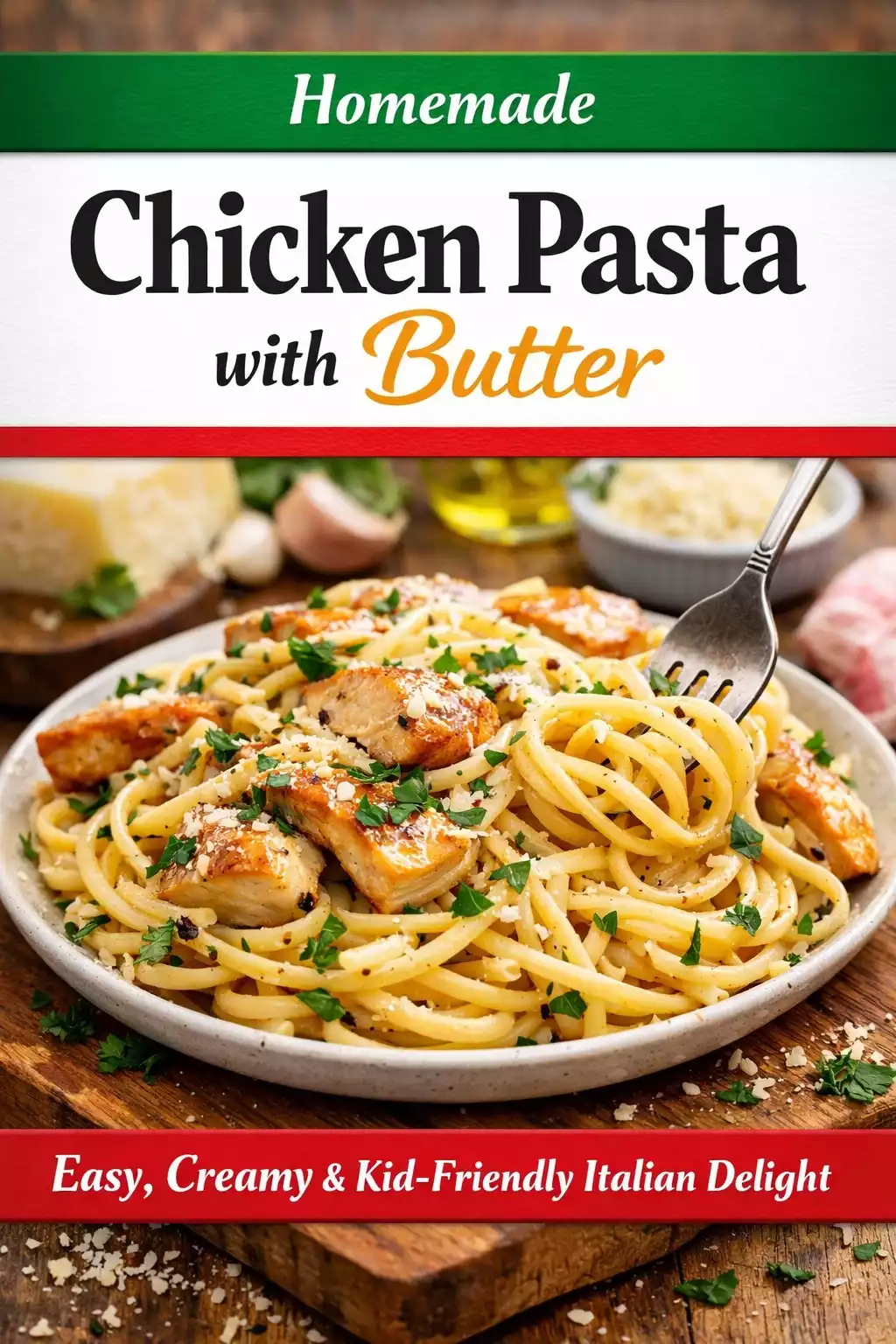
This is the recipe my sous chefs used to steal from my station. Chicken Pasta with Butter is the dish that proves simplicity isn’t the same as being easy. There are five, maybe six ingredients. There’s no cream, no complicated sauce, no reduction that takes an hour. There’s butter, there’s pasta, there’s chicken, there’s garlic, there’s parmesan, there’s pasta water, and there’s technique. The technique is everything. Miss it and you have noodles with butter. Execute it and you have one of the best things you can put on the table.
In Italian-American kitchens, this dish comes in a hundred variations under a hundred names — burro e parmigiano, aglio e olio with chicken, pasta al burro. What they all share is the foundational technique of emulsifying cold butter and starchy pasta water into a cohesive, silky sauce that coats every strand. No cream needed. The starch in the pasta water is the emulsifier. The cold butter is the fat. The technique is everything.
The best Italian chicken pasta with butter for kids (and honest adults) is also the best introduction to proper Italian pasta technique. It teaches you to respect the pasta water. It teaches you why butter goes in off-heat. It teaches you why finishing the pasta in the sauce, not plating then saucing, produces a fundamentally better dish. Master this and every pasta you make for the rest of your life improves. That’s the recipe worth learning.
Why This Chicken Pasta with Butter Recipe Works
- The pasta water is the secret weapon. Starchy pasta cooking water, when added to butter and tossed with pasta, creates an emulsified sauce that clings to every strand. Without it, the butter pools at the bottom of the bowl and the pasta is dry. This is the technique that separates Italian pasta from pasta.
- Cold butter added off-heat creates a silky sauce, not greasy noodles. Room-temperature or warm butter melts and separates. Cold butter added to warm pasta off-heat emulsifies into a glossy coating. This is the same mounting technique used in classic French sauces.
- Searing the chicken in the same pan as the pasta sauce builds layers. The fond from the sear becomes part of the butter sauce. Nothing is wasted. Every component feeds the next.
- Parmigiano-Reggiano, not Parmesan in a green can. Freshly grated real Parmesan melts into the sauce smoothly and adds umami that powdered or pre-grated cheese can’t replicate. The difference is significant and worth the few extra dollars.
- Finishing pasta in the sauce is the Italian standard for a reason. Two minutes of pasta tossing in the butter sauce produces pasta that has absorbed the sauce from the outside in, producing a cohesive dish rather than pasta and sauce sitting adjacent to each other.
Ingredients
For the Chicken
- 2 boneless skinless chicken breasts
- ½ tsp kosher salt
- ¼ tsp black pepper
- ½ tsp garlic powder
- 1 tbsp olive oil
For the Butter Sauce
- 4 tbsp cold unsalted butter, cut into cubes
- 3 cloves garlic, thinly sliced
- 1 tsp fresh thyme or ½ tsp dried
- ¼ cup pasta cooking water (reserved — this is essential)
- ½ cup freshly grated Parmigiano-Reggiano
- Salt and white pepper to taste
For the Pasta
- 12 oz linguine, fettuccine, or angel hair
- Kosher salt for pasta water
- Additional Parmigiano-Reggiano for serving
- Fresh parsley for garnish
Instructions
Step 1: Sear the Chicken
Season chicken with salt, pepper, and garlic powder. Heat olive oil in a large skillet over medium-high heat. Sear chicken 5–6 minutes per side until golden and cooked through (165°F). Remove to a cutting board. Do not wash the pan.
Step 2: Cook the Pasta
Cook pasta in aggressively salted boiling water (1 tbsp kosher salt per 4 cups water) until 1–2 minutes short of al dente. It will finish cooking in the sauce. Before draining, reserve at least ¾ cup of pasta cooking water in a measuring cup. Drain pasta.
Step 3: Build the Butter Sauce
Reduce heat to medium-low in the same pan used to sear the chicken. Add 1 tbsp of the cold butter. When it melts and foams, add the sliced garlic. Cook gently for 1–2 minutes until fragrant and just starting to turn golden — don’t let it brown or burn. Add thyme. Pour in ¼ cup of the reserved pasta water and swirl to combine with the garlic and pan fond.
Step 4: Mount the Butter and Finish
Remove the pan from heat. Add the remaining cold butter cubes one or two at a time, swirling the pan constantly between additions. This emulsification is the sauce — it should look glossy and cohesive. If it looks oily, add a splash of pasta water and swirl vigorously.
Step 5: Toss and Serve
Add the drained pasta to the pan and toss over medium-low heat for 1–2 minutes. Add pasta water in small splashes to loosen and help the sauce coat every strand. Add the Parmigiano-Reggiano and toss again. Slice the chicken and arrange on top or alongside. Garnish with fresh parsley and additional Parmesan. Serve immediately.
Tips & Common Mistakes
- Reserve the pasta water before draining. This is the single most important habit to build in Italian cooking. Set the measuring cup in the sink before you drain. It becomes automatic within a few attempts.
- Don’t brown the garlic. Burnt garlic is bitter and will ruin the delicate butter sauce. Gentle heat, constant attention, and pulling the garlic off the heat the moment it turns golden. This is a 90-second window — stay focused.
- Cold butter for the mount. Cold butter emulsifies. Warm butter melts and separates. Keep the butter in the fridge until the moment it goes in the pan.
- Finish the pasta in the sauce. Not on top. Not alongside. In. Add the pasta directly to the butter sauce and toss. Two minutes of tossing produces a cohesive, unified dish. Plating and saucing separately produces pasta with sauce. The technique is the difference.
- Taste before serving. Butter sauce needs careful salt calibration. The Parmesan adds salt; the pasta water adds salt; the pasta absorbed salt from the cooking water. Taste the finished dish and adjust — it may need less salt than you expect, or precisely the right amount more.
Variations
- Lemon Butter Version: Add 1 tsp lemon zest and 1 tbsp fresh lemon juice when mounting the butter. Bright, clean, and exceptional with chicken and thin pasta.
- Sage Butter: Replace thyme with 6–8 fresh sage leaves, crisped in the butter before adding the garlic. Classic Italian fall preparation that’s extraordinary with pasta.
- Burro e Parmigiano (No Chicken): Skip the chicken entirely. Pure butter, pasta water, and Parmigiano-Reggiano. The simplest, most revelatory Italian pasta preparation. Serves as the base technique from which everything else grows.
- With Mushrooms: Sauté ½ lb sliced cremini mushrooms in 1 tbsp butter until golden before building the butter sauce. Earthy and rich — outstanding with fettuccine.
For more chicken pasta combinations, explore spicy chicken pasta and chicken pasta with tomato sauce. The classic pan sauce technique used here appears in chicken piccata and chicken marsala. For the citrus variation, greek lemon chicken uses the same butter-and-acid profile.
Storage & Reheating
- Refrigerator: Store for up to 3 days. The butter sauce congeals in the fridge — this is normal. It revives completely with proper reheating.
- Reheating: Add 2–3 tbsp chicken broth or pasta water and heat over medium-low in a skillet, tossing gently. The added liquid re-emulsifies the butter and revives the sauce. Don’t overheat — gentle heat is what makes the butter sauce work again.
- Freezer: Not recommended — butter-sauced pasta doesn’t freeze well. Make it fresh; it takes 30 minutes.
Frequently Asked Questions
Why does my pasta taste greasy instead of buttery?
The butter broke instead of emulsifying. This happens when the butter was too warm, added too fast, or the pan was too hot. Fix it: remove from heat completely, add a tablespoon of cold pasta water, and swirl vigorously. The emulsification usually recovers.
What pasta shape works best for butter sauce?
Long, thin pasta: linguine, fettuccine, angel hair, spaghetti. The butter sauce coats thin pasta uniformly. Thick or ridged pasta can work but the delicate sauce can feel lost on heavy shapes. This is a case where pasta shape genuinely matters.
Can I make this without Parmigiano-Reggiano?
Use Pecorino Romano as a substitute — it’s saltier and sharper, so use slightly less. Pre-grated Parmesan in a container melts passably but not as smoothly. In a pinch, any hard, aged cheese works. The quality of the Parmesan is one of the most impactful variable in this simple dish.
Is this good for kids who don’t like strong flavors?
Butter pasta is one of the most universally accepted foods for children. The mild, rich, slightly savory flavor profile has near-universal appeal. For the kid-friendliest version, use very mild seasoning on the chicken, use unsalted butter, and let the cheese be the primary flavor. This is the dish that most families refer to as “the pasta they’ll always eat.”