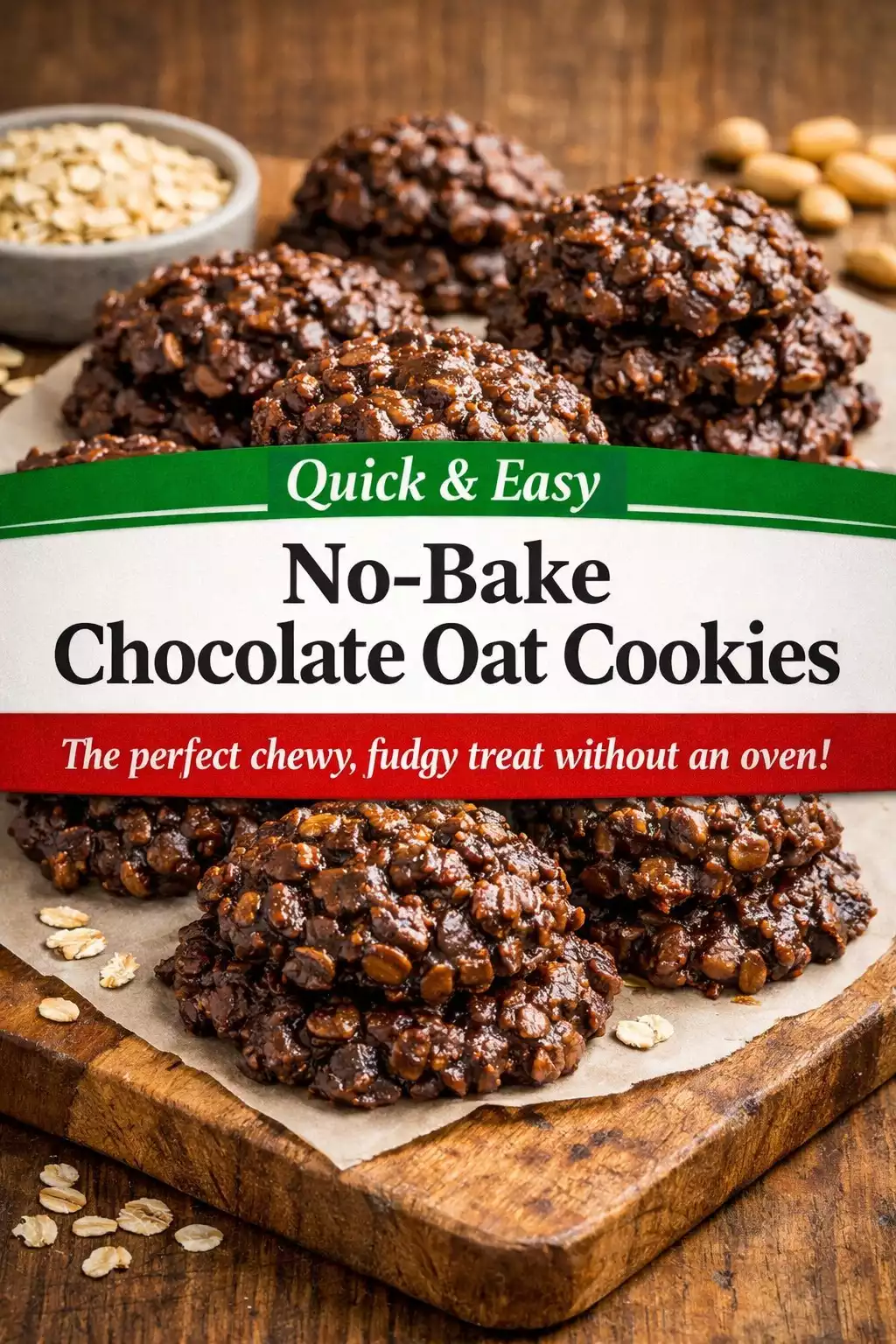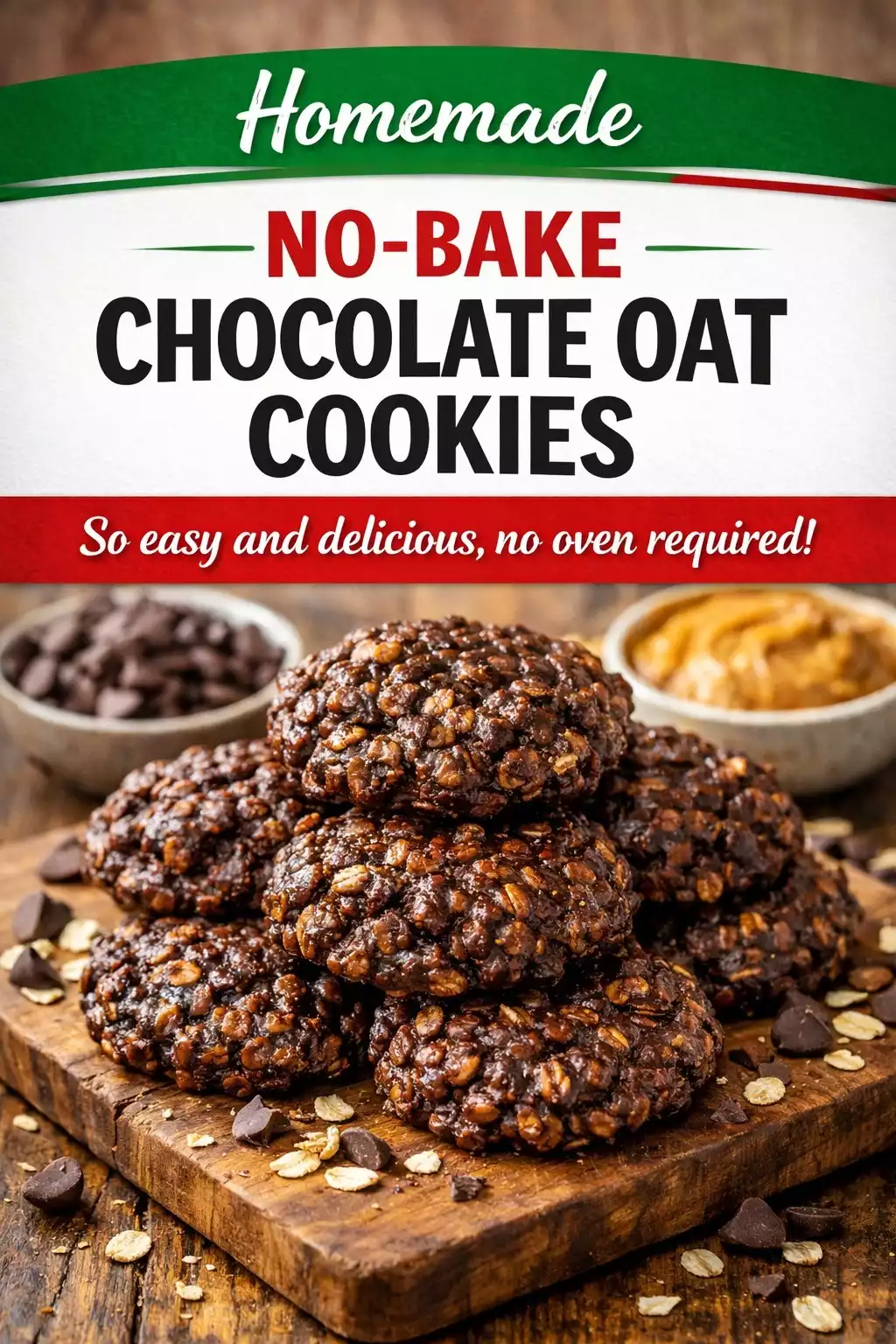
Not everything worth eating requires an oven. No-Bake Chocolate Oat Cookies — also called “no-bake cookies” or “chocolate drop cookies” depending on where you grew up — are one of the great stovetop confections of American home cooking. They take under 15 minutes, require no special equipment, and produce a chewy, fudgy, chocolate-peanut-butter cookie that cures cravings with zero preamble. These are cookie recipes for the impatient and the wise.
The science here is candy-making logic applied to a cookie: you cook sugar and butter to a specific temperature (soft ball stage, around 235°F), pull it off heat, mix in everything else, and drop it onto parchment to set. The timing and temperature are the entire technique. Undercook and they’ll be sticky forever. Overcook and they’ll crumble. Hit the right window and you get perfect fudgy cookies every single time. Three generations of this recipe have figured out that window. You’re welcome.
These pair naturally with chocolate peanut butter fudge and no-bake banana pudding for a full no-oven dessert spread. And check out homemade chocolate peanut butter cups if you’re deep in the chocolate-peanut-butter combination.
Why These No-Bake Chocolate Oat Cookies Work
- Candy-making technique — cooking to soft ball stage creates the right set without an oven
- Old-fashioned oats — provide hearty chew; quick oats create a mushier texture
- Peanut butter addition — adds fat and flavor that stabilizes the set and enriches the texture
- Butter in the base — makes them rich and prevents grainy texture from the sugar
- Parchment setting — cookies set up cleanly and don’t stick when properly made
Ingredients
The Cookie
- 2 cups (400g) granulated sugar
- 1/2 cup (113g) unsalted butter
- 1/2 cup whole milk
- 1/3 cup unsweetened cocoa powder
- 1/2 teaspoon fine salt
- 3 cups (270g) old-fashioned rolled oats
- 1/2 cup creamy peanut butter (not natural/drippy)
- 2 teaspoons pure vanilla extract
How to Make No-Bake Chocolate Oat Cookies
Step 1: Prepare Your Station
Line two large baking sheets with parchment paper or wax paper. Measure the oats, peanut butter, and vanilla and have them ready to add — once the candy mixture is ready, you have about 60 seconds to work before it starts to set. Pre-measuring is not optional; it’s survival.
Step 2: Cook the Candy Base
In a large heavy-bottomed saucepan, combine sugar, butter, milk, cocoa, and salt. Bring to a full rolling boil over medium-high heat, stirring constantly. Once it reaches a full boil — big bubbles across the entire surface, not just the edges — boil for exactly 1 minute (60 seconds) while stirring constantly. This is the critical moment: one minute of full boil = proper set. Under a minute = sticky cookies. Over two minutes = crumbly cookies.
Step 3: Add Mix-Ins Immediately
Remove from heat immediately after the 60-second boil. Quickly stir in peanut butter until melted and smooth. Add vanilla and stir. Add oats and stir vigorously until all oats are coated in the chocolate mixture. Work fast — the mixture begins to thicken within seconds.
Step 4: Drop onto Parchment
Working quickly, drop heaping tablespoons of the mixture onto the prepared parchment sheets. A cookie scoop makes this faster and more uniform. Don’t try to shape them perfectly — drop and let the mixture settle. The window for dropping cookies is about 60-90 seconds before the mixture gets too stiff to work with.
Step 5: Let Set Completely
Let cookies cool at room temperature for 30-45 minutes until completely firm. Do not move them or refrigerate during setting — they need undisturbed time to set properly. If your kitchen is very warm and humid, they may take longer. Properly made cookies will be firm and matte (not shiny or sticky) when done.
Tips & Common Mistakes
- Measure the boil time precisely — use a timer, not your gut. One minute from full rolling boil. This is the most important step.
- Use a candy thermometer if in doubt — the mixture should reach 235-240°F (soft ball stage). More reliable than timing on uncertain stovetops.
- Prep everything before starting — once that candy hits the oats, you have 90 seconds. No time to find the vanilla.
- Humidity matters — on very humid days, cookies can stay tacky. This is the sugar absorbing moisture from the air, not a technique error. Refrigerate if needed.
- Work fast after pulling from heat — if the mixture sets in the pot before you drop all cookies, put the pot back on low heat briefly to loosen.
- Don’t double the batch in one pot — the cooking dynamics change with double volume. Make two separate batches if needed.
Variations
- Coconut Oatmeal No-Bake Cookies: Add 1 cup sweetened shredded coconut with the oats. Reduces the oat quantity to 2 cups. Adds chewiness and a tropical undertone.
- Dark Chocolate Version: Use dark cocoa powder or replace 2 tablespoons cocoa with 1 oz melted dark chocolate. Deeper, more adult chocolate flavor.
- Almond Butter No-Bake Cookies: Replace peanut butter with almond butter. Slightly different flavor profile — slightly more bitter and nutty. Good option for peanut-free households.
- Coffee Chocolate No-Bake: Add 1 teaspoon instant espresso to the candy base. Enhances the chocolate depth significantly. Pair with chocolate trifle for a serious chocolate dessert table.
- Butterscotch Variation: Replace cocoa with 1 cup butterscotch chips melted into the butter-milk base. No cocoa at all. Completely different flavor, same technique.
Storage & Make-Ahead
- Room temperature: Store in an airtight container for up to 1 week. Layer with wax paper to prevent sticking.
- Refrigerator: Refrigerate in humid conditions or if cookies seem tacky. Keep airtight to prevent absorbing refrigerator odors.
- Freezer: Freeze in layers separated by wax paper for up to 2 months. Thaw at room temperature for 20 minutes.
- Shipping: These ship reasonably well in cool weather. In warm weather, the chocolate can soften. Pack in a rigid container with parchment between layers and a cold pack if shipping in summer.
- Make-ahead note: These are best the day they’re made but hold well for 3-4 days before texture changes.
Frequently Asked Questions
Why won’t my no-bake cookies set?
The sugar mixture didn’t cook long enough or hot enough. You need a true full rolling boil for a full 60 seconds. If you only got to a simmer, or pulled early, the sugar is in a liquid state that won’t set firm at room temperature. Unfortunately there’s no rescue once the oats are mixed in — you can refrigerate them and they’ll firm up cold, but they’ll soften at room temperature again.
Why are my no-bake cookies dry and crumbly?
Overcooked — the sugar went past soft ball stage into hard ball territory. All the moisture cooked out and there’s nothing left to bind the oats. This happens fast, especially at altitude or if your stove runs hot. Use a candy thermometer and pull at 235-240°F. Don’t go past 245°F or the texture is lost.
Can I use quick oats?
Yes but the texture changes significantly — quicker oats absorb more moisture and create a denser, less chewy, almost paste-like cookie. Old-fashioned rolled oats give the recognizable chunky texture that defines this recipe. If quick oats are all you have, reduce to 2 1/2 cups and expect a slightly different result.
Why do my cookies look grainy or have a gritty texture?
The sugar crystallized rather than forming a smooth candy base. This usually happens if sugar crystals on the sides of the pan fall back into the mixture during cooking, or if the mixture was stirred during the wrong phase. Don’t stir once boiling starts — just let it roll. Wipe any sugar crystals from the sides of the pan with a wet pastry brush before the boil begins.
Can I make these dairy-free?
Yes — use a full-fat plant-based milk (oat, soy, or coconut milk work well) and replace butter with coconut oil or a dairy-free butter alternative. Coconut oil produces a slightly firmer cookie that sets up better at room temperature. The flavor profile is slightly different but still excellent.