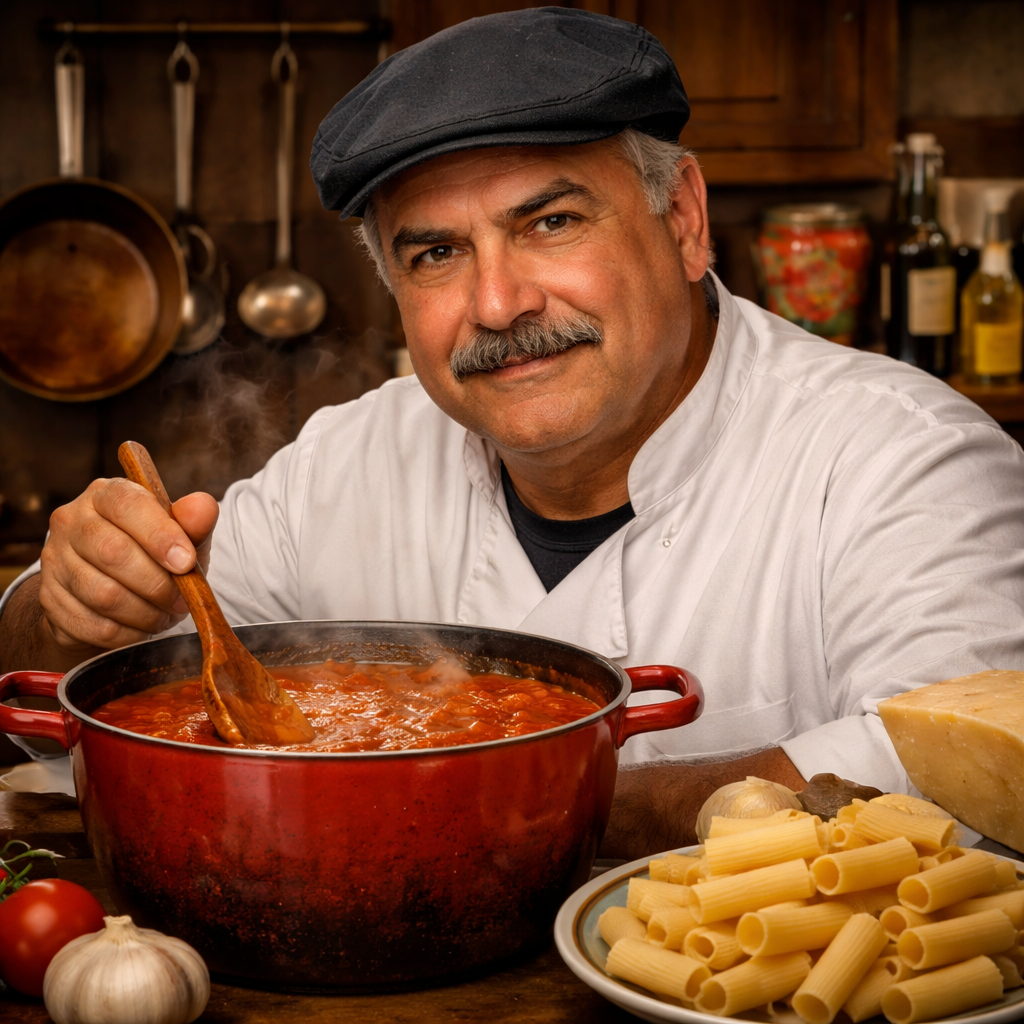
If you can boil water and follow directions, you can make this. Turkey Bolognese is the dish I reach for when I want all the Sunday-dinner satisfaction of a traditional meat sauce without the weight of a full pork-and-beef ragù. After thirty years in professional kitchens where Bolognese meant a three-hour affair with veal and pork, I came home and started experimenting with turkey — partly for practical reasons and partly because I was curious whether the technique could compensate for the lighter meat. It can.
The Italian-American Bolognese tradition is built on low and slow cooking, fat as a flavor vehicle, and patience. Turkey Bolognese respects all three rules. The key is starting with good quality ground turkey (not the leanest; you need some fat for flavor), and adding back the richness that turkey doesn’t naturally have — through pancetta, good olive oil, and a longer simmer in milk and tomato that the original Bolognese from Bologna has always used.
This turkey Bolognese is a full-technique ragù that happens to use turkey. It’s not a light-and-healthy approximation of Bolognese — it’s Bolognese with a different protein, made correctly. The milk is mandatory. The wine is mandatory. The aromatics are mandatory. Skip any of these and you get turkey meat sauce. Do it right and you get something people assume has pork in it.
Why This Turkey Bolognese Works
- Pancetta adds back the pork fat — turkey is lean; a small amount of pancetta rendered first provides the fat base that Bolognese needs without overwhelming the turkey
- Milk cooks into the meat — a traditional Bolognese step; the milk tenderizes the ground turkey and adds the richness the meat lacks on its own
- Wine before milk, always — the wine de-glazes and adds acid; the milk goes in after the wine cooks off so they don’t compete
- Low and slow simmer is mandatory — the 45-minute minimum simmer is where turkey Bolognese goes from “turkey meat sauce” to actual ragù; flavors develop and fat emulsifies
- Soffritto is the foundation — the carrot-celery-onion base builds sweetness and depth that makes Bolognese taste layered rather than flat
Ingredients
For the Ragù
- 1½ lbs ground turkey (93% lean, not 99% — you need some fat)
- 3 oz pancetta or thick-cut bacon, finely diced
- 1 medium onion, finely minced
- 2 stalks celery, finely minced
- 1 medium carrot, finely minced
- 4 cloves garlic, minced
- ½ cup dry white wine
- ½ cup whole milk
- 1 can (28 oz) crushed San Marzano tomatoes
- 2 tablespoons tomato paste
- 1 teaspoon dried thyme or fresh thyme sprigs
- 1 bay leaf
- 1 teaspoon kosher salt
- ½ teaspoon black pepper
- 3 tablespoons olive oil
For Serving
- 1 lb pappardelle, tagliatelle, or penne
- Freshly grated Parmigiano-Reggiano
- Fresh flat-leaf parsley
Instructions
Step 1: Render the Pancetta and Soffritto
In a wide, heavy Dutch oven over medium heat, add olive oil and diced pancetta. Render the pancetta slowly for 4–5 minutes until the fat is released and the pieces are just starting to crisp. Add the finely minced onion, celery, and carrot (the soffritto). Cook over medium-low heat for 10–12 minutes, stirring occasionally, until the vegetables are completely softened and starting to turn golden. Don’t rush this step — the soffritto is the flavor base and needs time.
Step 2: Brown the Turkey
Add garlic to the soffritto and cook 1 minute. Increase heat to medium-high. Add ground turkey in pieces. Brown thoroughly, breaking into fine crumbles, for 8–10 minutes. The turkey should be evenly golden-brown, not pale gray. Drain any excess fat, leaving 2 tablespoons. Season with salt and pepper.
Step 3: Add Wine, Then Milk
Add white wine and cook, stirring, until completely evaporated — about 4–5 minutes. The wine should absorb fully; no alcohol smell should remain. Then add the whole milk. Cook, stirring, for another 4–5 minutes until the milk is completely absorbed into the meat. This milk-absorption step is the non-negotiable Bolognese technique that transforms turkey meat sauce into ragù.
Step 4: Build the Tomato Sauce
Add tomato paste and cook 2 minutes, stirring, until it darkens slightly. Add crushed San Marzano tomatoes, thyme, and bay leaf. Stir to combine. Bring to a simmer, reduce heat to very low, and cook uncovered for 45 minutes to 1 hour, stirring occasionally. The sauce should be thick, clinging, and deeply fragrant. Remove bay leaf and thyme sprigs. Taste and adjust salt.
Step 5: Cook Pasta and Combine
Cook pasta in well-salted water to al dente. Reserve ½ cup pasta water. Add drained pasta to the ragù and toss over low heat for 2 minutes, adding pasta water to achieve a saucy, clinging consistency. Plate in warm bowls, top generously with Parmigiano-Reggiano, and garnish with fresh parsley. Turkey Bolognese does not need a light hand with the cheese.
Chef’s Tips & Common Mistakes
- Use 93% lean turkey, not 99% — 99% lean turkey has almost no fat and produces a dry, mealy ragù regardless of technique; 93% lean has enough fat to work properly
- Milk must be absorbed before tomato — adding tomatoes before the milk absorbs creates curdled patches; the sequence is wine first, then milk, then tomatoes
- Take the soffritto seriously — 10–12 minutes of patient vegetable cooking is not optional; this is the flavor base; rush it and the sauce tastes flat
- Low and slow simmer — no bubbling — Bolognese should barely simmer; aggressive boiling makes the meat tough and the sauce thin from too-fast evaporation
- Pancetta compensates for turkey’s leanness — small amount of cured pork fat distributed through the sauce adds the richness that pork-and-beef Bolognese has naturally
- Wide pasta shapes carry Bolognese — pappardelle and tagliatelle cradle the meat sauce; thin pasta is overwhelmed by it
Variations
- Traditional Beef-Pork Bolognese: Substitute 50/50 ground beef and ground pork for the turkey — the original Italian preparation using the same technique
- Mushroom Turkey Bolognese: Add 1 cup finely chopped cremini mushrooms with the soffritto for more umami depth — the mushrooms add body that compensates further for turkey’s leanness
- Light Pasta Primavera Contrast: This is the opposite of light pasta primavera in philosophy — a rich, long-cooked sauce vs. a quick, vegetable-forward preparation
- Baked Turkey Bolognese: Use as the meat sauce in homemade lasagna or baked ziti — the turkey ragù works in any baked pasta application
- Lentil Bolognese: For a fully vegetarian version, see lentil pasta sauce — the technique is similar; lentils replace the ground meat entirely
- Chicken Bolognese: Ground chicken in place of turkey — slightly milder flavor, similar technique, same need for pancetta and milk to add back richness
Storage & Reheating
Refrigerator: Store the sauce (without pasta) up to 5 days. Turkey Bolognese improves significantly on days 2 and 3 as the flavors develop. Always store sauce separately from pasta.
Reheating: Reheat sauce in a saucepan over medium-low with a splash of water or chicken stock. Toss with freshly cooked pasta — never reheat pasta already mixed with the sauce.
Freezer: Freeze the sauce alone in portions for up to 4 months. Turkey Bolognese freezes excellently. Thaw overnight in the refrigerator and reheat gently. Making a double batch and freezing half is the professional kitchen approach to this recipe.
Double Batch Recommendation: Always make double. The extra sauce freezes for up to 4 months and becomes one of the best emergency-dinner assets in the freezer.
Frequently Asked Questions
Why add milk to Bolognese?
Milk is the original Bolognese technique from Bologna. The proteins and fat in milk interact with the ground meat, tenderizing the texture and adding a subtle richness that can’t be achieved with broth or wine alone. The milk must be fully absorbed before the tomatoes go in — the acid in tomatoes curdles milk if they’re added simultaneously. This is why the sequence matters: wine first, then milk fully absorbed, then tomatoes. Related: homemade lasagna uses a similar meat preparation for its ragù layer.
Why is my turkey Bolognese dry?
Too-lean turkey (99%), insufficient fat from pancetta, or over-simmering without enough liquid. Fix: add a splash of chicken stock and simmer another 10 minutes. Next time: use 93% lean turkey, render the pancetta properly to release its fat, and check the sauce halfway through simmering to ensure it hasn’t reduced too far.
Can I skip the pancetta?
Technically yes, but the sauce will be noticeably leaner and less rich. If skipping pancetta, increase olive oil by 1 tablespoon and add ¼ cup heavy cream at the same stage as the milk. The cream compensates for the missing pork fat. Alternatively, use 80/20 ground turkey mixed with 93% lean for more built-in fat without pancetta. See lentil pasta sauce for a fully meat-free approach that doesn’t miss the fat.
What wine works best in turkey Bolognese?
Any dry white wine you’d drink. Pinot Grigio, Sauvignon Blanc, and dry Vermouth all work well. Avoid sweet wines or oaked whites (Chardonnay) — the oak can add bitterness when reduced. For a deeper, more robust sauce, a dry red (Chianti, Barbera) can be used instead of white — it gives the sauce a darker color and more tannic depth. Use approximately ½ cup and cook until completely evaporated.
How long does turkey Bolognese need to simmer?
45 minutes minimum; 90 minutes is better. The simmer is where turkey Bolognese earns its name. At 45 minutes, it’s a good meat sauce. At 90 minutes, it’s ragù — the fat emulsifies throughout, the flavors meld, and the texture becomes deeply cohesive. Keep the heat very low to prevent scorching. Add a splash of water or stock if it dries out. See spaghetti carbonara for the complete contrast — a pasta dish made in 20 minutes with a completely different approach.