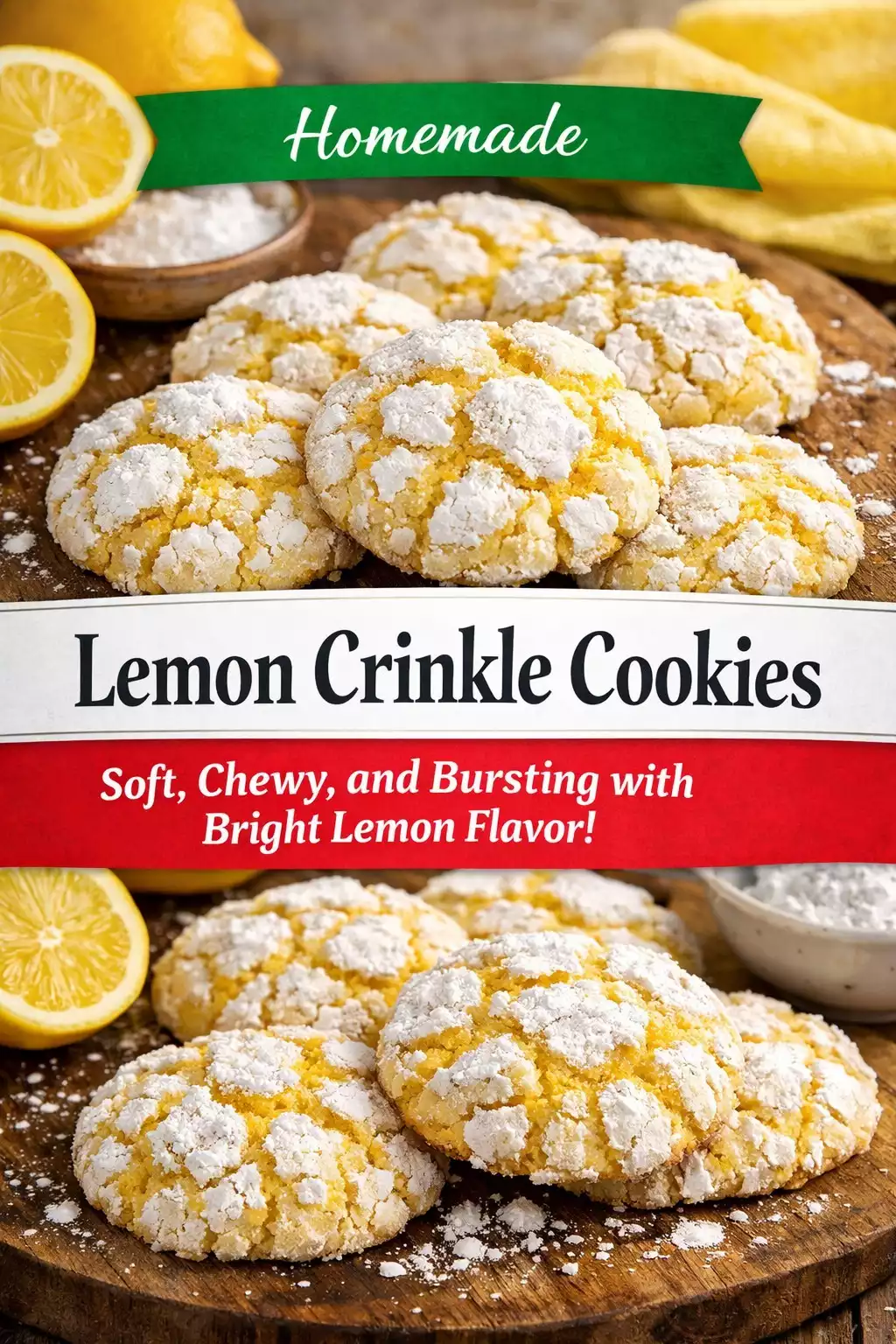
Citrus desserts are the great underestimated category. Everybody talks about chocolate. Everybody bakes vanilla. But a perfectly executed lemon cookie — bright, tangy, slightly crinkled, dusted white with powdered sugar — that’s the one that actually disappears first at a cookie exchange. Lemon Crinkle Cookies are the cookie recipes equivalent of a clean, sharp knife: precise, effective, and underrated until you actually use one.
Three generations of this recipe. The base is simple — butter, sugar, egg, lemon zest and juice — but the technique matters. The crinkle effect comes from rolling in powdered sugar, which creates a cracked exterior as the cookie spreads during baking. The result is a cookie that looks like it snowed on it, soft in the center with just enough chew at the edges. The lemon flavor is forward and bright without being lip-puckering. This is the cookie that makes people say “I don’t usually like lemon desserts” and then eat four of them.
For a citrus-forward spread, pair with no-bake lemon pie and lemon drizzle cake. If you want to balance with chocolate, double chocolate cookies is the natural contrast.
Why These Lemon Crinkle Cookies Work
- Lemon zest + juice — zest carries the aromatic oils, juice provides acidity; both are necessary
- Powdered sugar rolling — creates the signature crinkle pattern as cookies spread and crack during baking
- Cream cheese option — a small amount of cream cheese adds tang that amplifies the lemon flavor
- Chilled dough — prevents excessive spreading and keeps the center soft
- Double rolling — rolling in granulated sugar first, then powdered, creates a thicker, more defined crinkle
Ingredients
The Cookie Dough
- 1/2 cup (113g) unsalted butter, room temperature
- 2 oz cream cheese, room temperature (optional but recommended)
- 1 cup (200g) granulated sugar
- 1 large egg, room temperature
- Zest of 2 large lemons (about 2 tablespoons)
- 2 tablespoons fresh lemon juice
- 1 teaspoon pure vanilla extract
- 1/2 teaspoon lemon extract (optional — for more intense flavor)
- 1 3/4 cups (220g) all-purpose flour
- 1 teaspoon baking powder
- 1/4 teaspoon fine salt
- Yellow gel food coloring (optional — just a drop or two)
For Rolling
- 1/4 cup granulated sugar
- 1 cup powdered sugar, sifted
How to Make Lemon Crinkle Cookies
Step 1: Make the Dough
Beat butter (and cream cheese if using) until completely smooth, about 1 minute. Add sugar and beat for 2-3 minutes until pale and fluffy. Add egg, lemon zest, lemon juice, vanilla, and lemon extract (if using). Mix until combined. Add a drop of yellow gel food coloring if you want a more pronounced lemon appearance — optional but visually nice. Add flour, baking powder, and salt. Mix until just combined. Dough will be soft and slightly sticky.
Step 2: Chill the Dough
Cover tightly and refrigerate for at least 1 hour, up to 24 hours. The dough needs to be cold enough to handle and roll without sticking to your hands. If the dough is too sticky to roll into balls, add 1-2 tablespoons more flour and chill another 30 minutes.
Step 3: Roll in Sugar
Preheat oven to 350°F. Set up two bowls — one with granulated sugar, one with sifted powdered sugar. Scoop cold dough into 1-tablespoon balls. Roll each ball first in the granulated sugar (this acts as a moisture barrier), then roll generously in powdered sugar until completely coated. Place 2 inches apart on parchment-lined baking sheets.
Step 4: Bake
Bake for 10-12 minutes until edges are set and cookies have crinkled and spread. The centers should still look slightly soft. Don’t overbake — the powdered sugar coating can turn from white to light tan if left too long. Pull when centers look done but not firm. Cool on pan for 5 minutes before transferring.
Step 5: Optional Extra Powdered Sugar Dusting
After cookies cool completely, sift additional powdered sugar over the top for a fresh, snowy appearance. This restores any coating that absorbed during baking and makes them look freshly made even if baked the day before. Optional but worth the 30 seconds.
Tips & Common Mistakes
- Use fresh lemons only — bottled lemon juice lacks the aromatic compounds that make these pop. Zest is non-negotiable; it carries most of the flavor.
- Double-roll in both sugars — granulated sugar first absorbs surface moisture and prevents the powdered sugar from clumping. Skip granulated and your crinkle disappears.
- Keep dough cold — warm dough spreads too fast and loses the thick crinkle profile. Roll just a few at a time and keep the rest refrigerated.
- Sift the powdered sugar — lumpy powdered sugar creates uneven coating and bald spots in the crinkle.
- Don’t press the balls flat — they spread naturally. Pressing removes the height that creates the dramatic crinkle effect.
- Lemon zest measurement matters — two tablespoons of zest from 2 lemons is the right amount. Less and you’ll barely taste the lemon.
Variations
- Lime Crinkle Cookies: Swap all lemon for lime — zest and juice. Add a drop of green food coloring. Unexpected and excellent on summer dessert tables.
- Orange Crinkle Cookies: Use orange zest and juice. Reduce juice to 1 tablespoon as oranges are less acidic. The orange flavor is warmer and more subtle than lemon.
- Lemon Lavender Crinkle: Add 1 teaspoon dried culinary lavender (finely chopped) to the dough. A sophisticated pairing for bridal showers or garden parties.
- Glazed Lemon Version: Skip the powdered sugar rolling and instead drizzle cooled cookies with a simple lemon glaze (1 cup powdered sugar + 2 tablespoons lemon juice). Different look, equally good. Pairs well with tres leches cake at a spring gathering.
- Lemon Poppy Seed Crinkle: Add 2 tablespoons poppy seeds to the dough. The poppy seeds add visual interest and a subtle nuttiness that plays beautifully against lemon.
Storage & Make-Ahead
- Room temperature: Store in a single layer (or layered with parchment) in an airtight container for up to 5 days.
- Don’t stack without parchment — the powdered sugar coating transfers to other cookies and they stick together.
- Freezer (baked): Freeze in a single layer, then transfer to bags for up to 2 months. The powdered sugar coating may absorb slightly — dust with fresh powdered sugar after thawing.
- Freezer (dough): Scoop into balls and freeze raw (before rolling in sugar). Thaw in refrigerator overnight, then roll in sugars and bake. Do not freeze already-rolled balls.
- Shipping: These ship well in a rigid container with crumpled parchment between layers. The cookie itself is sturdy enough for 2-day shipping.
Frequently Asked Questions
Why didn’t my cookies crinkle?
Most likely the dough was too warm when it went into the oven, or you didn’t use enough powdered sugar coating. Warm dough spreads too fast and the crinkle doesn’t form. Cold, generously powdered dough creates maximum crinkle. Also make sure you used baking powder (not baking soda) — baking powder provides the lift that creates the crinkle pattern.
Can I make these without cream cheese?
Yes — the cream cheese is optional. Without it, the cookies will be slightly less tender but still delicious. Replace with an additional tablespoon of butter if you want similar fat content.
Why is my powdered sugar coating turning yellowish after baking?
Oven temperature is too high or the cookies baked too long. The powdered sugar starts to absorb moisture and caramelize slightly in high heat. Reduce oven to 325°F and bake 1-2 minutes longer if needed. Also make sure your rack is in the center position, not near the top of the oven.
Can I use lemon extract instead of fresh lemon?
Not as a full substitute. Lemon extract has the flavor compounds but lacks the acids in fresh juice that react with baking powder to create proper texture. The zest provides aromatic oils that extract can’t fully replicate. Use both extract and fresh together for maximum lemon punch. See also: molten chocolate lava cakes for another recipe where fresh ingredients make all the difference.
How do I get the cleanest crinkle pattern?
Three things: cold dough, generous powdered sugar coating, and no pre-flattening. The crinkle forms as the cookie spreads and the sugar shell cracks — this only happens when the dough is cold enough to spread slowly and the sugar coating is thick enough to crack visibly. Roll balls until they’re completely white, not just lightly dusted.