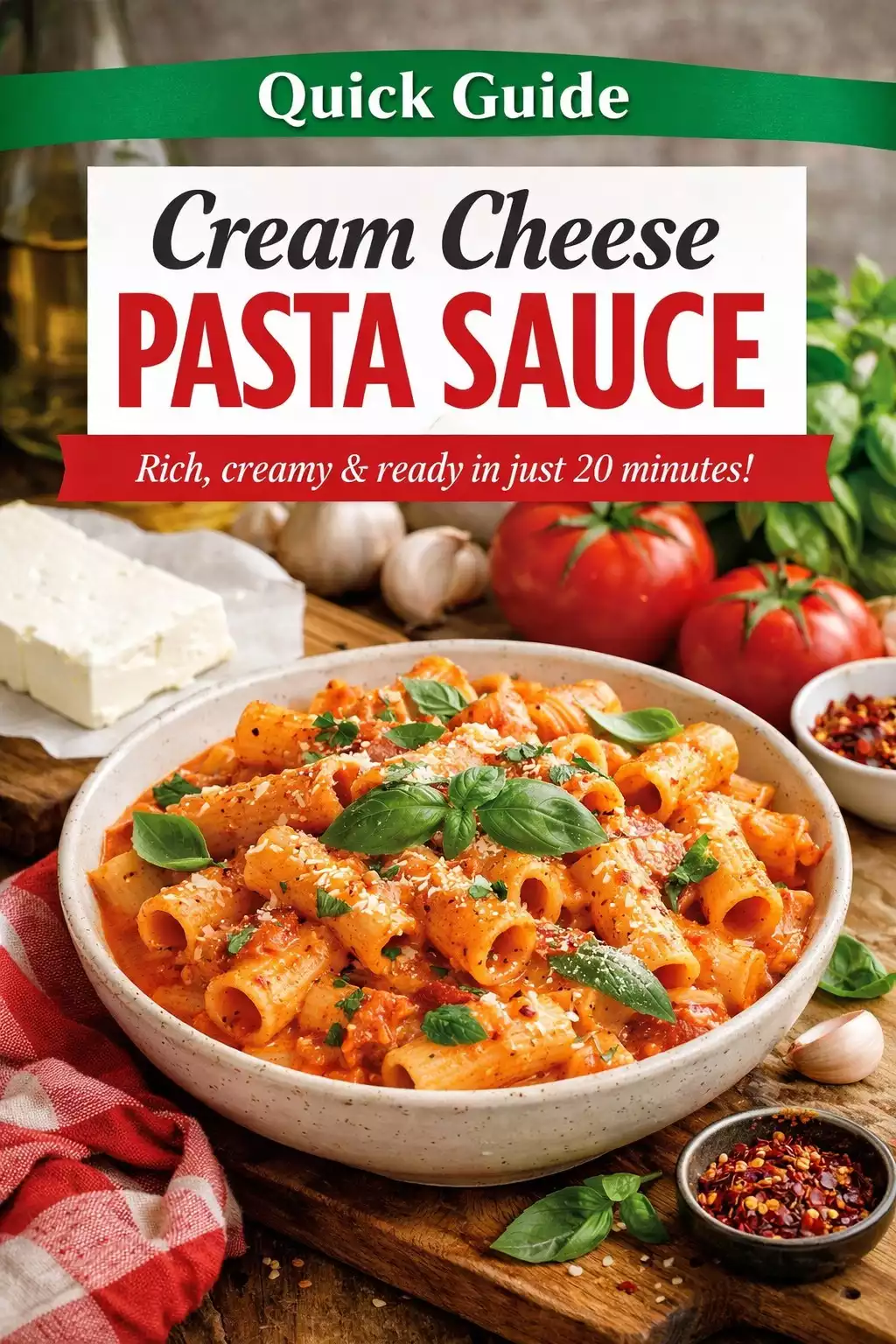
You think you know this dish? Sit down. Let me show you. Cream Cheese Pasta Sauce sounds like a recipe someone invented when they forgot to buy ricotta. And maybe it started that way. But what happens when you add cream cheese to a pasta sauce — done correctly — is that you get a sauce with more body, more richness, and more staying power than a straight cream sauce, without the one-dimensional heaviness of too much heavy cream.
The Italian-American way means no shortcuts, no compromises. And this sauce delivers on that standard. Cream cheese melts into a garlicky, tomato-enriched base and creates something that coats the pasta in a way that neither a pure tomato sauce nor a pure cream sauce can achieve on its own. It’s a hybrid. And I’ll take a great hybrid over a mediocre pure any day.
This best cream cheese pasta sauce uses a combination of cream cheese and tomato — giving it the richness of a cream sauce and the brightness of a tomato sauce. It’s ready in 20 minutes, works with any pasta shape, and is one of the most satisfying weeknight dinners in my rotation. That’s not a small claim. It has earned the spot.
Why Cream Cheese Works in Pasta Sauce
- Cream cheese emulsifies beautifully — its fat and protein content creates a stable emulsion with the pasta cooking water and tomato sauce, producing a sauce that coats pasta evenly without breaking.
- Adds body without heaviness — cream cheese contributes creaminess and richness with a slightly tangy note that heavy cream lacks. The tang prevents the sauce from feeling leaden.
- Tomato balances the cream cheese — the acidity of good canned tomatoes cuts through the cream cheese fat and keeps the sauce bright and alive rather than dull and heavy.
- Room temperature cream cheese melts without breaking — cold cream cheese added directly to a hot sauce doesn’t melt evenly. Room temperature cream cheese incorporates smoothly.
This belongs in the broader cream cheese recipes collection. See also creamy mushroom pasta and stuffed shells with ricotta for related pasta applications.
Ingredients for Cream Cheese Pasta Sauce
Serves 4 | Prep: 10 min | Cook: 20 min
The Sauce
- 8 oz (1 block) full-fat cream cheese, room temperature and cut into pieces
- 1 can (14 oz) crushed tomatoes or fire-roasted tomatoes
- 4 cloves garlic, minced
- 1 medium onion, finely diced
- 2 tablespoons olive oil
- 2 tablespoons butter
- ½ cup dry white wine or chicken broth
- ½ cup pasta cooking water (reserved before draining)
- 1 teaspoon dried Italian seasoning
- ½ teaspoon red pepper flakes
- Salt and pepper to taste
- Fresh basil for finishing
The Pasta
- 1 lb rigatoni, penne, or ziti (tube shapes hold this sauce best)
- 1 tablespoon salt (for pasta water)
Optional Add-Ins
- 8 oz Italian sausage (removed from casing, browned)
- Baby spinach (handful, stirred in at the end)
- Sun-dried tomatoes (2 tablespoons, chopped)
- Grated Parmesan for finishing
How to Make Cream Cheese Pasta Sauce
Step 1: Start the Pasta Water
Bring a large pot of water to a boil. Salt it generously — the water should taste like the sea. This seasons the pasta from the inside out. Add pasta when the water is at a rolling boil.
Step 2: Build the Sauce Base
Heat olive oil and butter together in a large skillet over medium heat. Add the diced onion and cook for 5-6 minutes until softened and translucent. Add the minced garlic and red pepper flakes, cook for 1-2 minutes until fragrant. Don’t let the garlic brown — golden is fine, brown makes it bitter.
Step 3: Add Wine and Tomatoes
Pour in the white wine or broth and let it reduce for 2-3 minutes until mostly evaporated. Add the crushed tomatoes and Italian seasoning. Stir to combine. Simmer for 8-10 minutes until the sauce has thickened slightly and the tomato flavor has deepened. Season with salt and pepper.
Step 4: Add the Cream Cheese
Reduce heat to low. Add the room-temperature cream cheese pieces to the sauce. Stir constantly as the cream cheese melts into the tomato base — it takes about 2-3 minutes of stirring over low heat for the cream cheese to fully incorporate and the sauce to become smooth and uniform. If the sauce looks broken or grainy, add a splash of pasta cooking water and stir vigorously — the starch in the pasta water helps emulsify.
Step 5: Add the Pasta and Finish
Reserve ½ cup of pasta cooking water before draining. Drain the pasta and add directly to the sauce (not the other way around). Toss to coat. Add pasta water a few tablespoons at a time as needed to reach the right consistency — the sauce should coat the pasta in a silky, cohesive layer. Add fresh basil, torn by hand. If using spinach, add a handful now and toss until wilted.
Step 6: Serve Immediately
Divide into warm bowls. Finish with grated Parmesan if using, a drizzle of good olive oil, fresh cracked black pepper, and more torn basil. Cream cheese pasta sauce is a serve-now dish — it doesn’t hold as well as a pure tomato sauce. Eat it fresh off the heat.
Pro Tips & Common Mistakes
- Room temperature cream cheese. Cold cream cheese straight from the fridge added to a hot sauce seizes and clumps. Cut it into pieces and let it sit out for 30 minutes before the sauce. This single step determines whether the sauce is silky or lumpy.
- Low heat when adding cream cheese. High heat breaks dairy. Turn the burner to low before adding the cream cheese and keep it there until fully incorporated.
- Reserve pasta water. The starchy pasta cooking water is the most important finishing tool in Italian cooking. It emulsifies the sauce, thins it to the right consistency, and helps it coat the pasta. Never drain without reserving at least ½ cup.
- Add pasta to the sauce, not sauce to the pasta. The pasta finishes cooking in the sauce, absorbing flavor and thickening the sauce with its surface starch. This is how Italian restaurants produce pasta that tastes like it was born in the sauce.
- Tube pasta is the right shape. Rigatoni, penne, ziti — the hollow tubes catch the sauce inside and the ridged exterior holds the sauce on the outside. This sauce needs a pasta it can cling to.
Variations Worth Trying
- Sausage and Cream Cheese: Brown hot Italian sausage (removed from casing) in the same pan before the onions. Remove, set aside, build the sauce, and add the sausage back in at the end. This is the most popular variation in my household.
- Roasted Red Pepper: Add a jarred roasted red pepper, blended smooth, to the tomato base before adding cream cheese. Creates a sweeter, more complex flavor with beautiful color.
- Lemon-Herb: Skip the tomatoes entirely. Build a sauce with garlic, butter, white wine, and cream cheese, finishing with lemon zest, lemon juice, and fresh herbs. An entirely different application of the same technique.
- Baked Version: Toss with pasta, transfer to a baking dish, top with mozzarella and breadcrumbs, bake at 375°F for 20-25 minutes until bubbly and golden. Similar principle to stuffed shells but fully assembled.
- Mushroom Cream Cheese Pasta: Load up on sautéed cremini and shiitake mushrooms before the garlic step. This deepens the umami profile significantly. See creamy mushroom pasta for a related approach.
Storage & Reheating
- Refrigerator: 3-4 days. The sauce and pasta together absorb each other overnight; day-2 leftovers are actually excellent.
- Reheating: Stovetop in a pan with a splash of water or broth, covered, over medium-low heat. Stir occasionally until warmed through. The added moisture prevents the cream cheese from breaking on reheat. Microwave works with a cover and 50% power.
- Sauce only (no pasta): Refrigerates for 5 days. Reheat on the stovetop over very low heat with a splash of water. Don’t boil.
Frequently Asked Questions
Can I substitute cream cheese with ricotta?
Different result. Ricotta creates a lighter, grainier texture — similar but not the same. For stuffed shells, ricotta is the classic choice. For a sauce that coats pasta smoothly, cream cheese emulsifies better. Both are correct in their application.
Why is my cream cheese pasta sauce grainy?
Either the cream cheese was cold (seizes instead of melting smoothly) or it was added over too-high heat. The fix: lower the heat, add a few tablespoons of pasta cooking water, and stir vigorously. The starch in the pasta water acts as an emulsifier and often rescues a broken sauce.
What pasta works best with cream cheese sauce?
Tube shapes (rigatoni, penne, ziti) or ridged shapes (rigatoni, fusilli) catch the sauce inside and on the ridges. Long pasta (spaghetti, fettuccine) works but the sauce is heavier and doesn’t cling as effectively. Avoid very thin pasta shapes — the sauce overwhelms them.
Can I make this dairy-free?
Dairy-free cream cheese (Violife or Kite Hill brands) melts reasonably well. Use a good plant-based butter. The flavor profile will be slightly different — dairy-free cream cheese tends to be milder — so season more aggressively.