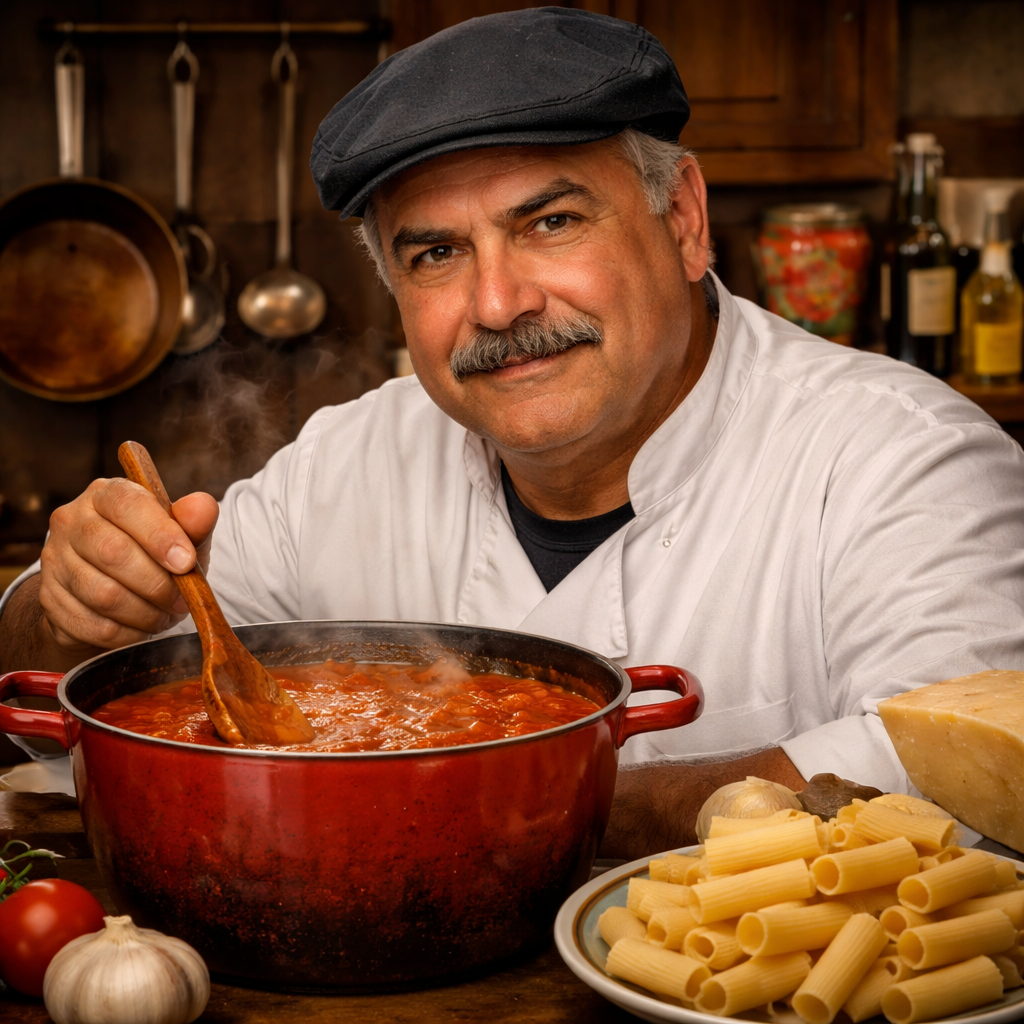
This is the recipe my sous chefs used to steal from my station. Caprese pasta salad looks like something you’d get at an expensive Italian restaurant for $22, but it’s twenty minutes of work and about eight dollars of ingredients. The caprese combination — tomato, mozzarella, basil — is one of the great flavor trilogies of Italian cooking. Putting it on pasta gives you something that works at a dinner party as well as a Monday night cookout.
My Italian-American background is built on the Caprese principle — excellent ingredients treated simply. Caprese pasta salad is proof that you don’t need a sauce. You need a good dressing, the freshest mozzarella you can find, the best tomatoes in season, and enough basil that the fragrance hits you before the fork does. The balsamic glaze at the end is the piece that makes it look finished. Don’t skip it.
This caprese pasta salad uses fresh mozzarella, not the shredded block kind, and it’s dressed with a bright lemon-olive oil vinaigrette rather than Italian dressing from a bottle. The fresh mozzarella tears into the salad at the last minute. The basil is added right before serving. And the balsamic glaze is drizzled over the top at the table, where everyone can see what’s happening. This is Italian-American cooking at its most elegant and its most effortless simultaneously.
Why This Caprese Pasta Salad Works
- Fresh mozzarella added late — mozzarella in dressing overnight becomes rubbery; added right before serving it stays creamy and tender
- Lemon-olive oil vinaigrette over Italian dressing — the lighter, brighter dressing lets the mozzarella and tomato flavors come forward instead of competing with them
- Balsamic glaze, not balsamic vinegar — reduced balsamic is sweet and thick, drizzling dramatically; raw vinegar is sharp and thin and runs off instead of coating
- Basil added at serving, not overnight — basil stored in dressing turns black and bitter within hours; always add fresh at serving time
- Cherry tomatoes over large tomatoes — cherry tomatoes hold their shape better and release less water overnight; large tomatoes turn soft and dilute the dressing
Ingredients
For the Pasta Salad
- 1 lb farfalle (bow ties) or rotini
- 2 pints cherry tomatoes (mixed colors if available), halved
- 8 oz fresh mozzarella (ciliegine/small balls, or large balls torn)
- 1 cup large fresh basil leaves, torn or chiffonade (add at serving only)
- Flaky sea salt and freshly cracked black pepper
For the Lemon Vinaigrette
- ½ cup good-quality extra virgin olive oil
- 3 tablespoons fresh lemon juice
- 1 tablespoon white wine vinegar or champagne vinegar
- 2 cloves garlic, minced
- 1 teaspoon Dijon mustard
- 1 teaspoon honey
- 1 teaspoon dried Italian seasoning (or fresh thyme)
- 1 teaspoon kosher salt
- ½ teaspoon black pepper
For Finishing
- 3–4 tablespoons balsamic glaze (store-bought or homemade reduced balsamic)
- Extra olive oil for drizzling
- Flaky sea salt (Maldon or Sicilian sea salt)
Instructions
Step 1: Make the Vinaigrette
Whisk together olive oil, lemon juice, white wine vinegar, garlic, Dijon, honey, Italian seasoning, salt, and pepper. Taste — the vinaigrette should be bright, slightly sharp, with a back note of sweetness from the honey. It should taste almost too tart on its own — it mellows when distributed through the pasta. Adjust and set aside.
Step 2: Cook the Pasta
Bring a large pot to a boil. Salt generously. Cook pasta to firm al dente. Drain and toss immediately with half the vinaigrette while hot. The warm pasta absorbs the lemon and garlic flavors into the surface. Cool to room temperature, tossing occasionally to prevent clumping.
Step 3: Add the Tomatoes
Add halved cherry tomatoes and remaining vinaigrette to the cooled pasta. Toss to combine. Taste and adjust salt and acid. Cover and refrigerate at least 1 hour (2 hours is better). The tomatoes release their juices as they sit, which combines with the vinaigrette and makes the whole salad more flavorful.
Step 4: Add Mozzarella and Basil at Serving
Remove from refrigerator 20 minutes before serving. Re-toss with a drizzle of fresh olive oil. If using large fresh mozzarella, tear it by hand into rough chunks — torn edges hold dressing better than clean knife cuts. Fold mozzarella into the pasta gently. Add torn fresh basil leaves. Season with flaky sea salt and fresh black pepper.
Step 5: Plate and Drizzle
Transfer to a large serving bowl or platter. Drizzle balsamic glaze in a crisscross pattern over the top — don’t mix it in, let it stay on the surface as a visual and flavor contrast. Add one more drizzle of extra virgin olive oil. Serve immediately. This is the caprese pasta salad that makes people set down their drinks and reach for the serving spoon.
Chef’s Tips & Common Mistakes
- Fresh mozzarella only — block mozzarella is for melting; fresh mozzarella packed in water is for caprese; the texture and flavor are completely different
- Balsamic glaze, not vinegar — raw balsamic vinegar is too sharp and runny; glaze is sweet, viscous, and dramatic; make your own by reducing balsamic to half volume
- Basil added at the table — basil stored in dressed salad turns black in hours; it should look bright green when it hits the table
- Flaky sea salt at the finish — the crunch and burst of salt on top contrasts with the creamy mozzarella; table salt mixed in cannot replicate this
- Torn mozzarella holds dressing better — the ragged edges from hand-tearing catch dressing in small pockets; clean-cut slices are beautiful but functional
- Mixed-color cherry tomatoes — red, orange, and yellow tomatoes bring visual variety and subtle flavor differences; worth using when available
Variations
- With Prosciutto: Layer torn prosciutto di Parma into the salad at serving — the sweet-salty cured meat with mozzarella and tomato is the Italian-American classic combination
- Warm Caprese Pasta: Serve the pasta warm with cherry tomatoes blistered in olive oil — the blistered tomatoes technique from cherry tomato pasta applied to the caprese format
- With Arugula: Add a handful of fresh arugula right before serving — the peppery greens against the creamy mozzarella is classic Italian bistro
- Italian Pasta Salad Version: Add Genoa salami and swap the lemon vinaigrette for the Italian dressing from classic Italian pasta salad
- Greek Caprese: Add Kalamata olives and swap mozzarella for feta — see Greek pasta salad for the feta-based approach
- Orzo Caprese: Use orzo instead of farfalle for a smaller, more elegant grain — see orzo salad with feta for the orzo pasta salad format
Storage & Reheating
Refrigerator: Store pasta and tomatoes without mozzarella and basil up to 3 days. The tomatoes make the dressing more flavorful every day. Mozzarella and basil always added at serving only.
Serving Temperature: Room temperature for best flavor. The mozzarella especially needs to come to room temperature — cold mozzarella is rubbery; room-temperature mozzarella is creamy and tender.
Balsamic Glaze: Store at room temperature in the bottle indefinitely. Make your own by simmering 1 cup balsamic vinegar over medium heat until reduced to ½ cup — about 15 minutes.
Freezer: Not recommended under any circumstances — fresh mozzarella, tomatoes, and basil do not survive freezing.
Frequently Asked Questions
What type of fresh mozzarella is best?
Ciliegine (cherry-sized balls) are ideal for pasta salad — each piece is bite-sized and holds its shape when tossed. Bocconcini (slightly larger) work equally well. Large fresh mozzarella balls torn by hand give a rustic, more dramatic presentation. Buffalo mozzarella is richer and more complex than cow’s milk mozzarella — the best choice if your budget allows. All must be packed in water brine, not the rubbery dry-packed kind. See Italian pasta salad for the contrast between fresh and aged Italian cheeses.
How do I make homemade balsamic glaze?
Pour 1 cup good-quality balsamic vinegar into a small saucepan. Add 1 tablespoon honey. Bring to a simmer over medium heat. Stir occasionally and simmer for 12–15 minutes until reduced by half and thick enough to coat a spoon. Cool completely before using — it thickens further as it cools. Store at room temperature up to 1 month. Worth making in a large batch.
Can I use sundried tomatoes instead of cherry tomatoes?
Yes — a combination of fresh cherry tomatoes and oil-packed sun-dried tomatoes gives both fresh acidity and concentrated sweetness. The sun-dried tomatoes also contribute their marinating oil to the dressing, which adds complexity. Use about ½ cup sun-dried tomatoes alongside 1 pint of cherry tomatoes. Related: tuna pasta uses the same sun-dried tomato technique for concentrated flavor.
Can I add protein to make it a complete meal?
Grilled chicken marinated in lemon and herbs added at serving is the most natural fit. Prosciutto di Parma or culatello (torn) adds Italian charcuterie character without cooking. For seafood: chilled cooked shrimp or the oil-packed tuna approach works beautifully with caprese flavors. Chickpeas make it vegetarian-complete.
How far ahead can I make caprese pasta salad?
The pasta and tomato base: up to 3 days ahead. Mozzarella: no more than 2 hours before serving. Basil: right before serving, never ahead. Balsamic drizzle: at the table. This staggered approach means you do most of the work days ahead, and the last-minute additions take under 5 minutes. See ranch pasta salad for the same make-ahead component strategy applied to a creamy dressing approach.