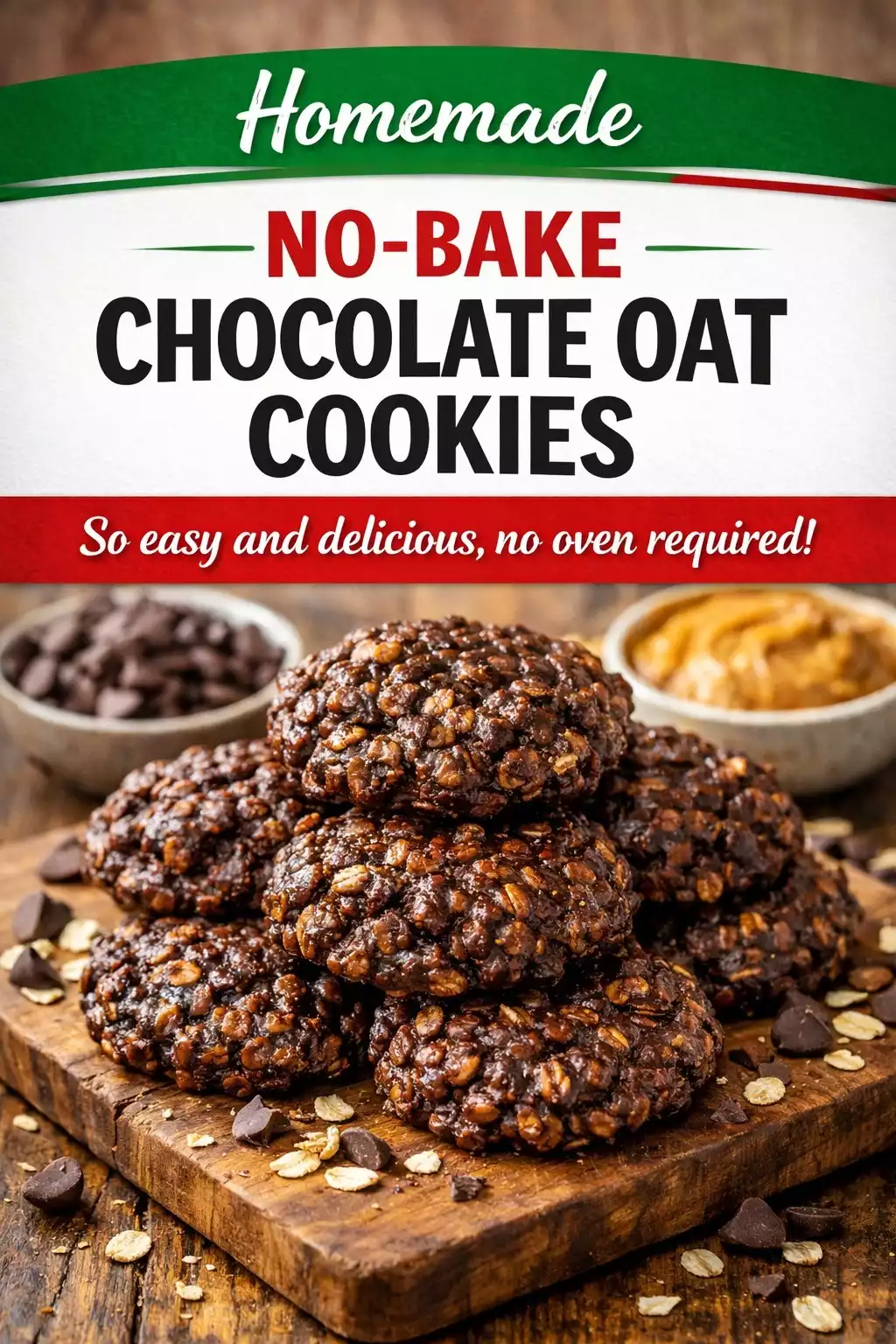
You think you know this dish? Sit down. Let me show you what a No-Bake Cookie actually tastes like when it’s made with proper technique and not out of a box that’s been in someone’s pantry since 2019. No-Bake Chocolate Oat Cookies — that combination of dark cocoa, peanut butter, oats, and a fudge-like base that sets up perfectly on the counter — are one of the greatest achievements in American home cooking. They require no oven, they take under twenty minutes start to finish, and when done right, they’re one of the most satisfying bites in the dessert world.
The science here is beautiful in its simplicity. You’re essentially making a soft candy base — butter, sugar, milk, and cocoa brought to a boil that cooks the sugars and creates structure — then binding it with oats and peanut butter before it can set. The timing of that boil is everything. One minute of rolling boil produces cookies that set up firm and chewy. Thirty seconds produces cookies that stay soft and sticky. Two minutes gives you crumbly rocks. You’re threading a needle every time, and once you find the right timing for your stove, these will come out perfect every single time.
I’ve made these for bake sales, church events, holiday trays, and countless Sunday afternoons when the kitchen needed something good and the oven wasn’t an option. Every Italian-American grandmother I know had a version of this recipe — they called them various things, stored them in various tins, and guarded the recipe as fiercely as their gravy. This is the version that earned its place in my permanent rotation.
Why This No-Bake Cookie Recipe Works
- The one-minute boil — Bringing the sugar mixture to a full rolling boil for exactly 60 seconds is the technical heart of this recipe. This brings the syrup to the soft-ball stage, which gives the cookies structure when cooled. Under-boiling = sticky; over-boiling = crumbly.
- Real butter and whole milk — Fat content matters for the fudge base. Real butter creates a richer, more cohesive base than margarine. Whole milk provides better texture than skim or 2%.
- Quick oats, not old-fashioned — Quick oats have a finer texture that integrates more completely into the cookie and creates a more uniform, fudge-like bite. Old-fashioned oats are chewier and slightly more rustic — both work, but quick oats produce the classic texture.
- Working quickly — Once the hot mixture is combined with oats and peanut butter, it starts setting immediately. Drop onto the parchment without hesitation — every second of delay produces a thicker, harder cookie.
Ingredients
For the No-Bake Cookies (Makes ~24 Cookies)
- 2 cups granulated sugar
- ½ cup unsalted butter (1 stick)
- ½ cup whole milk
- 3 tablespoons unsweetened cocoa powder
- Pinch of salt
- 3 cups quick-cooking oats
- ½ cup creamy peanut butter
- 2 teaspoons pure vanilla extract
Instructions
Step 1: Line Your Surface
Before doing anything else, line two large baking sheets with parchment paper or wax paper. Have the oats, peanut butter, and vanilla already measured and ready in a large mixing bowl. When the hot mixture is ready, there will be no time to search for measuring cups. Preparation here is everything.
Step 2: Make the Fudge Base
In a medium saucepan over medium-high heat, combine sugar, butter, milk, cocoa powder, and salt. Stir constantly until butter melts and sugar dissolves. Bring to a full rolling boil — the kind that can’t be stirred down — and boil for exactly 60 seconds, stirring constantly. Use a timer. This is not an estimate. Start the timer the moment you see a full, vigorous boil across the entire surface of the mixture.
Step 3: Combine and Drop
Immediately pour the hot mixture over the oats and peanut butter in the bowl. Add vanilla. Stir quickly and vigorously until completely combined — every oat should be coated, the peanut butter should be fully incorporated, and the mixture should be uniform in color and consistency. This will take about 30 seconds of fast stirring.
Step 4: Drop onto Parchment
Working quickly, drop rounded tablespoons of the mixture onto the prepared parchment paper. The mixture sets fast — if it starts to stiffen before you’re done, use two spoons to scrape and push each cookie into shape. Leave about 1 inch between cookies though they won’t spread. Flatten each mound slightly with the back of a spoon if desired.
Step 5: Cool and Set
Let cookies cool at room temperature for 30-45 minutes until fully set and firm to the touch. They should peel cleanly from the parchment without sticking. If they’re still sticky after an hour, they were underboiled — refrigerate for 30 minutes to help them firm up. If they’re crumbly and fell apart when dropped, they were overboiled — eat them as a trail mix and do better next time.
Tips & Common Mistakes
- Time the boil precisely: The one-minute boil is the most important step. Use a digital kitchen timer, not a mental count. One recipe, one timer, one perfect result. Variations in stove heat mean some cooks need 90 seconds; test one batch to find your kitchen’s timing.
- Don’t substitute margarine: Margarine has more water and less fat than real butter, which changes how the fudge base sets. Use real unsalted butter every time.
- Have everything measured and ready: Once that fudge base comes off the stove, you have about 90 seconds before it starts setting. Anything not pre-measured becomes a scramble that produces uneven cookies.
- Humidity affects setting: On humid days, no-bake cookies take longer to set and sometimes stay slightly sticky. This is normal. Refrigerate for 30 minutes to compensate.
- Natural peanut butter can separate: Natural peanut butters with oil separation can make the cookies slightly greasy or loose. Stir the peanut butter thoroughly before measuring, or use conventional creamy peanut butter for more consistent results.
Variations Worth Trying
- Almond Butter Version: Substitute almond butter for peanut butter. The flavor is more subtle and slightly sweeter. Excellent for anyone with peanut allergies.
- Dark Chocolate Version: Use dark cocoa powder (Dutch-process) for a more intense, less sweet chocolate flavor. Also add 2 oz of finely chopped dark chocolate to the bowl with the oats for extra richness.
- Coconut No-Bake Cookies: Add ½ cup of shredded unsweetened coconut to the oat mixture. Reduces the oat amount to 2½ cups. The coconut adds chew and a faintly tropical note that works surprisingly well.
- No-Nut Version: Replace peanut butter with sunflower seed butter for a nut-free option that bakes sale-friendly. The texture is slightly different — a bit more dense — but the flavor is excellent.
For more easy no-bake desserts and classic baking treats, check out no-bake banana pudding, no-bake cheesecake, and no-bake peanut butter balls.
Storage
- Room temperature: Store in an airtight container, layered with parchment, for up to 5 days. They stay chewy at room temperature.
- Refrigerator: Store for up to 2 weeks. The cold firms them up considerably — let them sit at room temperature for 5 minutes before eating if you prefer a softer texture.
- Freezer: Layer with parchment in a freezer-safe container and freeze for up to 3 months. Thaw at room temperature for 15-20 minutes. These are also excellent eaten semi-frozen — dense, fudgy, cold.
Frequently Asked Questions
Why didn’t my cookies set up?
The mixture wasn’t boiled long enough. The sugar needs to reach the soft-ball stage to provide structure. If they’re still sticky after cooling an hour at room temperature, refrigerate them. For the next batch, extend the boil by 15-20 seconds and see if that solves it on your stove.
Why are my cookies dry and crumbly?
They were overboiled — the sugar cooked past the soft-ball stage into the hard-ball range and the resulting candy is too rigid to hold the oats together. Reduce the boiling time by 15-20 seconds in the next batch. The crumbly results can be eaten as oat clusters mixed into yogurt or ice cream.
Can I use old-fashioned oats?
Yes. Old-fashioned oats produce a chewier, slightly more rustic cookie with more visible oat texture. The flavor is the same; the texture is heartier. Both are legitimate — choose based on preference.
Can I add nuts?
Absolutely. Chopped walnuts, pecans, or almonds added with the oats work well. Add ½ cup and reduce the oat amount slightly to maintain the right consistency. Toasted nuts are noticeably better than raw.
What if I don’t have a full minute at a full rolling boil?
Start the timer only when you see a full rolling boil — the kind where large, active bubbles cover the entire surface and cannot be stirred down. A simmer or partial boil doesn’t count. Waiting for the real thing is the most important step in the recipe.