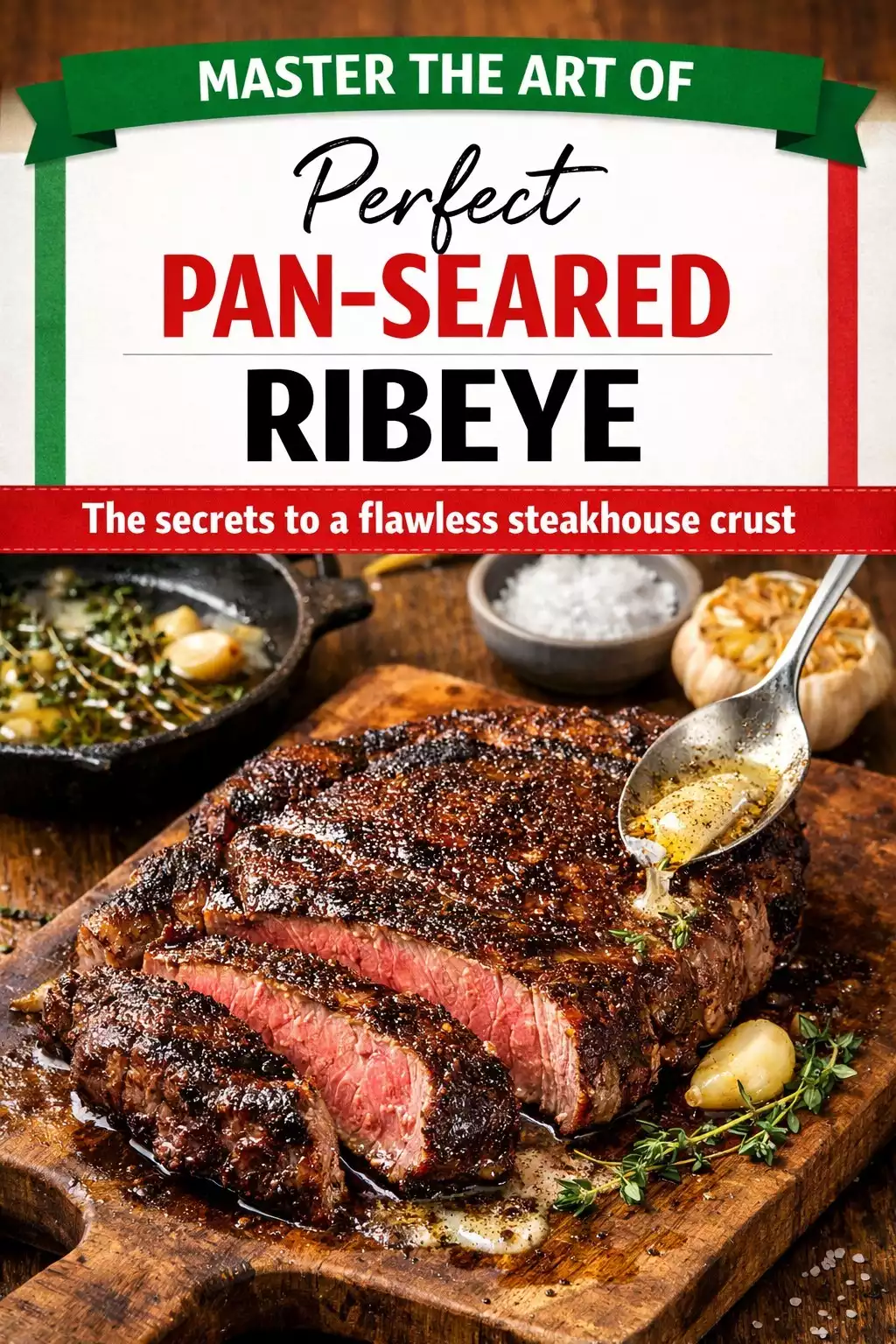
There is no more honest test of a cook’s skill than a pan-seared steak. No sauce to hide behind, no braising liquid to mask mistakes — just beef, heat, and technique. I’ve seen trained chefs overcook a ribeye on their first week and home cooks nail it by following the right steps. The skill isn’t complicated. The execution requires attention. Perfect Pan-Seared Ribeye is one of those dishes that looks simple from the outside and rewards anyone who takes it seriously.
The ribeye is the right cut for this application. Fat cap along the edge, excellent marbling throughout, enough thickness to develop a crust while keeping the center where it belongs. The technique is cast iron, preheated ripping hot, a 3-4 minute sear per side, and then a basting phase with butter, garlic, and thyme that every steakhouse charges extra for and every home cook can replicate exactly. The result is a steak with a dark, crackling crust and a center that’s warm and rosy, the way it’s meant to be.
For more steak technique and related beef dishes, see garlic butter filet mignon for a different cut using similar principles, or pair with steak mushroom sauce to elevate any seared steak. The classic beef stew and best meatloaf recipe round out the beef repertoire.
Why This Works
- Dry brine (salt ahead of time): Salting the steak 45 minutes to 1 hour before cooking draws moisture to the surface, which then gets reabsorbed with the salt, seasoning the meat deeply and creating a drier surface that sears better.
- Ripping hot cast iron: The pan needs to be preheated for at least 5 minutes over high heat before the steak goes in. An insufficiently hot pan steams the steak instead of searing it — gray crust, no bark, inferior flavor.
- Butter basting: Adding butter, garlic, and fresh thyme in the last 2 minutes and continuously spooning the foaming butter over the steak creates a flavor infusion that permeates the crust and fragrant herbs coat every bite.
- Resting is mandatory: Cutting immediately after cooking releases all the internal juices onto the board. A 5-minute rest allows the fibers to relax and reabsorb moisture. The steak is juicier, period.
Ingredients
For the Ribeye
- 1-2 bone-in or boneless ribeye steaks, 1 to 1.5 inches thick
- Kosher salt (generous)
- Black pepper, coarsely ground
- 2 tablespoons high smoke-point oil (avocado, canola, or grapeseed)
- 3 tablespoons unsalted butter
- 4 cloves garlic, smashed with the flat of a knife
- 4 sprigs fresh thyme
- 2 sprigs fresh rosemary
Instructions
Step 1: Dry Brine the Steak
Remove steak from refrigerator at least 45 minutes before cooking. Pat completely dry with paper towels. Season both sides and the edges generously with kosher salt and coarsely ground black pepper. Place on a wire rack and let sit at room temperature uncovered. The surface should look dry before the steak goes in the pan — this is what creates the crust.
Step 2: Preheat the Pan
Place a cast-iron skillet on the stove over high heat. Let it preheat for a full 5 minutes — the pan should be dark and just beginning to smoke. Add the oil and swirl to coat. The oil should shimmer immediately and begin smoking within 15-20 seconds. If it doesn’t smoke quickly, the pan isn’t hot enough. Wait until it does.
Step 3: Sear the First Side
Place the steak in the pan away from the body and press down gently to ensure full contact with the pan surface. Do not move it. Let it sear undisturbed for 3-4 minutes. A properly searing steak releases from the pan on its own when the crust is ready — if it resists when lifting, give it another 30 seconds. The first side should be deeply browned with a proper crust.
Step 4: Sear the Second Side and Edges
Flip the steak. Sear the second side for 3 minutes. Using tongs, hold the steak on its edges to render the fat cap — 30-60 seconds per edge. This rendering creates both flavor and texture.
Step 5: Butter Baste
Reduce heat to medium. Add butter, garlic cloves, thyme, and rosemary to the pan. As the butter foams, tilt the pan toward the burner and use a spoon to continuously baste the steak with the fragrant butter for 1-2 minutes. The garlic and herb-infused butter permeates the crust and creates the restaurant finish. Internal temperature for medium-rare: 130-135°F.
Step 6: Rest and Serve
Transfer steak to a cutting board and let rest for 5 minutes. Do not tent with foil — tenting traps steam and softens the crust that took 8 minutes to build. After resting, slice against the grain if cutting, or serve whole. Finish with flaky sea salt on top.
Tips & Common Mistakes
- Never cook cold steak: Cold-center steak takes longer to cook on the outside, resulting in overcooked exterior before the center reaches the right temperature. Room temperature (or at least 45 minutes out of the fridge) is essential.
- Dry the surface completely: Surface moisture turns to steam in the pan and inhibits browning. Pat dry after the dry brine absorbs. The surface should look matte, not shiny, before cooking.
- Don’t press down during searing: Pressing the steak into the pan squeezes out juices. Let it sit undisturbed and let the Maillard reaction do the work without interference.
- Use a thermometer: The touch test is unreliable for beginners. An instant-read thermometer takes the guesswork out. Pull at 130°F for medium-rare — it rises to 135°F during resting.
- Cast iron only for this: Non-stick pans can’t handle the heat required. Stainless works but doesn’t retain heat as well. Cast iron is the tool for steakhouse results at home.
Variations Worth Trying
- Reverse sear method: Start in a 250°F oven until the steak reaches 115°F internal, then sear in a ripping hot cast iron for 1-2 minutes per side. More even edge-to-edge doneness. Especially good for 1.5+ inch steaks. See steak recipes for the full reverse sear technique.
- Compound butter finish: Instead of plain butter basting, make a herb butter (softened butter + roasted garlic + fresh herbs) and top the rested steak with a slice. It melts into the crust as you eat.
- Steak au poivre: Press coarsely cracked peppercorns into both sides before searing. Deglaze with cognac after basting, add cream, and reduce for a classic French peppercorn sauce.
- Chimichurri finish: Skip the butter baste and instead top the rested steak with fresh chimichurri (parsley, oregano, garlic, red wine vinegar, olive oil). A South American approach with bright acidity.
- Pan sauce after the steak: After the steak rests, use the same pan with the beef drippings to make a quick pan sauce — deglaze with wine, add shallots and broth, reduce, finish with butter. See steak mushroom sauce for a complete sauce recipe.
Storage & Reheating
- Refrigerator: Store cooked steak wrapped in foil for up to 3 days. The quality degrades but it’s still excellent for steak salads, steak and eggs, or sandwiches.
- Freezer: Not recommended for cooked ribeye — the texture suffers significantly. Freeze raw ribeye for up to 6 months, thaw in the refrigerator overnight before cooking.
- Reheating: The best method: place the cold steak on a wire rack in a 250°F oven for 20-25 minutes until warmed through, then sear in a hot skillet for 1 minute per side to refresh the crust. Microwave makes it rubbery — avoid it for steak.
Frequently Asked Questions
What thickness ribeye works best?
One to one-and-a-half inches is the sweet spot for pan searing. Thinner than 1 inch cooks through too fast before developing a proper crust. Thicker than 1.5 inches is better suited for the reverse sear method to ensure even doneness from edge to center.
What oil should I use for high-heat searing?
Use an oil with a high smoke point: avocado oil (520°F), refined grapeseed oil (420°F), or canola oil (400°F). Never use extra virgin olive oil or butter alone for the initial sear — both smoke and burn at high heat. Butter is added later in the basting phase when the heat is reduced.
How do I know when to flip the steak?
The steak will release from the pan naturally when the crust is fully formed. If it sticks when gently lifted, the crust isn’t ready — wait another 30 seconds. Forcing a flip too early pulls the crust off and leaves it stuck to the pan. Patience pays off here.
Is bone-in or boneless ribeye better?
Both are excellent. Bone-in ribeye (often called cowboy or tomahawk when very large) cooks slightly unevenly near the bone, but many cooks and diners prefer the added flavor the bone contributes during cooking. Boneless is more uniform and easier to slice. For pure technique and consistency, boneless is more forgiving.
Can this technique be used on other cuts?
Yes. The same pan-searing technique applies to New York strip, filet mignon, and T-bone. Adjust cooking time based on thickness and fat content — leaner cuts like filet need slightly less time and more attention to avoid drying out. See garlic butter filet mignon for the filet application.