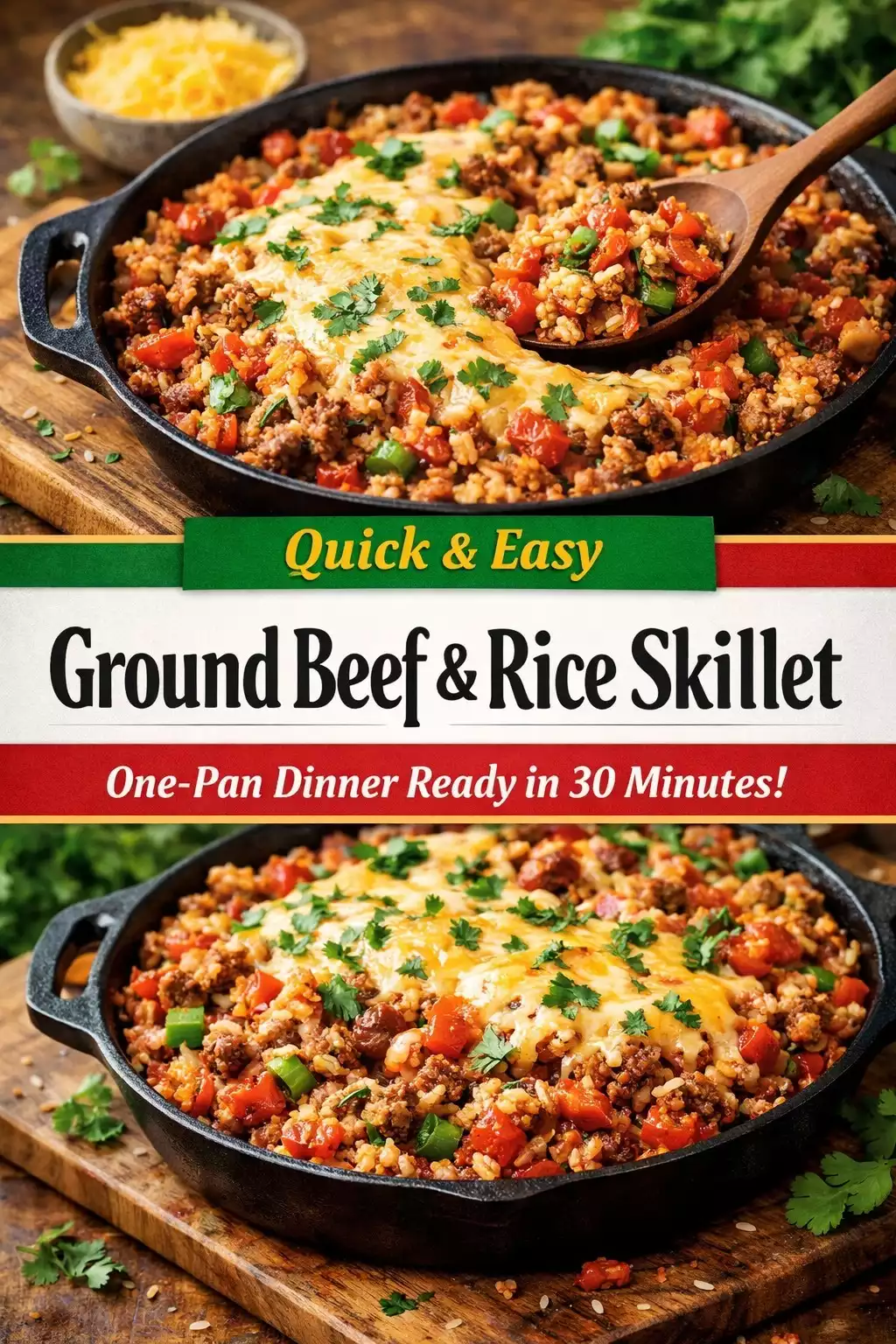
This is the recipe that ends arguments at Sunday dinner. Ground Beef and Rice Skillet is the weeknight dish that proves expensive ingredients and complicated techniques are not prerequisites for eating well. This is one pan, under 30 minutes, the kind of meal that keeps coming back to the rotation because it works every single time. The trick, as always, is doing the few simple things correctly.
The rice cooks directly in the pan with the beef and aromatics — absorbing the seasoned liquid, picking up the beef fat, cooking in a base that builds flavor the whole way through. It’s not fried rice (which requires cold, pre-cooked rice) and it’s not a side dish. It’s a complete one-pan dinner where every component contributes to the others. The texture of the rice at the end — slightly fluffy, with the bottom layer developing a subtle crust from the pan — is one of those things that makes you want to eat directly from the skillet.
For a fried rice variation using leftover rice, see the beef fried rice or the budget-oriented beef fried rice (leftover rice). The ground beef potato skillet follows the same one-pan logic with potatoes instead of rice. And the classic beef stew and homemade meatballs round out the beef family for larger dinner projects.
Why This Works
- Rice absorbs the cooking liquid: Cooking rice in seasoned beef broth rather than plain water means the grain absorbs flavor as it cooks. The rice is not just a vehicle for the beef — it becomes part of the same flavor base.
- Beef browned before rice: Browning the beef properly in the pan creates drippings and browned bits (fond) that the liquid and rice will incorporate. Skip this step and the rice base is significantly less flavorful.
- Cover and low heat for the rice stage: Once the liquid is added and the rice goes in, reducing to low heat and covering the pan allows the rice to steam properly without burning the bottom. Patience here produces fluffy rice rather than a crunchy, uneven mess.
- One pan throughout: Every component builds on the previous one. The onions cook in the beef drippings. The spices bloom in the onion-beef fat. The rice absorbs the spice-infused broth. This is layered cooking in the most efficient format.
Ingredients
For the Skillet
- 1 lb ground beef (80/20)
- 1 cup long-grain white rice (uncooked)
- 1 medium yellow onion, diced
- 1 bell pepper, diced
- 3 cloves garlic, minced
- 1 can (14 oz) diced tomatoes
- 2 cups beef broth
- 1 teaspoon cumin
- 1 teaspoon garlic powder
- 1 teaspoon onion powder
- 1 teaspoon smoked paprika
- ½ teaspoon chili powder
- Salt and black pepper to taste
- 1 tablespoon olive oil
- 1 cup shredded cheddar or Mexican blend cheese
- Fresh cilantro or parsley for garnish
Instructions
Step 1: Brown the Beef
Heat olive oil in a large, deep skillet over medium-high heat. Add ground beef in one piece without breaking it up. Let it sear for 2 minutes. Then break apart and continue cooking until fully browned, about 6-8 minutes total. Season with all spices (cumin, garlic powder, onion powder, paprika, chili powder, salt, and pepper). Drain excess fat if using beef above 80/20, but leave some fat in the pan for flavor.
Step 2: Cook the Aromatics
Add onion and bell pepper to the beef. Cook 3-4 minutes until softened. Add garlic and cook 1 minute more, stirring. The pan should be fragrant and the vegetables softened but not mushy.
Step 3: Add the Rice
Add uncooked rice to the pan and stir to coat with the beef-fat mixture. Toast the rice for 1 minute, stirring constantly. This step builds flavor in the rice and prepares it to absorb the liquid evenly.
Step 4: Add Liquid and Cook
Pour in diced tomatoes (with juices) and beef broth. Stir to combine, scraping up any browned bits from the bottom of the pan. Bring to a boil, then reduce heat to LOW. Cover and cook for 18-20 minutes without lifting the lid. The rice needs steam pressure to cook evenly. After 18 minutes, check — the liquid should be absorbed and the rice should be just tender.
Step 5: Finish and Serve
Remove from heat. Scatter cheese over the top, replace the lid, and let the residual heat melt the cheese for 2-3 minutes. Taste and adjust seasoning. Garnish with fresh cilantro or parsley. Serve directly from the skillet.
Tips & Common Mistakes
- Use long-grain rice: Short-grain or instant rice changes the cooking time and texture significantly. Long-grain white rice is calibrated for this recipe’s liquid ratio and timing.
- Don’t lift the lid during cooking: The steam pressure is what cooks the rice evenly. Every peek releases steam and adds 3-5 minutes to the cooking time while producing unevenly cooked rice.
- Toast the rice: The 1-minute toasting step in the beef fat is the difference between bland starchy rice and nutty, flavorful rice. It takes 60 seconds and adds significant flavor.
- Exact liquid ratio matters: 2 cups beef broth plus the tomato juices is calibrated for 1 cup of rice. If scaling up, maintain the 2:1 liquid-to-rice ratio (counting tomato juice as part of the liquid).
- Low heat for the rice stage: Once the lid goes on, turn the heat to its lowest setting. Too high and the bottom burns before the top cooks. Too low and the rice steams slowly and unevenly. The lowest reliable burner setting is correct.
Variations Worth Trying
- Mexican rice skillet: Add a tablespoon of chipotle in adobo and use fire-roasted diced tomatoes. Top with sour cream, avocado, and salsa verde. A completely different destination with the same technique.
- Italian style: Swap the Mexican spice blend for Italian seasoning, add crushed tomatoes instead of diced, and top with mozzarella and fresh basil. Closer to an Americanized stuffed pepper filling in skillet form.
- Cajun version: Add Cajun spice blend, andouille sausage alongside the beef, and top with sliced green onions. The holy trinity (onion, celery, bell pepper) works perfectly in this format.
- Add beans: Stir a can of drained black or pinto beans in with the tomatoes. More protein, more fiber, stretches the recipe to feed a larger group for the same cost.
- One-pan variations: This technique works as the foundation for many other skillet meals. For another one-pan approach, compare with ground beef potato skillet and the budget-focused beef fried rice (leftover rice).
Storage & Reheating
- Refrigerator: Store in an airtight container for up to 4 days. The rice absorbs more liquid overnight and the texture becomes more cohesive. Equally good the next day as lunch.
- Freezer: Freezes well for up to 2 months. Rice can become slightly grainy when frozen and reheated but is still very good. Let thaw overnight in the refrigerator before reheating.
- Reheating: Add a splash of beef broth or water before reheating — the rice has absorbed most of the liquid and needs a little moisture to reconstitute. Stovetop over medium-low heat with the splash of broth, covered, for 5-7 minutes. Microwave covered in 90-second intervals with a tablespoon of water.
Frequently Asked Questions
Can brown rice be substituted?
Yes, with significant timing adjustments. Brown rice takes 40-45 minutes to cook and requires more liquid (2.5 cups broth instead of 2). The resulting dish is heartier and more nutritious but takes longer. Use the same technique but increase both liquid and covered cooking time accordingly.
What if the rice sticks to the bottom?
A small amount of sticking creates a desirable crust (like socarrat in Spanish rice). Excessive sticking means the heat was too high or the liquid ran out. If the liquid absorbs before the rice is done, add ¼ cup of hot broth and continue cooking. Prevention: lowest burner setting after adding the lid.
Can this be made without the cheese?
Absolutely. The cheese is a finishing touch, not structural. Skip it for a lighter dish or for dairy-free diners. The base recipe is complete without it — the cheese just adds richness and a creamy element that most people enjoy.
How do I know when the rice is done?
The liquid should be fully absorbed with no visible standing liquid in the pan. The rice should be tender when bitten with no chalky center, and the top surface should look fluffy rather than wet. If liquid remains after 20 minutes, remove the lid and cook on low for 3-5 more minutes to evaporate.
What’s the difference between this and stuffed pepper filling?
It’s essentially the same filling — many people make this specifically to use as stuffed pepper filling, then refrigerate the extra for stuffed peppers the next day. The skillet version is more efficient; the stuffed pepper version is more presentation-focused. Both use the same base recipe. For stuffed peppers specifically, see beef stuffed bell peppers.