Red velvet cake is one of the most misunderstood recipes in the American baking canon. People think the color is the point. The color is the signal — the signal that you’re eating a cake with a specific chemistry: cocoa reacting with buttermilk and vinegar, producing a crumb that is more tender, more fine-textured, and more distinctly flavored than a standard chocolate layer cake. The color is a byproduct of doing it correctly. Southern bakers knew this for generations before red velvet became a menu trend.
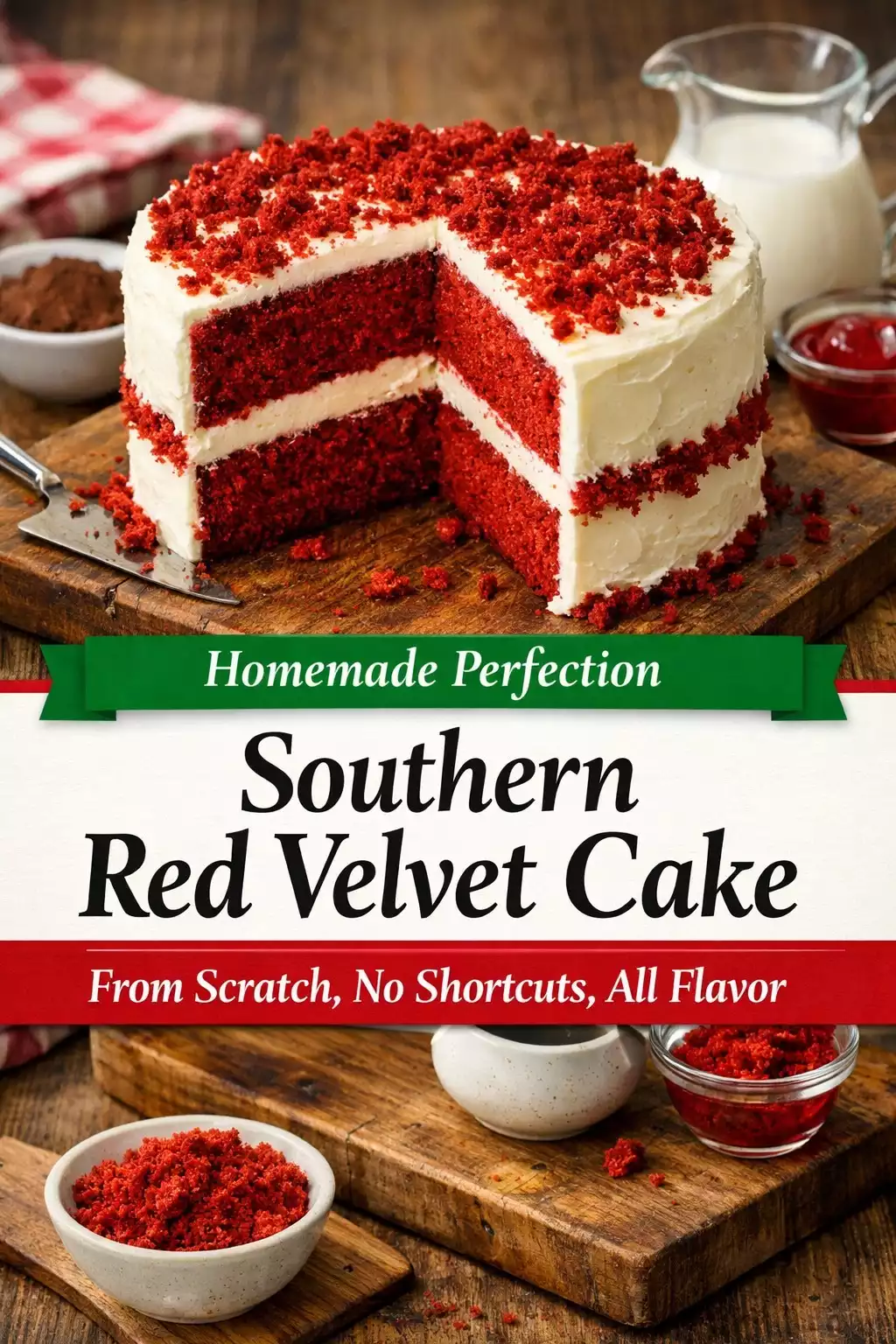
Marco doesn’t bake often, but when he does, it’s worth it. Southern Red Velvet Cake — the version his family actually requests, not the Pinterest fantasy. Not a box mix with extra food coloring. Not a dry sponge covered in inadequate frosting. A proper two-layer red velvet with a cream cheese frosting that has enough tang to balance the sweetness and enough structure to hold its shape when you serve it. The crumb is the point. The color is the proof you did it right.
Don’t rush this. Good food doesn’t have a timer. Cake recipes like this one reward patience at every step — from room-temperature ingredients to proper pan preparation to the rest before frosting. This is the red velvet cake that ends arguments at your table.
Why This Recipe Works
- Buttermilk and vinegar activate the cocoa: The acid in buttermilk and the added vinegar react with natural cocoa powder, enhancing the red pigments in the cocoa and producing the tenderizing effect that gives red velvet its characteristic soft crumb.
- Oil instead of butter: Oil-based cakes stay moist at refrigerator temperature, which matters for a cake that’s typically made a day ahead and served cold or at room temperature. Butter-based red velvet becomes dry after chilling.
- Natural cocoa powder: Dutch-process cocoa is too alkaline for this reaction. Natural (non-alkalized) cocoa powder is required for proper crumb texture and the classic flavor.
- Cream cheese frosting with full tang: A great cream cheese frosting has enough cream cheese to taste like cream cheese — not just sweetened butter with cream cheese notes. Proper ratio is critical.
- Room temperature everything: Cold eggs or buttermilk in a room-temperature batter creates uneven mixing. Room-temperature ingredients emulsify uniformly and produce a finer, more consistent crumb.
Ingredients
For the Cake (Two 9-inch layers)
- 2½ cups all-purpose flour
- 2 tablespoons natural (non-Dutch) cocoa powder
- 1 teaspoon baking soda
- ½ teaspoon salt
- 1½ cups granulated sugar
- 2 large eggs, room temperature
- 1½ cups buttermilk, room temperature
- 1 cup neutral oil (vegetable or canola)
- 1 teaspoon pure vanilla extract
- 1 tablespoon white vinegar
- 2 tablespoons red food coloring (gel preferred)
For the Cream Cheese Frosting
- 16 oz (2 blocks) full-fat cream cheese, room temperature
- ½ cup (1 stick) unsalted butter, room temperature
- 4 cups powdered sugar, sifted
- 2 teaspoons pure vanilla extract
- Pinch of salt
Instructions
Step 1: Prepare Pans and Preheat
Preheat oven to 350°F (175°C). Grease two 9-inch round cake pans, line the bottoms with parchment paper circles, and grease the parchment. Dust with flour and tap out the excess. This layered preparation ensures clean, damage-free release from both pans.
Step 2: Mix Dry Ingredients
Whisk together flour, cocoa powder, baking soda, and salt in a bowl. Set aside. Natural cocoa powder’s acidity is part of the recipe’s chemistry — sifting it into the flour distributes it evenly throughout every bite.
Step 3: Mix Wet Ingredients
In a large bowl, whisk sugar, eggs, oil, buttermilk, vanilla, vinegar, and red food coloring until smooth and uniform. The vinegar activates the baking soda later in the process — make sure it’s well distributed.
Step 4: Combine
Add the dry ingredients to the wet in two additions, stirring gently between each until just combined. The batter should be smooth, glossy red, and slightly thick. Don’t overmix — overmixed red velvet develops gluten and produces a tough, rubbery cake.
Step 5: Bake
Divide batter evenly between prepared pans. Bake 28–33 minutes until a toothpick inserted in the center comes out clean and the cake springs back when pressed gently. Don’t overbake — a dry red velvet is a wasted red velvet. Cool in pans 10 minutes, then invert onto wire racks and cool completely before frosting.
Step 6: Make Frosting
Beat cream cheese and butter together on medium speed until completely smooth and unified — no lumps. Add powdered sugar 1 cup at a time, beating on low to incorporate then medium to smooth. Add vanilla and salt. Beat until frosting is thick, creamy, and holds peaks. Refrigerate 20 minutes if it seems too soft to spread.
Step 7: Frost and Serve
Level the cake layers if domed. Place first layer on a cake board. Spread a generous layer of frosting over the top. Add second layer and frost the top and sides completely. For a clean finish, apply a thin crumb coat first, refrigerate 15 minutes, then apply the final coat. Garnish with red velvet crumbs pressed onto the sides if desired.
Pro Tips & Common Mistakes
- Use natural cocoa, not Dutch-process: The acid reaction with natural cocoa is part of the recipe’s structure and flavor. Dutch-process cocoa is already alkalized and won’t produce the same effect or texture.
- Room temperature dairy and eggs: Cold buttermilk causes oil to seize and creates an uneven batter. Pull everything from the refrigerator at least 45 minutes before baking.
- Don’t overmix: Mix until just combined after adding dry ingredients. A few passes of the spatula is all it needs. Overmixing is the most common cause of tough, dense red velvet.
- Cool completely before frosting: Warm cake layers melt cream cheese frosting. The frosting slides, the layers shift, the whole assembly becomes a problem. Wait until every bit of warmth is gone.
- Gel food coloring is more concentrated: Two tablespoons of gel coloring produces a deep, saturated red. Liquid food coloring requires significantly more volume and introduces extra liquid that affects the batter balance.
Variations Worth Trying
- Red Velvet Cupcakes: Divide batter among 24 lined muffin cups. Bake at 350°F for 18–22 minutes. The frosting-to-cake ratio in cupcake form is exceptional.
- Red Velvet Bundt: Pour batter into a greased and floured 12-cup Bundt pan and bake 45–55 minutes. Drizzle with cream cheese glaze instead of frosting.
- Red Velvet Cheesecake Cake: Place a thin cheesecake layer between the red velvet layers. The cream cheese frosting, cheesecake center, and red velvet layers create an extraordinary multi-layer result.
- Natural Color Version: Use beet powder instead of artificial food coloring — 2 tablespoons produces a natural deep red without artificial dye. The flavor difference is minimal.
- White Chocolate Drizzle: Melt 4 oz white chocolate and drizzle over the frosted cake before the frosting sets. The white chocolate sets into elegant lines against the cream-colored frosting. Also see this hummingbird cake, this southern pecan pie, this tres leches cake, this no-bake banana pudding, and these double chocolate cookies for more Southern-inspired desserts.
Storage & Reheating
- Room temperature: Frosted cake can sit at room temperature up to 2 hours for serving. The cream cheese frosting is stable for a short window.
- Refrigerator: Cover and refrigerate up to 5 days. The cake actually improves on days 2 and 3 as the layers absorb the frosting and the crumb tightens.
- Bring to room temperature before serving: Cold red velvet is dense and slightly rubbery. Allow 30–45 minutes at room temperature for the best texture.
- Freezer: Freeze unfrosted layers wrapped tightly in plastic and foil for up to 3 months. Frost after thawing completely at room temperature.
Frequently Asked Questions
Why is my red velvet cake brown instead of red?
Either Dutch-process cocoa was used (which neutralizes the acid reaction) or insufficient food coloring was added. Use natural cocoa and gel food coloring for the reliable red result. The cocoa-acid reaction alone produces only a subtle reddish tint — the food coloring amplifies it to the iconic red.
Can I make red velvet without food coloring?
Yes. The cake will be a deep brown-red rather than vivid red — the natural result of the cocoa and buttermilk reaction. Beet powder (2 tablespoons) provides a natural alternative color. The flavor is identical without food coloring.
Why did my frosting become runny?
Cream cheese that was too warm, or butter that was too soft. Both should be room temperature but firm — not warm. If frosting is too soft, refrigerate 20 minutes and beat again. Don’t add more sugar to compensate — it makes the frosting grainy.
Can I use this recipe for a 3-layer cake?
Yes. Divide the batter among three 8-inch pans (not 9-inch — shallower layers prevent overflow). Reduce bake time to 22–26 minutes. Make 1.5x the frosting recipe to cover the additional surface area.
Do I need buttermilk or can I substitute?
The buttermilk is structural, not just flavorful — its acidity activates the baking soda and tenderizes the gluten. Make a substitute: 1½ cups whole milk plus 1½ tablespoons white vinegar. Stir, let sit 5 minutes, use immediately. Reliable replacement for this recipe.
How long will the frosted cake keep?
Refrigerated and covered, 5 days with no noticeable quality decline. The second and third days are often the best — the flavors settle and the frosting sets into a more cohesive layer around the cake. Make it ahead without concern.