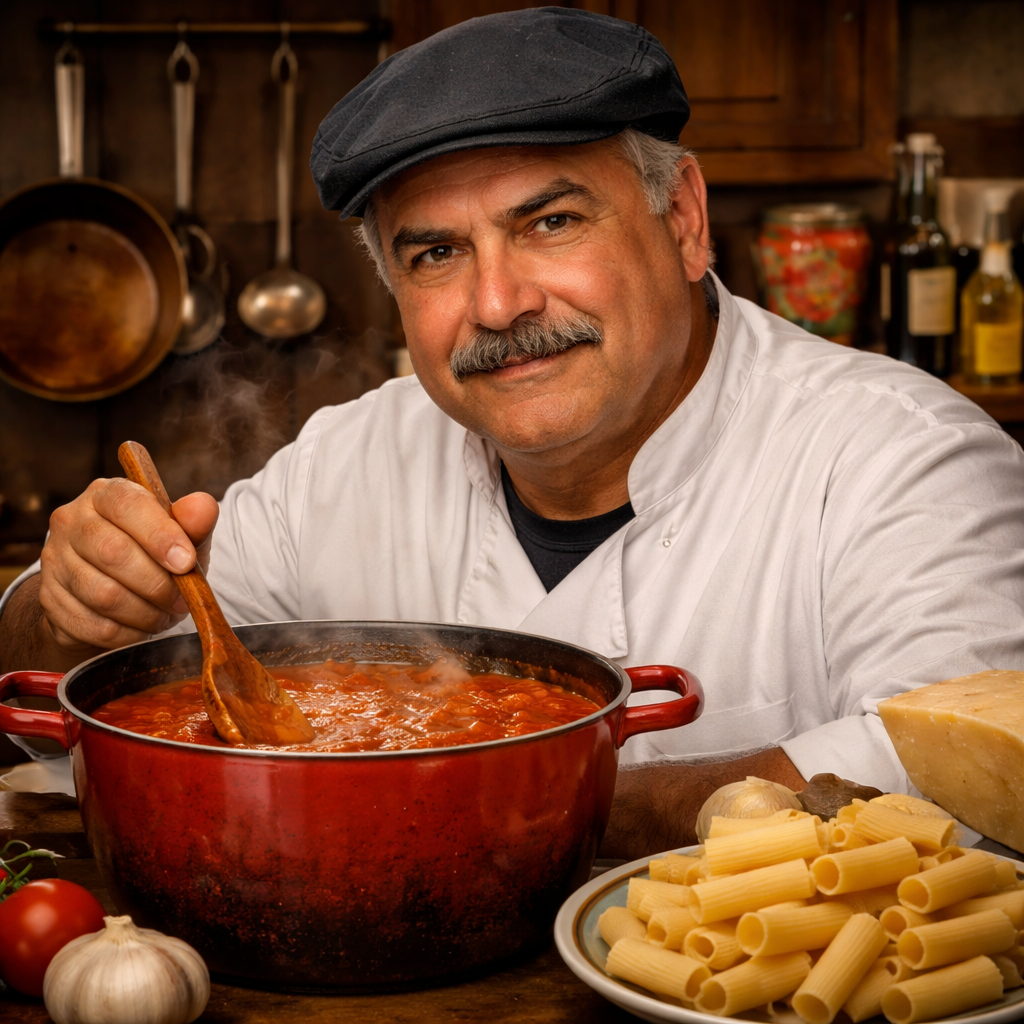
You want the secret? It’s patience. And good olive oil. Sunday Pot Roast is the recipe my family has fought over for two generations — not about who gets the last slice, but about who gets to make it. Because the cook who makes the pot roast owns Sunday. It’s as simple as that. I’ve made this in restaurant-grade braisers and in a beat-up Dutch oven my mother used for forty years, and the results are virtually indistinguishable. Good technique, the right cut of beef, and time do the work here.
A pot roast is fundamentally a braise — a cut of tough, collagen-rich meat cooked low and slow in liquid until the connective tissue dissolves into gelatin and the meat yields to a fork. What you’re chasing is beef so tender it pulls apart reluctantly, swimming in a braising liquid so rich it coats a spoon. This is Sunday dinner as a spiritual practice.
For the full beef dinner rotation, pair this with Classic Beef Stew for another low-and-slow masterclass, and Hamburger Steak with Onion Gravy when the week doesn’t allow Sunday-level commitment. Keep Beef Tacos in the weeknight arsenal, and Best Meatloaf Recipe and Homemade Meatballs complete the lineup.
Why This Pot Roast Actually Works
- Chuck roast is the right cut: The high collagen content in chuck transforms into gelatin over long cooking, creating that silky texture that defines a great pot roast.
- Hard sear first: The crust developed before braising adds depth to the finished braising liquid that just can’t come from liquid alone.
- Low and slow: 300°F oven, 3–3.5 hours. Higher temperature squeezes moisture out faster than collagen can dissolve into gelatin.
- Vegetables added late: Carrots and potatoes go in the last 45–60 minutes so they’re cooked through but not disintegrated.
- Rest before serving: Like any braise, it benefits from 15 minutes off heat before carving.
Ingredients
The Roast
- 3–4 lb chuck roast, tied or intact
- 2 tbsp neutral oil or olive oil
- 2 tsp kosher salt
- 1 tsp black pepper
- 1 tsp garlic powder
The Braise
- 1 large yellow onion, roughly chopped
- 4 garlic cloves, smashed
- 2 carrots, cut into 2-inch pieces
- 2 celery stalks, cut into 2-inch pieces
- 2 tbsp tomato paste
- 1 cup dry red wine
- 2 cups beef broth
- 2 sprigs fresh thyme
- 1 sprig fresh rosemary
- 2 bay leaves
Late-Add Vegetables
- 4 medium Yukon Gold potatoes, quartered
- 3 large carrots, cut into 2-inch pieces
- Salt and pepper to taste
Instructions
Step 1: Season and Sear
Pat the chuck roast completely dry with paper towels. Season aggressively on all sides with salt, pepper, and garlic powder. Heat a Dutch oven or heavy oven-safe pot over high heat until smoking. Add oil, then sear the roast 4–5 minutes per side until a deep, dark crust forms. Don’t move it — let the crust release naturally. Sear the ends as well. Remove and set aside.
Step 2: Build the Braise Base
Reduce heat to medium. In the same pot, sauté onion and celery 4–5 minutes. Add smashed garlic and cook 1 minute. Add tomato paste and cook, stirring, 2–3 minutes until slightly darkened and jammy. Pour in wine and scrape up every brown bit from the bottom of the pot. Simmer 2–3 minutes until wine reduces slightly.
Step 3: Braise
Add beef broth, carrots, celery, thyme, rosemary, and bay leaves. Nestle the seared roast back into the pot. The liquid should come about halfway up the sides of the meat — not cover it. Bring to a simmer, cover tightly, and transfer to a 300°F oven. Braise 2.5 hours.
Step 4: Add Vegetables
Remove pot from oven. Add quartered potatoes and additional carrot pieces around and under the roast. Return to oven for 45–60 more minutes, until vegetables are tender and meat registers 200–205°F — or yields completely to a fork with no resistance.
Step 5: Rest and Serve
Remove roast and vegetables. Discard herb sprigs and bay leaves. If desired, reduce the braising liquid over medium-high heat 5–10 minutes for a richer sauce. Slice or pull the roast and arrange with vegetables. Spoon the braising liquid generously over everything.
Pro Tips & Common Mistakes
- Don’t use lean cuts: Eye of round or sirloin tip won’t break down the same way. Chuck has the connective tissue that transforms into gelatin during braising. It’s not optional.
- Don’t rush the sear: A pale golden sear contributes almost nothing to flavor. Dark, almost-too-dark is what you’re after. It shouldn’t smell burned — it should smell like “beef.”
- Don’t skip the tomato paste step: Cooking tomato paste in fat until slightly darkened concentrates umami and adds a depth that raw paste can’t provide.
- Keep the lid on: Every time the lid comes off, you lose steam and temperature. The braise should be barely simmering, not vigorously bubbling.
- Add vegetables late: Potatoes and carrots added at the start turn to mush over 3+ hours. The last 45–60 minutes is the window.
Variations Worth Trying
- Slow Cooker: Sear on the stovetop, transfer everything to a slow cooker. Cook on LOW 8–10 hours or HIGH 5–6 hours. Add vegetables the last 2 hours on HIGH.
- Italian-Style: Add ¼ cup grated Parmesan rind to the braise, use red wine generously, finish with fresh basil. Serve with polenta instead of potatoes.
- French-Style (Pot-au-Feu): Use a bouquet garni of parsley, thyme, bay, and cloves. Serve broth separately as a first course with crusty bread before the meat and vegetables.
- Instant Pot: Sear on SAUTE setting, add all braise ingredients, cook on HIGH PRESSURE for 70–80 minutes. Natural pressure release 20 minutes. Add vegetables and cook an additional 10 minutes HIGH PRESSURE.
Storage & Reheating
- Refrigerator: Pot roast and vegetables in braising liquid, 4–5 days. The liquid will gel in the refrigerator — that’s the gelatin from collagen breakdown, and it’s a sign of quality.
- Freezer: Pulled or sliced, with liquid, up to 3 months. Defrost overnight in refrigerator before reheating.
- Reheating: Stovetop in a covered pan over low heat with the braising liquid is best. Add a splash of beef broth if the liquid has been absorbed. Oven at 300°F covered for 25–30 minutes also works well.
- Leftover ideas: Pot roast hash with potatoes, French dip sandwiches with braising liquid as the au jus, or tacos with the pulled beef.
Frequently Asked Questions
What’s the best cut for pot roast?
Chuck roast, every time. The shoulder muscle contains abundant connective tissue (collagen) that dissolves into gelatin during braising, creating that characteristic silky texture and rich braising liquid. Brisket is a close second for a slightly denser texture.
How do I know when it’s done?
Temperature matters less than texture here. At 200–205°F, the connective tissue has fully converted to gelatin. More practically: when a fork slides in and the meat pulls apart with no resistance, it’s done. If it’s still firm at the fork, it needs more time.
Can I make this a day ahead?
Yes, and it’s better the next day. Cool completely, refrigerate in the braising liquid. The fat will solidify on top and can be skimmed off before reheating. Flavor deepens overnight significantly.
How much liquid do I need?
Enough to come halfway up the sides of the roast. You want the bottom half submerged and the top exposed so it doesn’t steam uniformly — the braising and the ambient oven heat work together to produce a more complex result than pure submersion.