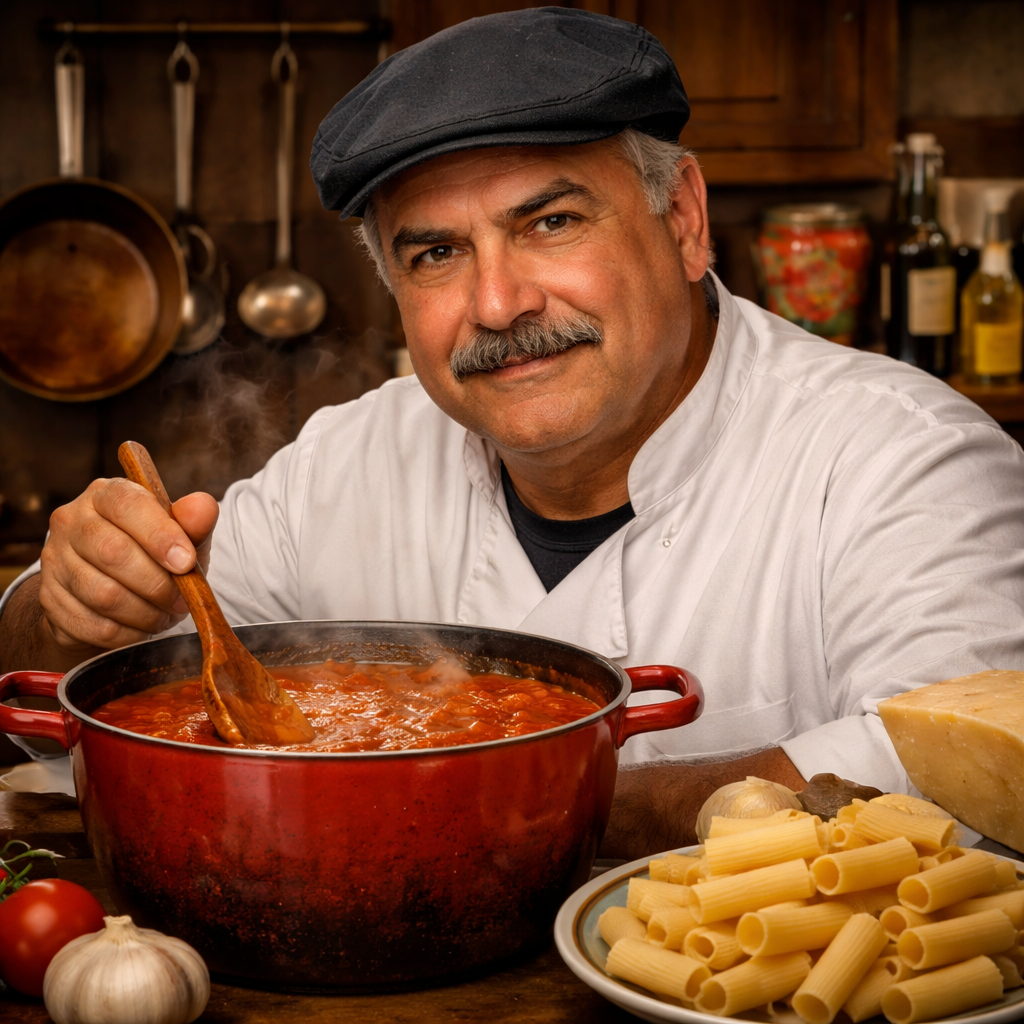
My mother made this every Sunday. I still can’t beat hers, but I’m close. What Americans call carbonara is often a cream-sauce approximation — and I understand why, because real carbonara is terrifying the first time you make it. The eggs have to hit the hot pasta at exactly the right moment, the pan has to be off the heat but still warm, and you’re trusting temperature gradients to set your sauce without scrambling your eggs. My mother never worried about any of this. She just made it and it was perfect every time. That’s what experience looks like.
This version uses bacon — not guanciale, not pancetta, just good quality thick-cut American bacon — because that’s the Italian-American version that has lived in New Jersey households for seventy-five years. The result is slightly smokier than the Roman original, slightly richer from the bacon fat, and completely addictive in a way that makes you understand why people kept making it.
This egg and bacon pasta is honest home cooking. No cream. The creaminess comes entirely from eggs, cheese, and pasta water — the technique is what makes it work. Learn this once and you’ll understand why every other carbonara you’ve had was just a sauce with pasta instead of a unified dish.
Why This Egg and Bacon Pasta Works
- Whole eggs plus yolks — yolks provide richness and binding; whole eggs provide moisture; the ratio matters
- Hot pasta, not hot pan — the pasta carries enough heat to set the eggs; the pan off heat prevents scrambling
- Pasta water is the control mechanism — starchy water loosens the sauce while lowering the temperature, giving more time before eggs set
- Bacon fat stays in the pan — rendered bacon fat is where the carbonara flavor lives; don’t drain it
- Pecorino Romano plus Parmigiano — the sharpness of Pecorino balanced by the nuttiness of Parmigiano gives the right carbonara profile
Ingredients
Core Ingredients
- 1 pound spaghetti or rigatoni
- 8 oz thick-cut bacon (or pancetta), cut into small pieces
- 3 large eggs plus 2 egg yolks
- ¾ cup freshly grated Pecorino Romano
- ¼ cup freshly grated Parmigiano-Reggiano
- 1 teaspoon freshly cracked black pepper (generous — don’t be timid)
- ½ cup reserved pasta water
- Kosher salt for pasta water
Optional Additions
- 1 clove garlic (brown in bacon fat, then remove — adds flavor without making it garlicky)
- Splash of white wine (deglaze after bacon, before adding pasta)
- Fresh parsley for garnish
- Extra egg yolk for each serving for a richer finish
Instructions
Step 1: Cook the Bacon
Add bacon pieces to a cold skillet. Turn heat to medium and render slowly — starting cold renders the fat without burning the outside. Cook 8–10 minutes until bacon is crispy and the fat has pooled in the pan. Remove bacon with a slotted spoon to a paper towel. Leave all the fat in the pan. If using garlic, remove it now. The fat-rich pan is where the pasta finishes.
Step 2: Make the Egg Mixture
While bacon renders, whisk eggs, yolks, Pecorino Romano, and Parmigiano together in a bowl. Add the black pepper and mix well. The mixture should look thick and slightly grainy from the cheese. Set aside at room temperature — cold egg mixture takes longer to set and gives you more margin when combining.
Step 3: Cook the Pasta
Bring a large pot to a boil. Salt it well (the sauce is already salty from cheese and bacon, so don’t over-salt the water). Cook pasta two minutes shy of al dente. Reserve 1 full cup pasta water before draining. Drain pasta and immediately transfer to the skillet with the bacon fat over medium-low heat.
Step 4: Combine — The Critical Step
Remove the skillet from direct heat. Let the pan cool for 30 seconds. Add ¼ cup pasta water to the pasta in the pan and toss. Then pour the egg and cheese mixture over the pasta. Toss vigorously and constantly for 2 full minutes — the residual heat of the pasta sets the eggs into a creamy sauce rather than scrambled eggs. Add more pasta water a tablespoon at a time to keep the sauce flowing and loose. The finished sauce should coat every strand in a creamy, golden glaze. Return cooked bacon to the pan and toss once more.
Step 5: Plate Immediately
Carbonara does not wait. Plate into warm bowls immediately. Add more black pepper, more Pecorino, and serve. If the pasta sits for even two minutes, the eggs continue setting from the residual heat and the sauce goes from creamy to thick. Eat it the moment it hits the bowl.
Chef’s Tips & Common Mistakes
- Off-heat egg addition is everything — eggs added to a hot pan over direct heat scramble in seconds; take the pan off heat and count to 30 before adding
- Toss constantly and quickly — the motion distributes heat evenly and prevents any one area from getting hot enough to scramble
- Pasta water is the safety net — if the sauce starts getting too thick or grainy, add pasta water immediately and toss; it cools and loosens simultaneously
- Room temperature eggs emulsify better — cold eggs from the fridge are more likely to seize; take them out 20 minutes before using
- Freshly cracked black pepper, not pre-ground — carbonara is named partly for its black pepper; pre-ground is too fine and too mild for this application
- Don’t add cream — cream is a crutch that gives the illusion of carbonara without the technique; the egg and cheese emulsion is the correct method
Variations
- Traditional Roman Carbonara: Substitute guanciale (cured pork cheek) for bacon — more delicate fat, less smoke, the original as designed by Romans
- Pancetta Version: Italian pancetta sits between guanciale and American bacon — less smoky than bacon, more available than guanciale
- Rigatoni Carbonara: Use rigatoni instead of spaghetti — the tubes trap sauce inside; see spaghetti carbonara for the long pasta version
- Spring Carbonara: Add fresh peas and asparagus tips — a classic seasonal variation that lightens the richness
- With Sausage: Sub crispy Italian sausage for bacon — similar rendered fat technique to creamy sausage rigatoni but with the egg-based sauce
- Baked Carbonara: Combine sauced pasta in a baking dish, top with extra cheese, bake at 375°F for 15 minutes — transforms into a baked pasta recipe format
Storage & Reheating
Refrigerator: Store up to 2 days. The sauce sets firmer as it cools but remains good.
Reheating: Reheat in a non-stick skillet over low heat with a splash of water, tossing gently. Never microwave — the eggs dry out in uneven waves. Add a fresh crack of black pepper and a small amount of freshly grated cheese after reheating.
Best Fresh: Carbonara is at its peak the moment it’s made. The texture changes notably after refrigeration. Make what you’ll eat.
Freezer: Not recommended — egg-based sauces do not survive freezing and reheating.
Frequently Asked Questions
Why did my carbonara scramble?
The pan was too hot when the egg mixture was added. The eggs cooked before they could emulsify with the pasta water and fat. Prevention: take the pan fully off heat, wait 30 seconds, then add the egg mixture while tossing constantly and quickly. If it starts to scramble, add cold pasta water immediately and toss — it can sometimes be rescued in the early stages.
Can I use pre-shredded cheese for carbonara?
No. Pre-shredded cheese has anti-caking agents that prevent proper melting and create a gritty texture in the sauce. Freshly grated Pecorino and Parmigiano are non-negotiable for proper carbonara. A microplane or box grater produces the fine texture needed to emulsify properly. See white sauce pasta for another recipe where pre-shredded cheese is disqualifying.
Is it safe to eat carbonara? The eggs aren’t cooked all the way.
The eggs are cooked to approximately 160°F through the residual heat of the hot pasta — technically pasteurized by the process. For extra safety with vulnerable individuals (pregnant, elderly, immunocompromised), use pasteurized eggs. The sauce texture is creamy, not raw-egg gelatinous when done correctly.
Why does my carbonara taste flat?
Usually not enough black pepper and not enough Pecorino. Carbonara is seasoned with cheese and pepper, not salt. Taste after combining — if it tastes mild, add more Pecorino and significantly more freshly cracked black pepper. See homemade lasagna for a ricotta-based pasta that uses similar Italian cheese layering.
Can I use just egg yolks?
More yolks = richer, more golden carbonara. Some traditional recipes use all yolks. The tradeoff is a thicker sauce that sets faster — it requires more pasta water to loosen and more speed when combining. For beginners, the whole egg plus yolk ratio here gives more working time and a slightly lighter result that’s more forgiving. Master that, then go all-yolk if you want maximum richness.