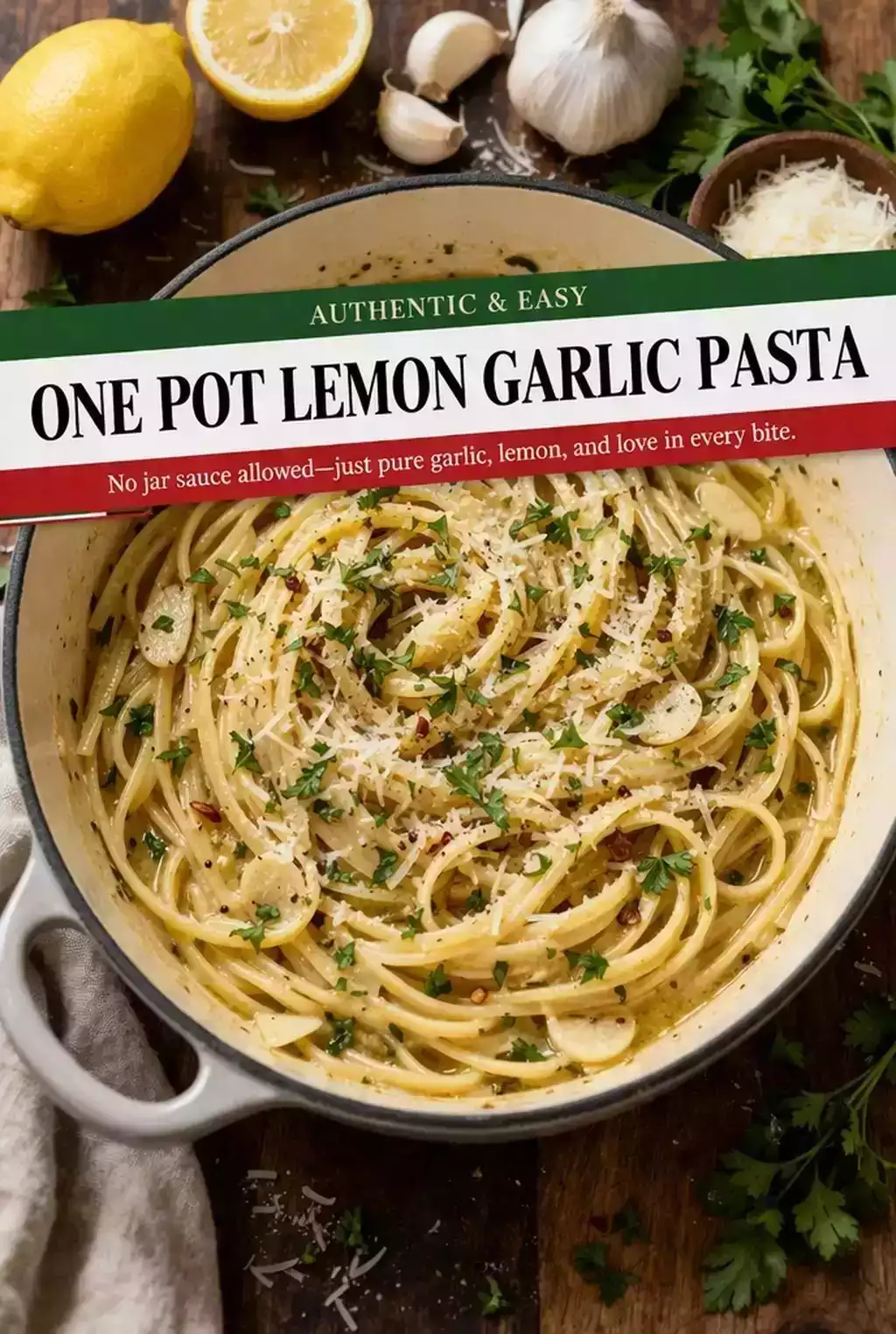
If you’re using jarred sauce for this, we need to talk. Aglio e olio is the most honest pasta in existence — five ingredients, twenty minutes, zero places to hide. My first Italian cooking teacher in Jersey called it “the test.” If you could make aglio e olio properly, you could cook. If you couldn’t, all the complicated recipes in the world wouldn’t save you.
I’ve eaten this in trattorias in Rome and at my nonna’s kitchen table in Elizabeth, New Jersey. The versions aren’t that different — good olive oil, good garlic, good pasta. The difference between a transcendent bowl and a mediocre one is about thirty seconds of attention at the stove.
This recipe for aglio e olio is built on two fundamentals: garlic that’s golden, not burnt, and pasta water that emulsifies the oil into a sauce. Skip either step and you’ve got oily noodles. Nail both and you’ve got one of the greatest things Italian cooking ever produced.
Why This Aglio e Olio Recipe Works
- Garlic is sliced thin, not minced — slices toast evenly and turn golden; minced garlic burns before it cooks
- Pasta water does the real work — starchy water emulsifies olive oil into a silky coating instead of a puddle
- Red pepper flakes go in with the garlic — blooming them in oil extracts heat and depth that raw flakes can’t give
- Quality olive oil is the flavor — not a supporting player, the actual star of the dish
- Pasta finishes in the pan — starch release from the last two minutes in the skillet builds body the bowl needs
Ingredients
Core Ingredients
- 1 pound spaghetti or linguine
- 8 cloves garlic, thinly sliced
- ½ cup good-quality extra virgin olive oil
- 1 teaspoon red pepper flakes (adjust to taste)
- 1 teaspoon kosher salt (plus more for pasta water)
- ½ cup fresh flat-leaf parsley, roughly chopped
- ½ cup reserved pasta water (have 1 cup ready)
- Freshly grated Parmigiano-Reggiano, for serving (optional — purists skip it)
Optional Upgrades
- 4 anchovy fillets (add with garlic, they dissolve into the oil)
- 1 teaspoon lemon zest (add at the end)
- Splash of white wine (add after garlic, cook off before pasta water)
- Toasted breadcrumbs (pangrattato) for crunch on top
Instructions
Step 1: Salt the Pasta Water Hard
Bring a large pot to a rolling boil. Add enough kosher salt that it tastes like the sea. Drop the spaghetti and cook until two minutes shy of al dente. Reserve at least 1 cup of pasta water before draining — this is the sauce. Don’t forget it.
Step 2: Toast the Garlic Low and Slow
While pasta cooks, add olive oil and sliced garlic to a cold skillet. Turn heat to medium-low. Let the garlic slowly turn golden over 6–8 minutes — low and slow is everything. When the slices are golden and fragrant, add red pepper flakes and cook 30 more seconds. The garlic should be pale gold, never brown, never dark. Dark garlic is bitter. Start over if needed.
Step 3: Build the Sauce
Remove the skillet from heat briefly, then add ½ cup reserved pasta water. It will sputter — that’s fine. Return to medium heat and stir the oil and water together for 1 minute. The starch from the pasta water begins emulsifying with the oil, forming a loose sauce. This is the technique that turns oil into coating.
Step 4: Finish the Pasta in the Pan
Add the drained spaghetti directly to the skillet. Toss constantly over medium heat for 2 minutes. Add more pasta water if needed — the pasta should look glossy and sauced, not oily and wet. Stir in parsley off the heat. Taste and adjust salt.
Step 5: Serve Immediately
Aglio e olio waits for no one. Plate immediately and eat while the pasta is moving. A shower of toasted breadcrumbs on top is traditional in some regions. Parmigiano is optional — serious Roman cooks skip it since there’s no sauce to anchor the cheese.
Chef’s Tips & Common Mistakes
- Start garlic in cold oil — cold start means gradual, even toasting; hot oil scorches the outside before the center cooks
- Reserve pasta water before draining — the single most forgotten step, and the most critical to the sauce
- Don’t rush the emulsification — toss vigorously so the fat and water bond; lazy tossing gives you greasy pasta
- Use a wide skillet, not a saucepan — surface area allows the pasta to toss and the sauce to cling properly
- Undercook pasta by 2 minutes — it always finishes in the pan; going in already al dente means overcooked on the plate
- Anchovy option is not optional for purists — four fillets dissolved into the oil adds umami depth most people can’t identify but everyone loves
Variations
- Aglio e Olio with Shrimp: Add peeled shrimp to the garlic oil after toasting, cook 2 minutes per side, then proceed — shrimp pasta technique similar to creamy garlic shrimp pasta
- With Anchovies and Capers: Add 4 anchovy fillets and 2 tablespoons capers with the garlic — a classic Naples-style variation
- Breadcrumb Version (Pasta con Mollica): Top with toasted breadcrumbs tossed in olive oil and garlic — Sicilian peasant food at its finest
- Lemon Aglio e Olio: Finish with lemon zest and juice for brightness — related technique to fettuccine Alfredo‘s fat-based coating
- Vegetable Version: Add blistered cherry tomatoes or wilted arugula at the end for color and nutrition without disrupting the base
Storage & Reheating
Refrigerator: Store up to 2 days in an airtight container. The pasta will absorb the oil as it sits.
Reheating: Reheat in a skillet over medium with a splash of water or olive oil, tossing to revive the emulsion. Microwave dries it out.
Best Fresh: Aglio e olio is a twenty-minute dish that doesn’t improve with time. Make it when you’re ready to eat it.
Freezer: Not recommended — the texture of the pasta and the oil emulsion both suffer.
Frequently Asked Questions
Why does my aglio e olio taste oily instead of saucy?
Not enough pasta water and not enough tossing. The starch in pasta water emulsifies with olive oil to form a sauce. Add more pasta water and toss aggressively over heat until the mixture looks creamy and clings rather than pools at the bottom of the bowl.
Can I use garlic powder instead of fresh garlic?
Not in this recipe. Garlic powder won’t toast in oil the same way and won’t give the golden, nutty flavor that defines the dish. This is one of five ingredients — every one needs to be the real thing. See cacio e pepe for another minimal-ingredient pasta where quality cannot be faked.
Is cheese supposed to go on aglio e olio?
Traditional Roman cooking says no — no tomato, no cream, no cheese. In practice, a little Parmigiano-Reggiano or Pecorino Romano doesn’t hurt. But if skipping cheese is hard, try the anchovy version first — it adds umami that makes cheese feel unnecessary.
How do I keep the garlic from burning?
Cold oil, medium-low heat, patience. Never add garlic to a hot pan for this recipe. Starting cold gives control. Monitor constantly — the window between golden and burnt is about thirty seconds. When in doubt, pull it off heat early and let residual heat finish it.
What’s the best pasta shape for aglio e olio?
Spaghetti is traditional and remains the best choice — the thin strands coat evenly in oil and the sauce distributes through the whole bowl. Linguine is a close second. Avoid thick pasta or shapes with pockets that trap oil without distributing it. Related: penne alla vodka uses a tube shape specifically to trap the sauce inside.