The first time I made this for my wife, she called her mother. Baked lemon herb salmon is one of those recipes that looks like it took more effort than it did, produces a result that embarrasses restaurant-priced dishes, and becomes a weeknight staple within the first month of making it. The oven does most of the work. Your job is simple: season generously, choose good salmon, and don’t overcook it. That third point is where most people lose the battle. Salmon at the right temperature — just flaking, slightly translucent at the very center — is a completely different experience from salmon cooked to 165°F out of excessive caution.
This is Baked Lemon Herb Salmon — old-school Italian-American style. Check out my Honey Garlic Salmon and Pan-Seared Salmon for other salmon preparations, and see my Air Fryer Salmon and Teriyaki Salmon for even more ways to cook this extraordinary fish.
Why This Baked Salmon Works
- Room temperature salmon — cold fish straight from the fridge creates uneven cooking — the outside reaches temperature before the inside warms up. A 15-minute rest on the counter matters with thick fillets.
- High heat, short time — 400–425°F for 12–15 minutes produces a lightly caramelized exterior and a perfectly moist interior. Low heat for longer produces dry, chalky salmon every time.
- Lemon and herb directly on the fish — herbs and lemon placed on the flesh before baking steam into the fish as it cooks, perfuming the interior with their flavors rather than just sitting on the outside.
- Don’t overcook — the most important instruction in salmon cookery. Pull at 125–130°F for medium (silky, slightly translucent center) or 145°F for fully cooked through. Both are safe; both are excellent — at different ends of the texture spectrum.
Ingredients
The Salmon
- 4 salmon fillets, 6 oz each, skin-on preferred
- 2 tbsp olive oil
- 1 tsp kosher salt
- 1 tsp garlic powder
- ½ tsp black pepper
- Zest of 1 lemon
- 1 tsp fresh thyme leaves or ½ tsp dried thyme
- 1 tsp fresh rosemary, finely chopped, or ½ tsp dried
- 2 tbsp flat-leaf parsley, chopped (for finishing)
The Topping
- 1 lemon, thinly sliced into rounds
- 3–4 garlic cloves, thinly sliced
- Fresh thyme or rosemary sprigs for the pan
For Serving
- Lemon wedges
- Fresh parsley or dill
- A drizzle of good olive oil at the finish
Instructions
Step 1: Bring Salmon to Room Temperature
Remove salmon from the fridge 15–20 minutes before cooking. Pat completely dry with paper towels. Dry salmon browns and caramelizes; wet salmon steams and stays pale.
Step 2: Season
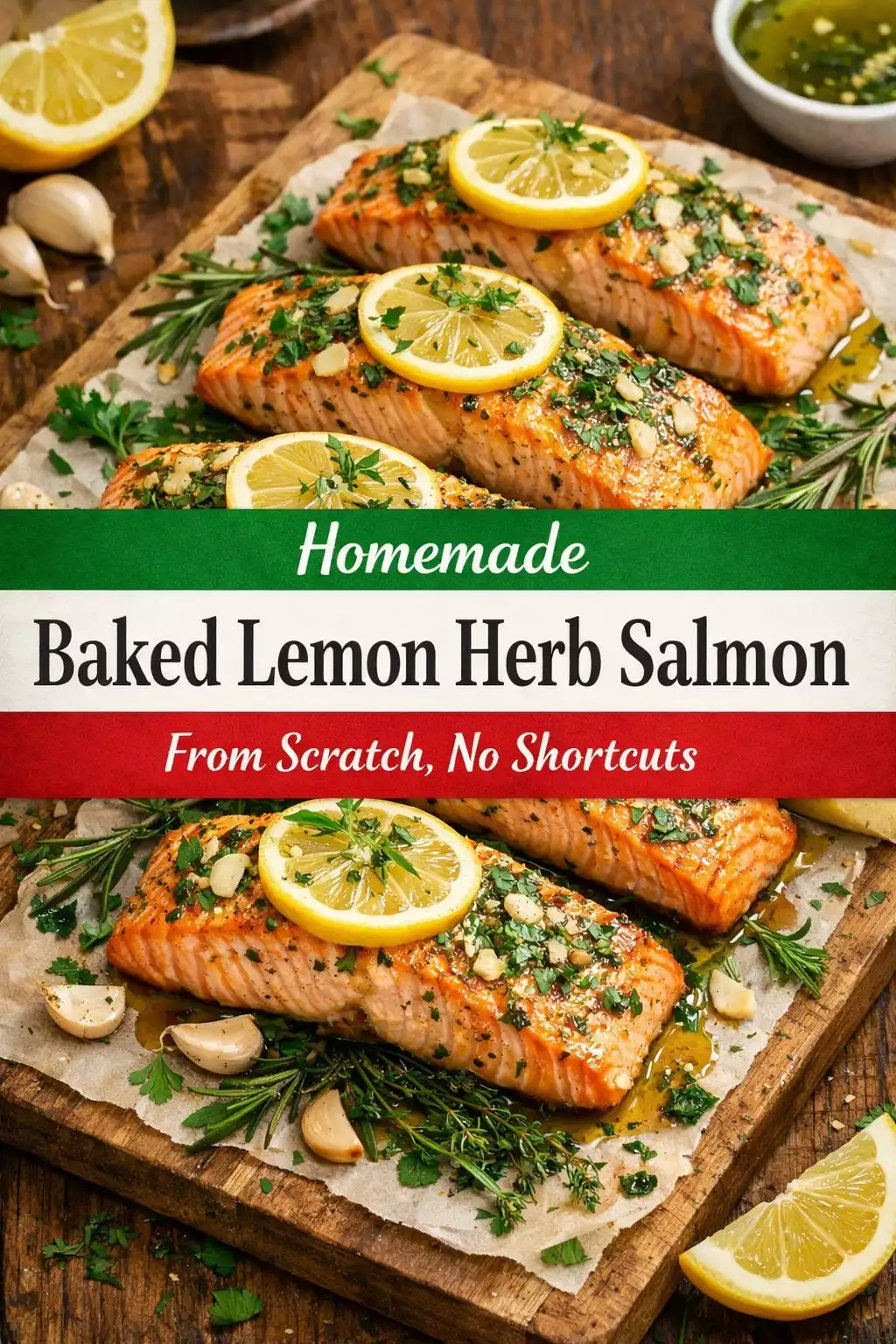
Drizzle olive oil over each fillet and rub it in on all surfaces. Mix salt, garlic powder, pepper, lemon zest, thyme, and rosemary. Press this mixture onto the flesh side (top) of each fillet.
Step 3: Prep the Baking Sheet
Line a baking sheet with foil or parchment. Lay herb sprigs and garlic slices across the pan — the salmon will bake on top of these, which infuses the bottom of the fish with herbal aroma. Place salmon skin-side down on top.
Step 4: Bake
Preheat oven to 400°F. Place lemon slices on top of each fillet. Bake for 12–15 minutes depending on thickness:
¾ inch thick: 10–12 minutes to medium
1 inch thick: 12–15 minutes to medium
1¼ inches thick: 15–18 minutes to medium
The fish is done when it flakes easily at the edges but still has a slight translucency at the very center. It continues cooking for 1–2 minutes after coming out of the oven.
Step 5: Finish and Serve
Remove from the oven. Let rest 2–3 minutes. Remove lemon slices. Drizzle with a bit of fresh olive oil, scatter fresh parsley over the top, and serve with lemon wedges. The skin typically comes off easily after baking — it sticks to the pan and the flesh lifts off cleanly.
Tips & Common Mistakes
- Don’t overcook — this is the most important instruction in this recipe. Check at 12 minutes for 1-inch fillets. The salmon should flake at the edges and look slightly underdone at the center — it finishes from carryover heat.
- Pat dry every time — surface moisture on salmon prevents the exterior from caramelizing and produces steamed, pale fish instead of the slightly golden, fragrant result this method achieves.
- Fresh herbs beat dried — for the finish (fresh parsley scattered after baking), fresh is the only option — dried parsley as a garnish adds nothing. For the seasoning mix, dried herbs work fine in the oven.
- Use a thermometer for confidence — 125–130°F for medium-cooked salmon, 145°F for fully cooked. A thermometer removes all guesswork and prevents the two most common salmon mistakes: undercooking and overcooking.
- Room temperature makes a real difference — especially for thick fillets (1 inch+). Cold fillets at the center remain cold when the exterior is already at temperature. 15 minutes on the counter solves this.
Variations
- Garlic Butter Baked Salmon: Replace olive oil with melted garlic butter. Add fresh dill instead of rosemary. A richer, more indulgent result that takes 5 extra minutes.
- Dijon and Herb: Spread a thin layer of Dijon mustard over the flesh before adding the herb seasoning. The mustard creates a light crust and adds a tangy depth.
- Mediterranean Style: Add capers, halved cherry tomatoes, and sliced kalamata olives to the baking sheet around the salmon. Everything roasts together and creates a built-in sauce. Serve with crusty bread for scooping.
- Asian Lemon: Replace the Mediterranean herbs with ginger, soy sauce, sesame oil, and rice vinegar in the seasoning. Finish with sesame seeds and scallions instead of parsley.
- One-Pan Dinner: Add asparagus or green beans to the baking sheet around the salmon, tossed with olive oil and seasoned. Everything finishes together. One pan, complete dinner. See my Honey Garlic Salmon for a sweeter salmon direction.
Storage & Reheating
- Refrigerator: Store cooked salmon up to 3 days in an airtight container. Excellent cold — use in salads, grain bowls, or over pasta with olive oil the next day.
- Reheating: The best way to reheat salmon is at 275°F in the oven, covered with foil, for 10–12 minutes. This very gentle heat warms the fish without further cooking it. Microwave is acceptable for small portions but steams the texture rubbery. Many people prefer leftover salmon cold.
- Freezing: Not recommended for cooked salmon. Freeze raw salmon instead — it thaws and cooks perfectly. Cooked salmon loses moisture and texture in the freezer.
Frequently Asked Questions
Wild-caught or farmed salmon?
Wild-caught salmon (sockeye, king, coho) has a more complex, intense flavor and firmer texture. Farmed Atlantic salmon is milder, fattier, and more consistent in texture and availability. Both cook the same way. For flavor, wild-caught is preferable when available and affordable. For everyday cooking, farmed Atlantic is perfectly good and significantly cheaper.
Skin-on or skinless?
Skin-on is better for baking — the skin insulates the flesh from direct pan heat, preventing the bottom from overcooking while the top finishes. The skin also makes the fillet easier to handle without breaking. It peels off easily after baking if you prefer not to eat it.
How do I know when salmon is done?
Press gently at the thickest part with a finger or fork. Fully cooked salmon flakes and feels firm throughout. Perfectly medium salmon flakes at the edges but still feels slightly soft (not mushy) at the center. Raw salmon is completely soft throughout and doesn’t flake. A thermometer removes all uncertainty.
What do you serve with baked salmon?
Roasted asparagus, steamed broccoli, roasted cherry tomatoes, simple green salad, rice, quinoa, or pasta with olive oil all work. Salmon is versatile — it pairs well with anything that has brightness (lemon, vinegar) or freshness (herbs, greens) to complement its richness.
Can I bake salmon from frozen?
Yes — no need to thaw. Increase bake time by 3–5 minutes and check temperature earlier than you think. The skin may not crisp from frozen but the flesh cooks through well. Pat the surface dry after the first 5 minutes if possible (a small amount of ice melts off) to improve surface color in the last few minutes. Also see my Pan-Seared Salmon for the stovetop technique.