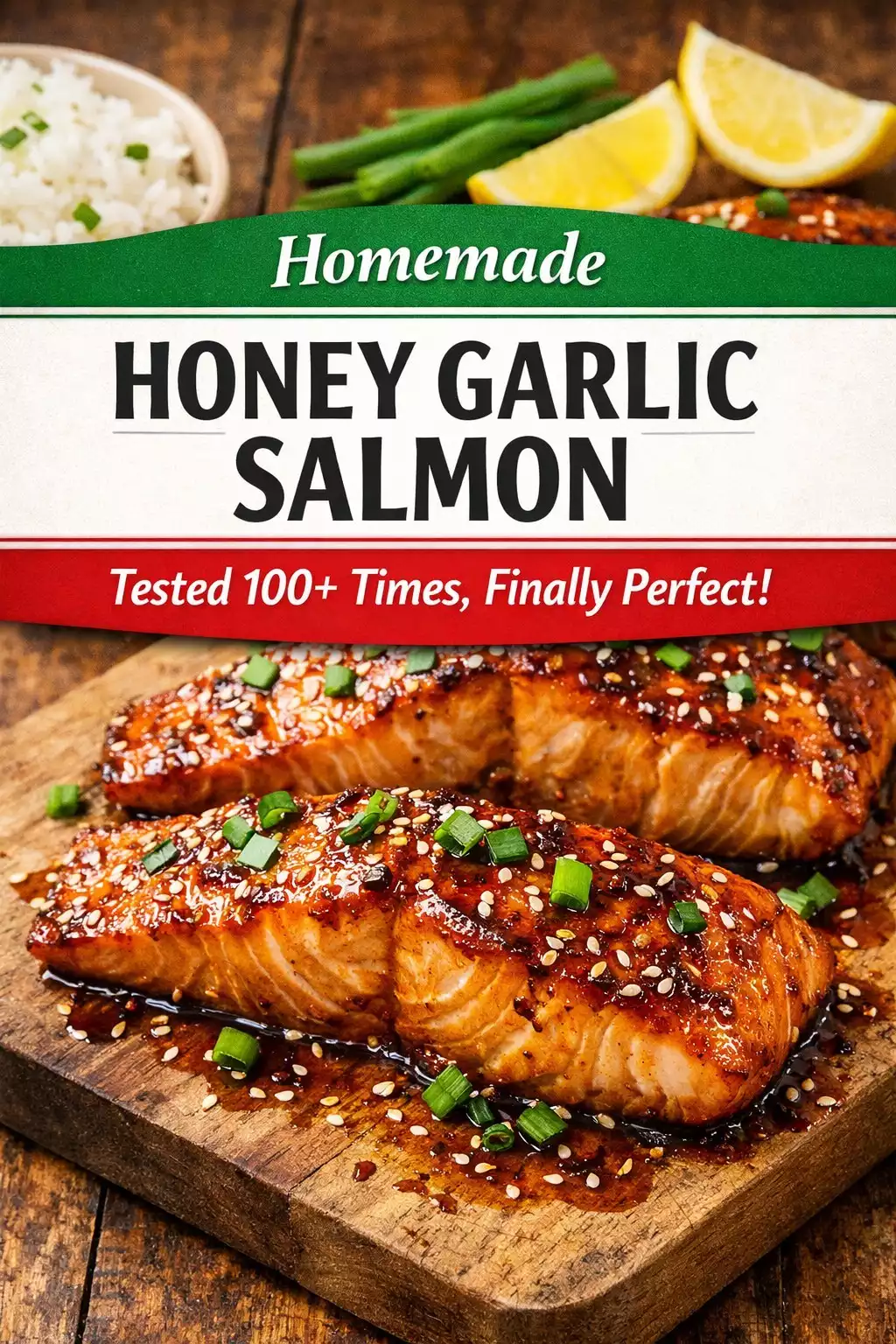
When I retired from the kitchen, this is what I kept cooking. Honey garlic salmon is the recipe that converts people who think they don’t like fish. The glaze is the reason: sweet from the honey, deeply savory from the garlic and soy, slightly caramelized around the edges from the high heat of the pan. It’s bold enough to stand up to the richness of the salmon without masking it, and it comes together in under 20 minutes, start to finish. I’ve made this for dinner parties and I’ve made it on Tuesday night when I didn’t feel like cooking. Both times it delivered exactly what I expected: a beautiful piece of salmon that made people reach for more.
This is Honey Garlic Salmon — old-school Italian-American style, Marco’s way. Also see my Baked Lemon Herb Salmon, Pan-Seared Salmon, Air Fryer Salmon, and Teriyaki Salmon for the complete salmon collection.
Why This Honey Garlic Salmon Works
- Sear first, glaze last — the glaze goes on in the final 2–3 minutes of cooking, not before. Sugar burns quickly at high heat. Building the sear on plain, dry salmon first means color and crust before the glaze ever goes on.
- Pat completely dry before searing — moisture on the surface of the salmon creates steam in the pan instead of searing. Dry fish, hot pan = golden crust. Wet fish, hot pan = gray steamed result.
- Garlic bloomed in the pan, not raw — the honey garlic sauce is built in the salmon pan after the fish is cooked, using the residual salmon fond. Raw garlic sauce dumped on at serving tastes sharp and aggressive; pan-bloomed garlic sauce is mellowed, fragrant, and rounded.
- The glaze balance matters — too sweet and it overwhelms the salmon; too salty and it overpowers. Honey + soy + garlic + a splash of lemon or rice vinegar for acid is the formula.
Ingredients
The Salmon
- 4 salmon fillets, 6 oz each, skin-on or off
- 1 tbsp olive oil or avocado oil
- 1 tsp kosher salt
- ½ tsp black pepper
- ½ tsp garlic powder
The Honey Garlic Glaze
- 3 tbsp honey
- 2 tbsp soy sauce (low-sodium preferred)
- 4 garlic cloves, minced or pressed
- 1 tbsp butter
- 1 tbsp rice vinegar or lemon juice
- 1 tsp sesame oil (optional — adds depth)
- ¼ tsp red pepper flakes (optional)
For Serving
- Sesame seeds
- Sliced scallions
- Lemon wedges
- Steamed rice or roasted vegetables
Instructions
Step 1: Mix the Glaze
Whisk together honey, soy sauce, rice vinegar, sesame oil, and red pepper flakes in a small bowl. Set aside. Have the minced garlic and butter ready. This glaze comes together fast once the pan is hot — mise en place first.
Step 2: Prep the Salmon
Pat salmon fillets completely dry. Season with salt, pepper, and garlic powder on both sides. Let rest at room temperature for 10 minutes.
Step 3: Sear the Salmon
Heat oil in a large non-stick or cast iron skillet over medium-high heat until shimmering. Add salmon skin-side up (flesh side down first for the best crust). Cook without moving for 4–5 minutes until a deep golden crust forms on the flesh side. Flip and cook 2–3 minutes on the skin side.
Step 4: Build the Glaze in the Pan
Push the salmon to the side of the pan. Add butter to the empty space. Once melted, add the minced garlic — cook 30–60 seconds until fragrant and just beginning to turn golden. Pour the honey-soy mixture into the pan. Swirl to combine with the garlic and butter. Let it bubble and reduce for 1 minute — it will thicken slightly into a glaze.
Step 5: Glaze and Finish
Spoon the glaze over the salmon repeatedly for 1–2 minutes until the fish is lacquered and the glaze is thick and clinging. Check doneness — the flesh should flake at the thickest point and the internal temperature should read 130–145°F.
Step 6: Plate and Serve
Transfer salmon to plates, spoon remaining glaze from the pan over the top. Garnish with sesame seeds, scallions, and a lemon wedge. Serve immediately over rice or with roasted vegetables.
Tips & Common Mistakes
- Build the sear before the glaze — honey burns quickly at searing temperatures. The fish needs to develop its crust on bare, seasoned flesh. The glaze only goes on in the last 2 minutes.
- Don’t move the salmon during the sear — if the fish sticks when you try to flip it, it’s not ready. Wait another 30 seconds. A properly seared fish releases naturally from the pan.
- Watch the garlic closely — minced garlic goes from fragrant to bitter in under a minute at high heat. Add the liquid glaze the moment the garlic turns golden around the edges.
- Baste enthusiastically — the glazing step is active: keep spooning the sauce over the salmon repeatedly. This builds up a lacquered coating rather than a thin wash.
- Taste the glaze before using it — honey and soy sauce vary in sweetness and saltiness by brand. Taste and adjust — more soy for salt, more honey for sweet, more vinegar for acid.
Variations
- Baked Honey Garlic Salmon: Season salmon, place on a foil-lined baking sheet, pour the glaze over the top, and bake at 400°F for 12–15 minutes. Less crust than the pan version but excellent for batch cooking multiple fillets at once.
- Honey Garlic Shrimp: Use the exact same glaze with shrimp instead of salmon. Pan-sear the shrimp 1 minute per side, remove, build the glaze in the pan, and toss the shrimp back in. Done in 8 minutes total.
- Miso Honey Glaze: Replace 1 tablespoon of soy sauce with 1 tablespoon of white miso paste. The miso adds a fermented depth and complexity that takes the glaze to another level.
- Spicy Version: Double the red pepper flakes and add a teaspoon of gochujang to the glaze. The heat balances the sweetness and adds a Korean-inspired dimension.
- Ginger Addition: Add 1 teaspoon of freshly grated ginger to the garlic when blooming in the butter. The ginger adds brightness and sharpness that lifts the entire flavor profile. See my Teriyaki Salmon for a related sweet-savory salmon glaze approach.
Storage & Reheating
- Refrigerator: Store in an airtight container up to 3 days. The glaze firms up in the fridge — excellent cold on salads and grain bowls.
- Reheating: Reheat at 275°F in the oven, covered with foil, for 10 minutes. This gentle heat warms the fish without further cooking it. Alternatively, add a splash of water to a skillet and warm the salmon covered over very low heat. Avoid microwaving — it steams the salmon rubbery.
- Extra glaze: Store leftover glaze in a jar in the fridge for up to a week. Excellent on chicken, shrimp, tofu, or roasted vegetables.
Frequently Asked Questions
Can I make this in the oven instead of the stovetop?
Yes — season the salmon and place on a foil-lined baking sheet. Mix the glaze and spoon it over the salmon. Bake at 400°F for 12–15 minutes. The baked version lacks the stovetop crust but is excellent for cooking multiple fillets at once with minimal attention. Spoon more glaze halfway through if desired.
Can I use frozen salmon?
Thaw first for the pan-sear method — frozen salmon carries too much moisture, which prevents the sear. Quick thaw in cold water for 15 minutes, then pat very dry. For the oven version, frozen salmon can be baked directly (add 3–5 extra minutes) since the oven environment handles the moisture differently.
Is honey garlic salmon too sweet?
Balanced correctly, no — the soy sauce and rice vinegar provide salt and acid that counteract the sweetness. The fish itself is savory and rich. If your result tastes too sweet, add more soy sauce and a stronger acid finish (lemon rather than rice vinegar). Reduce the honey by 1 tablespoon if the balance still feels off.
What rice is best to serve with this?
Jasmine rice — it’s fragrant, slightly sticky, and pairs perfectly with the sweet-savory glaze. Brown rice is an excellent nutritious alternative. Cauliflower rice for a lower-carb approach. The glaze is generous enough that whatever base you choose will be well-covered.
How do I get the glaze to stick to the salmon?
Two things: 1) The salmon surface should be dry before searing (no moisture = better crust for glaze to cling to). 2) The glaze needs to reduce slightly before applying — a thin, watery glaze runs off; a glaze reduced to light syrup consistency clings and lacquers. Baste repeatedly as it reduces to build up the coating. See my Baked Lemon Herb Salmon for a lighter, herb-forward salmon direction.