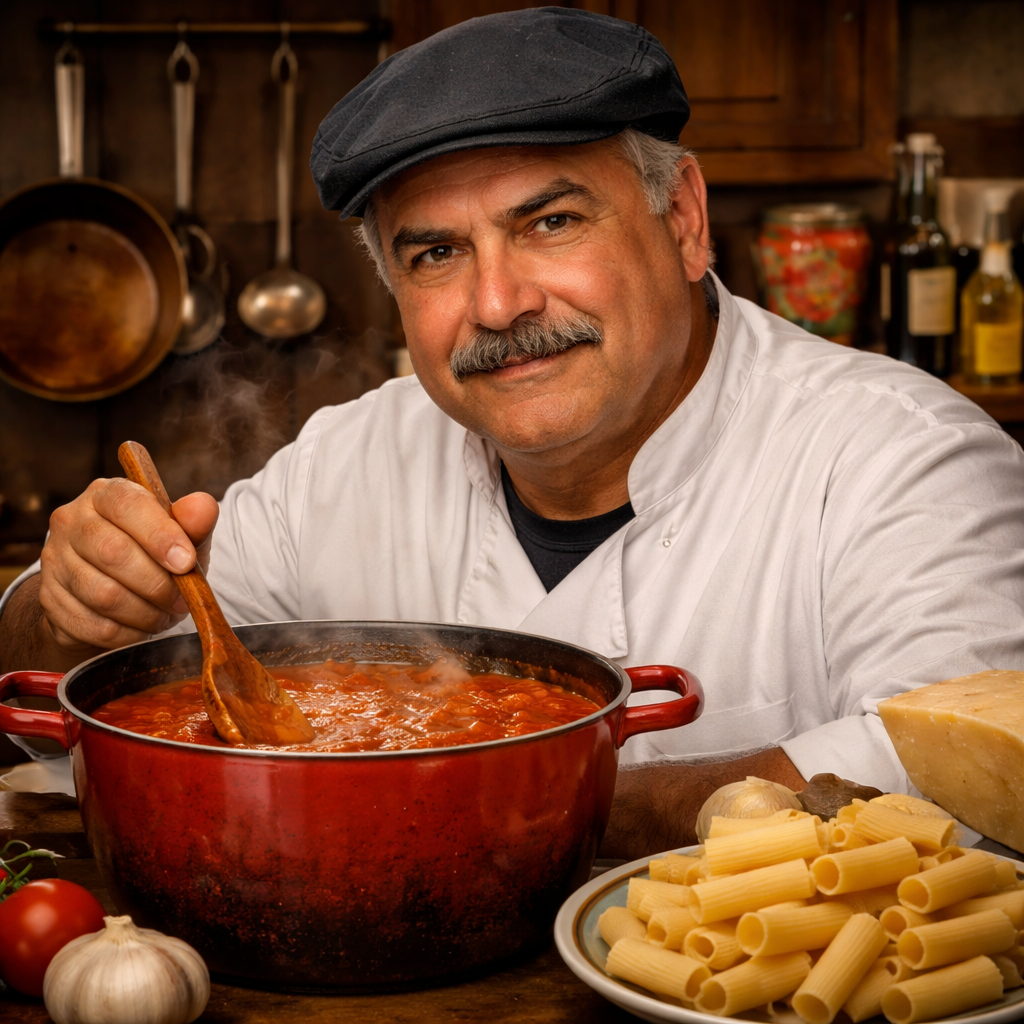
Don’t rush this. Good food doesn’t have a timer. Stuffed Cabbage Rolls — Gołąbki in Polish, which translates literally to “little pigeons” — are one of those dishes that requires you to slow down and work with your hands. You peel the cabbage leaves, you roll each one individually, you tuck it into the pot like you’re putting something to bed. There’s a meditative quality to this work that people who only cook fast food have never experienced. The result of that labor is a dish that tastes of patience and feeds a crowd from one pot.
The filling is simple: ground beef and pork mixed with rice, seasoned with onion and marjoram. The sauce is tomato-based, slightly sweet, and slightly sour. The rolls are tucked into the pot snugly and braised low and slow until the cabbage is completely tender and the filling is cooked through and has absorbed the tomato sauce. This is cold-weather food. This is when-the-family-is-coming food. This is three-generations-in-one-kitchen food.
Make more than you think you need. These reheat beautifully and taste better the next day. Any leftovers will not last 24 hours.
Why These Stuffed Cabbage Rolls Work
- Parboil the cabbage first: Raw cabbage won’t roll without tearing. Briefly blanching the whole head softens the outer leaves enough to roll pliably without splitting.
- Half-cooked rice in the filling: If raw rice goes into the filling, the rolls take much longer to cook and the rice absorbs all the moisture from the meat. Parcooked rice (half done) absorbs just enough moisture during the braise to finish perfectly.
- Pork and beef mixture: Pure beef filling can be dry and one-dimensional. The fat in ground pork adds richness and keeps the filling moist through the long braise.
- Snug fit in the pot: Packing the rolls tightly prevents them from unrolling during braising. Any gaps allow the rolls to tumble and the filling to spill out.
Ingredients
For the Rolls
- 1 large head green cabbage (3–4 lbs)
- 1 lb ground beef (80/20)
- ½ lb ground pork
- 1 cup long-grain white rice, half-cooked and cooled
- 1 medium onion, finely grated
- 2 cloves garlic, minced
- 1 tsp dried marjoram
- Salt and black pepper to taste
- 1 egg
For the Tomato Sauce
- 1 can (28 oz) crushed tomatoes
- 1 cup beef broth
- 1 tbsp tomato paste
- 1 tbsp sugar
- 1 tbsp red wine vinegar or lemon juice
- 1 tsp dried thyme
- Salt and pepper to taste
Instructions
Step 1: Prepare the Cabbage
Bring a large pot of water to a boil. Cut out the core of the cabbage from the bottom using a paring knife. Submerge the whole head core-side down in the boiling water. After 2–3 minutes, peel back the softened outer leaves one at a time using tongs. Return the cabbage to the water between each leaf as it softens. Collect 12–16 large, pliable leaves. Let them cool and pat dry. Trim any thick center rib from each leaf with a knife so it rolls more easily.
Step 2: Make the Filling
Par-cook rice in salted water for 8–10 minutes (half the full cooking time). Drain and cool. Combine ground beef, ground pork, cooled half-cooked rice, grated onion, garlic, marjoram, egg, salt, and pepper in a bowl. Mix until just combined — don’t overwork the meat or the filling becomes dense. Test the seasoning: take a small portion, microwave 30 seconds, and taste. Adjust salt and marjoram before filling all the rolls.
Step 3: Roll the Cabbage
Place a cabbage leaf flat with the thick end (where the rib was) facing you. Place 3–4 tablespoons of filling in the center lower third of the leaf. Fold the bottom up over the filling. Fold the sides in. Roll forward tightly. Place seam-side down. Repeat with all filling and leaves. Any extra cabbage can be chopped and used to line the pot bottom.
Step 4: Make the Sauce and Braise
Combine crushed tomatoes, broth, tomato paste, sugar, vinegar, thyme, salt, and pepper. Taste — the sauce should be slightly sweet-tart. Line the bottom of a large Dutch oven with chopped cabbage scraps. Arrange stuffed cabbage rolls seam-side down in tight layers. Pour the tomato sauce over and around the rolls until they’re about ¾ covered. Bring to a simmer, cover tightly, and braise on the stovetop over low heat for 1.5 hours, or bake covered at 325°F for the same time. The rolls are done when the cabbage is very tender and the filling is completely cooked through.
Step 5: Serve
Carefully transfer rolls to plates with a large spoon or tongs. Spoon sauce generously over each serving. Serve with a side of sour cream, mashed potatoes, or crusty bread for the sauce. Sprinkle with fresh parsley. Don’t rush the serving — the rolls are hot and the filling continues cooking in the residual heat for several minutes after being removed.
Tips & Common Mistakes
- Don’t skip parboiling: Trying to roll raw cabbage tears the leaves. The brief blanching step is what makes rolling possible. Don’t over-blanch either — the leaves should be pliable but not completely soft (they’ll continue cooking in the braise).
- Half-cook the rice: Raw rice in the filling absorbs too much moisture and produces a dry, dense filling. Fully cooked rice becomes mushy. Half-cooked rice finishes perfectly during the braise.
- Season the filling generously: The cabbage and sauce both dilute the flavors of the filling during cooking. The filling should taste distinctly seasoned raw (taking into account it will be cooked further) — test it before filling all the rolls.
- Pack tightly in the pot: Loosely arranged rolls unroll during braising. Tight packing keeps each roll intact throughout the cooking process.
Variations
- Slow cooker version: After assembling rolls in the pot, transfer to a slow cooker with tomato sauce. Cook on LOW for 6–8 hours. Excellent result and completely hands-off after assembly.
- Mushroom cream sauce: Replace the tomato sauce with a cream-based mushroom sauce. A Polish variation called karpótki that is particularly excellent.
- Vegetarian version: Replace meat with a mixture of cooked lentils, mushrooms, and the same rice. Increase seasoning to compensate for the missing meat richness.
- Greek-style dolmades: Use grape leaves instead of cabbage. Fill with lamb, rice, and mint. Use a lemon-egg sauce instead of tomato. A Mediterranean cousin of the same technique.
More Eastern European comfort food: Hungarian beef goulash, Polish kielbasa and sauerkraut, Czech svičková, classic Polish pierogi, and classic borscht.
Storage & Reheating
- Refrigerator: Keeps for up to 4 days. Dramatically better on day 2 — the filling absorbs more sauce overnight and the flavors deepen. Make a day ahead when possible.
- Reheating: Reheat in a covered pan on the stovetop with extra tomato sauce or broth over medium-low heat. Or in a 325°F oven covered with foil for 20–25 minutes.
- Freezing: Freeze cooked rolls in sauce for up to 3 months. Thaw overnight in the fridge and reheat covered in the oven. The cabbage texture softens slightly after freezing but the overall dish is still excellent.
Frequently Asked Questions
What is marjoram and can I substitute?
Marjoram is a Mediterranean herb similar to oregano but milder, sweeter, and more floral. It’s the traditional Polish seasoning for Gołąbki filling. Dried marjoram is available at well-stocked grocery stores. Substitute with ¾ of the amount in dried oregano plus a pinch of thyme if marjoram is unavailable.
My cabbage rolls keep unrolling during cooking. How do I fix this?
Pack them more tightly in the pot seam-side down so the weight and pressure of adjacent rolls holds them closed. They can also be secured with a toothpick before placing in the pot. Remove toothpicks before serving.
Can I make the rolls the day before?
Yes — assemble uncooked rolls, cover and refrigerate overnight, and braise the next day. Or fully cook, refrigerate, and reheat before serving. Either approach works. The make-ahead nature of this dish is one of its great practical advantages.
How do I know the filling is cooked?
Cut open a roll after the 1.5-hour braise. The filling should be uniformly gray-brown throughout with no pink remaining and the rice should be fully cooked. If the center is still pink or the rice is crunchy, continue cooking covered for 15–20 more minutes.