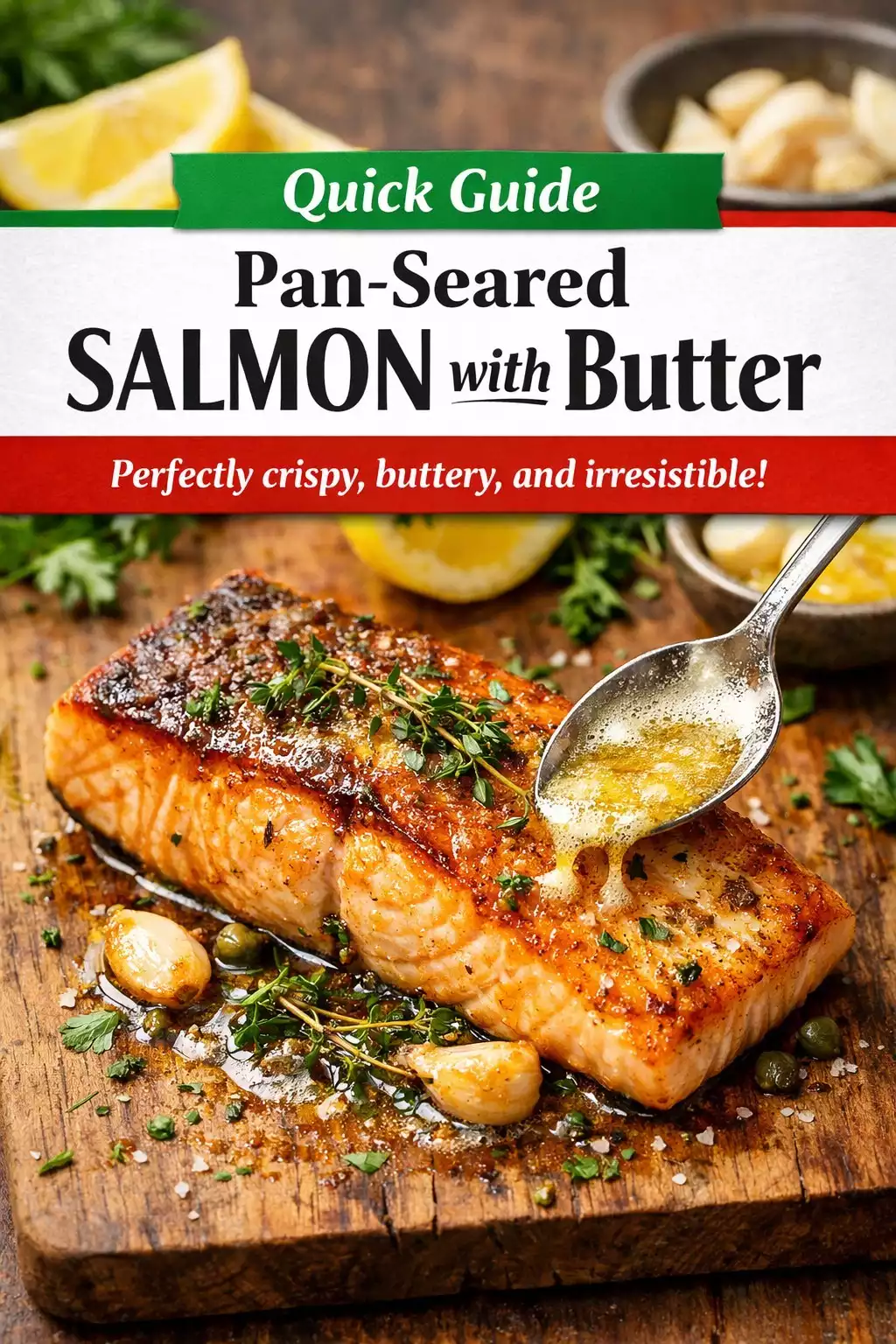
You think you know this dish? Sit down. Let me show you. Pan-seared salmon with butter is the technique that separates people who cook salmon from people who cook salmon well. The difference isn’t the recipe — there is almost no recipe here. The difference is the pan, the heat, the timing, and the one decision that most home cooks get wrong: when to flip. A perfectly seared salmon fillet has a golden-brown, slightly crackling crust on the flesh side, the interior is silky and just flaking, and the skin is crispy enough to eat if you want to (and you should, because it’s delicious when it’s done right). Butter basted at the end finishes it with a richness that makes everything else it touches better.
This is Pan-Seared Salmon with Butter — the recipe my family fights over. Check out my Baked Lemon Herb Salmon, Honey Garlic Salmon, Air Fryer Salmon, and Teriyaki Salmon for every other excellent salmon preparation in this collection.
Why This Pan-Seared Salmon Works
- Skin-side down, start there — starting skin-side down renders the fat from the skin, crisps it, and protects the flesh from direct pan heat while the skin does its job. Most of the cooking happens skin-side down.
- Hot pan, don’t move it — the salmon needs to develop a crust before it will naturally release from the pan. If it sticks when you try to flip it, it’s not ready. Wait. It will release when the crust has formed.
- Press gently at the start — salmon skin curls and causes uneven contact with the pan. A gentle press for the first 30 seconds ensures the entire skin makes contact with the heat for even crisping.
- Butter baste at the end — basting with foaming butter during the last 2 minutes adds richness, color, and a nutty-brown butter depth that elevates a simple seared fillet into something worthy of a restaurant plate.
Ingredients
The Salmon
- 4 salmon fillets, 6 oz each, skin-on
- 1 tbsp neutral oil (avocado or vegetable — high smoke point)
- 1 tsp kosher salt
- ½ tsp black pepper
- ½ tsp garlic powder
The Butter Baste
- 3 tbsp unsalted butter
- 3 garlic cloves, smashed
- 3 sprigs fresh thyme or rosemary
- 1 tbsp fresh lemon juice
For Serving
- Lemon wedges
- Fresh parsley, chopped
- Flaky sea salt (optional finishing salt)
- Capers (optional)
Instructions
Step 1: Prep the Salmon
Remove salmon from the fridge 15 minutes before cooking. Pat completely dry — on the flesh side, skin side, and edges. Season the flesh side and edges with salt, pepper, and garlic powder. Leave the skin unseasoned until right before the pan.
Step 2: Heat the Pan Properly
Heat a stainless steel or cast iron skillet over medium-high heat for 2–3 minutes until it’s genuinely hot — a drop of water should evaporate instantly. Add the oil and heat until it shimmers. The pan must be truly hot before the salmon goes in.
Step 3: Sear Skin-Side Down
Season the skin side with salt right before placing in the pan. Place salmon skin-side down. Press gently but firmly with a spatula for the first 30 seconds to ensure full contact between the skin and pan. Don’t move it after that. Cook 5–6 minutes until the flesh has turned opaque about two-thirds of the way up the sides — you can see the color change from translucent to opaque as it cooks.
Step 4: Flip Once
When the flesh has turned opaque about two-thirds up and the skin is deeply golden and crisping, flip the salmon. The fish should release from the pan easily — if it resists, wait 30 more seconds. Cook the flesh side for 1–2 minutes only — the salmon is almost fully cooked from the skin-side time.
Step 5: Butter Baste
Add butter, smashed garlic, and herb sprigs to the pan. As the butter foams and begins to turn a light golden color, tip the pan slightly and use a spoon to repeatedly baste the salmon with the hot butter for 1–2 minutes. The aromas during this step are extraordinary. This is classical French technique in your home kitchen.
Step 6: Finish and Serve
Squeeze lemon into the butter baste (it will sizzle). Baste once more. Transfer salmon to warm plates. Spoon the browned butter from the pan over each fillet. Garnish with fresh parsley and a pinch of flaky sea salt on top. Serve immediately.
Tips & Common Mistakes
- The natural release test — if the salmon won’t flip when you try, it’s not ready. The sear isn’t complete. Wait another 30–60 seconds and try again. Forcing an early flip tears the flesh and ruins the crust.
- Skin-to-pan contact is everything — that first 30-second press ensures the entire skin surface is in contact with the hot pan. Salmon skin that arches away from the pan doesn’t crisp evenly.
- The two-thirds rule — when the opaque color change has moved two-thirds of the way up the side of the fillet from the bottom, the salmon is close to done from the skin side alone. The flip and brief flesh-side sear finishes it.
- Don’t move the butter baste pan off heat — the basting butter should be actively foaming during the process. If it stops foaming, the pan has cooled. Keep it on medium heat.
- Serve immediately — pan-seared salmon is at its best the moment it comes out of the pan. The skin starts to soften within minutes. This is a cook-to-order dish.
Variations
- Blackened Salmon: Replace the standard seasoning with a blackening spice blend (smoked paprika, cayenne, garlic powder, onion powder, dried thyme, dried oregano). High heat, skin-side down, same technique. Bold and dramatic.
- Dijon and Herb Crust: After the skin-side sear, flip and spread a thin layer of Dijon mustard on the flesh side. Top with a mix of panko, parmesan, and fresh herbs. Broil for 2–3 minutes to set the crust instead of continuing to sear.
- Brown Butter Caper Sauce: Continue cooking the butter until it turns deep golden brown with a nutty aroma. Add 2 tablespoons of capers and 2 tablespoons of fresh lemon juice. Spoon this beurre noisette with capers over the plated salmon. An intensely flavored, classical French preparation.
- Miso Butter Baste: Whisk 1 tablespoon of white miso paste into the basting butter instead of plain butter. The miso adds a fermented, umami depth to the baste. Skip the herbs and use scallions and sesame seeds as garnish.
- Skinless Fillets: Cook flesh-side down first for 4 minutes (can build a crust on the flesh side without the skin protecting it). Flip and cook 1–2 more minutes. Baste with butter the same way. See my Baked Lemon Herb Salmon for a more forgiving technique if pan-searing feels too precise.
Storage & Reheating
- Refrigerator: Store up to 3 days. Cooked salmon is excellent cold in salads and grain bowls — the cold texture is different from hot but equally enjoyable for many preparations.
- Reheating: The skin will not recrisp after storage. Reheat very gently at 275°F in the oven, covered, for 10 minutes. Many people prefer leftover pan-seared salmon cold on salads rather than reheated.
- Make-ahead note: This is not a make-ahead dish. The crispy skin and the butter baste are at their best the moment the fish comes out of the pan. Cook to order when possible.
Frequently Asked Questions
Why does my salmon stick to the pan?
Pan not hot enough before adding the fish, fish not dry enough, or the pan isn’t seasoned well enough (for cast iron). Ensure the pan is genuinely hot — a drop of water should evaporate instantly. Dry the fish thoroughly. And give it time — a properly searing fillet will naturally release when the crust is formed. Forcing a flip before release causes sticking and tearing.
What type of pan is best?
Stainless steel or cast iron are ideal for searing — they hold heat better and create more even crust than non-stick. Non-stick is more forgiving if you’re new to this technique but won’t produce the same level of crust. For the best result: stainless steel thoroughly preheated with plenty of oil.
My skin is never crispy. What’s wrong?
Usually insufficient pan heat, insufficient pressing at the start, or the skin wasn’t dried well. The skin needs to make full, flat contact with a hot surface to crisp. Press for 30 seconds at the start, don’t move it for the full 5–6 minutes, and verify the pan was truly hot before the fish went in.
Should I cook salmon skin-side down or up?
Skin-side down for the majority of the cooking — 5–6 minutes skin-side down, 1–2 minutes flesh-side down. The skin insulates and protects the flesh while it cooks through, and the fat in the skin renders and bastes the fish from the bottom up. The flip is brief and final.
How do I make the butter baste without burning it?
Reduce heat slightly when adding the butter — medium rather than medium-high. The butter should foam but not instantly brown and burn. Adding smashed garlic and herb sprigs to the butter helps regulate the temperature by taking up some of the heat. Baste continuously and keep the pan tilted to pool the butter for easy spooning. Also see my Honey Garlic Salmon for a pan-finished salmon with a different flavor direction.